You’ll want modern comfort, but your Victorian railway cottage demands historic restraint. Start by evaluating its structure, original joinery, fireplaces, roof, and layout before planning any changes. Set a realistic budget and timeline, then prioritise urgent repairs, safety upgrades, insulation, plumbing, and electrics. With careful choices, you can create a practical kitchen and bathroom while preserving the cottage’s character—but the first inspection may reveal problems that shape every decision that follows.
Assess Your Victorian Railway Cottage
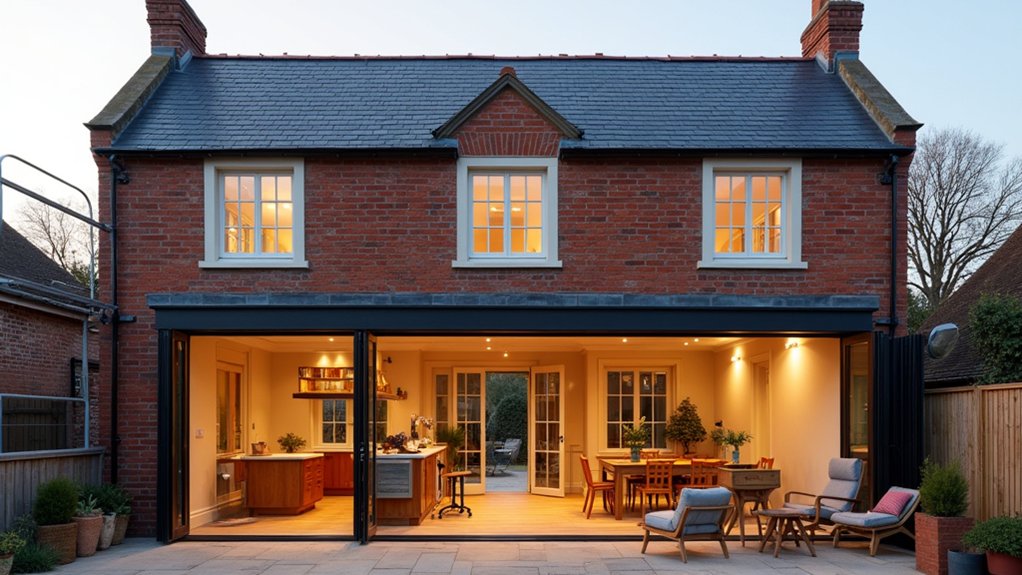
Before planning any restoration, assess your Victorian railway cottage as both a home and a historic document. Walk through every room and record its condition, including damp, cracking, roof movement, timber decay, and outdated services. Photograph details before you disturb them, and note original joinery, fireplaces, doors, flooring, windows, and fittings.
Study the Cottage layout carefully: its compact rooms, circulation, and service areas often reflect railway workers’ daily lives. Identify later alterations separately from surviving fabric, then investigate local records, maps, and comparable cottages to clarify the building’s history.
Don’t assume imperfections require removal; aged materials may embody authentic Victorian charm. Consult a conservation professional before altering structural elements or significant features.
Your assessment should distinguish urgent safety concerns from historically valuable details and guide sensitive design decisions without compromising the cottage’s character.
Set a Restoration Budget and Timeline
Set a restoration budget that covers essential repairs, professional fees, materials, permissions, and a contingency for hidden defects.
Prioritise work that protects the cottage’s structure and historic character, then allocate funds for later improvements.
Create a realistic timeline around surveys, approvals, skilled-trade availability, seasonal conditions, and unexpected delays.
Define Your Restoration Budget
Establish a realistic restoration budget and timeline before work begins, allowing for specialist trades, heritage-appropriate materials, approvals, and a contingency of at least 10–20% for hidden defects. To control spending:
- Obtain detailed quotes from conservation builders, roofers, joiners, electricians, and plumbers.
- Separate essential repairs from upgrades, then fund structural safety and weatherproofing first.
- Price material selection carefully, comparing reclaimed, compatible, and approved modern alternatives.
- Reserve funds for surveys, planning fees, professional advice, waste removal, and temporary protection.
Use the cottage’s condition report and measured drawings to build a room-by-room cost schedule. Check whether listed-building consent or local approvals affect fees and specifications.
Protect historical accuracy by budgeting for lime mortar, timber repairs, period ironmongery, and matching finishes rather than cheaper substitutes.
Keep a written allowance for inflation and supplier changes, and review every quotation before committing. This discipline helps you preserve character without exceeding your means.
Create a Realistic Timeline
Build the programme around the cottage’s condition, approvals, seasonal constraints, and the availability of specialist trades. Begin with a survey, measured drawings, and checks against local heritage requirements. Allow time for permissions, structural assessments, and any discoveries concealed behind later finishes.
Protect historic architecture by scheduling careful repairs before cosmetic work, and consult records that reveal the neighborhood history when deciding which features to retain.
Divide the project into logical phases: make the building weather-tight, address structure and services, restore windows and masonry, then complete interiors and landscaping.
Add contingency time—at least 15 percent—for material delays, specialist craftsmanship, and unexpected defects. Confirm each contractor’s lead time, coordinate dependencies, and review progress at agreed milestones.
A realistic programme protects your budget, reduces rushed decisions, and helps you live comfortably without sacrificing the cottage’s character.
Protect Original Victorian Features
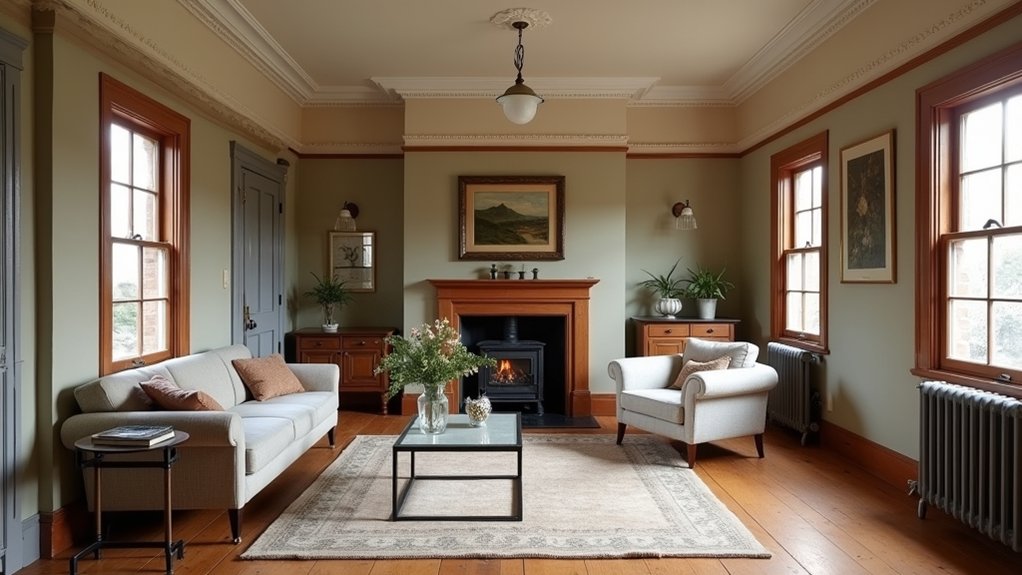
Protect the cottage’s original Victorian features before making modern alterations.
Preserve ornate woodwork by repairing, not replacing, sound details, and use period-appropriate finishes.
Restore original floorboards carefully, retaining their character while addressing damage and safe, even wear.
Preserve Ornate Woodwork
Before stripping, sanding, or repainting, inspect each piece of ornate woodwork for its original finish, joinery, and decorative details. Photograph every feature, then seek conservation advice if you find historic paint, gilding, or damage.
- Clean gently: Remove dust with a soft brush and low-suction vacuum, using a screen to prevent contact.
- Test finishes: Try mild, reversible cleaning methods in an inconspicuous area; avoid harsh solvents and abrasive pads.
- Repair carefully: Consolidate loose joints and intricate carvings with compatible materials, retaining existing fabric rather than replacing it.
- Protect surfaces: Apply breathable, conservation-approved coatings only when necessary, and label any intervention for future owners.
Control damp, condensation, and direct sunlight, because they accelerate movement, cracking, and fading.
Don’t fill carved details with modern sealants. Keep original hardware, and consult a specialist before altering, removing, or repainting significant features.
Restore Original Floorboards
Once the ornate woodwork is secure, turn your attention to the original floorboards, which often carry saw marks, wear patterns, and fixing details that reveal the cottage’s history. Inspect each board for rot, woodworm, loose nails, and movement before lifting anything.
Replace only failed sections, matching timber species, width, thickness, and ageing as closely as possible. Remove paint carefully with a scraper; avoid aggressive machinery that can erase tool marks and soften edges.
If floorboard sanding is necessary, use progressively finer grades and stop once the surface is stable, not perfectly uniform. Countersink protruding nails and repair gaps with sympathetic timber slivers rather than modern filler.
Finish with a breathable wood treatment, such as hardwax oil, and test its colour in an inconspicuous area first. Protect the restored boards with felt pads and rugs.
Repair the Roof, Walls, and Floors
Sound repairs should preserve the cottage’s original fabric wherever possible. Begin with a careful survey, recording movement, damp marks, slipped slates, and uneven floors before removing anything.
- Roof repair: Replace broken slates with matching reclaimed or locally sourced materials. Repair the structure only where necessary, retaining sound rafters and traditional fixings.
- Wall reinforcement: Trace cracks to their cause, then use compatible lime mortar and discreet stitching rather than hard cement, which can trap moisture.
- Masonry care: Repoint open joints by hand, matching the existing profile and colour. Remove loose render gently, and keep historic brickwork visible where appropriate.
- Floor repair: Lift boards methodically, label each one, and reuse them after treating beetle damage and replacing failed joists. Correct major level changes carefully, preserving honest age and character.
Ask a conservation specialist to assess serious settlement, rot, or structural movement before work begins. Never conceal defects behind cosmetic finishes.
Upgrade Insulation, Plumbing, and Electrics
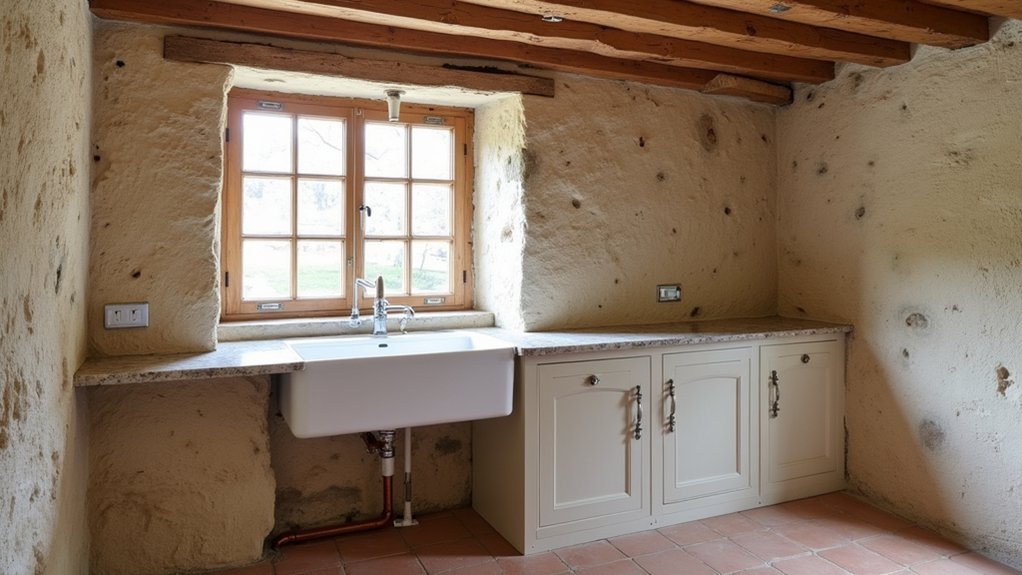
Upgrade services with minimal disturbance to the cottage’s historic fabric. Begin with a survey, checking damp, draughts, pipe routes, and existing wiring before opening walls or floors.
Choose breathable insulation techniques, such as wood-fibre boards or lime-compatible materials, rather than trapping moisture behind impermeable layers. Insulate the roof, suspended floors, and accessible external walls carefully, preserving skirtings, cornices, and original boards wherever possible.
Plan plumbing upgrades around existing routes to limit chasing. Replace failing galvanised or lead pipes with approved modern systems, add accessible isolation valves, and protect vulnerable pipes from frost.
Have a qualified electrician inspect the installation, upgrade the consumer unit, and install suitably positioned sockets, lighting circuits, smoke alarms, and earthing.
Conceal cables discreetly, document every alteration, and obtain required approvals before closing surfaces.
Plan a Practical Cottage Kitchen
Plan the kitchen around the cottage’s existing proportions, window positions, and service routes rather than forcing in a modern fitted scheme. Preserve original floorboards, beams, and brickwork where practical, then introduce durable, reversible fittings.
- Choose a freestanding range or compact cooker that suits the room’s scale.
- Pair painted timber cupboards with open shelves, keeping doors simple and historically sympathetic.
- Select stone, timber, or linoleum worktops that withstand daily use without appearing overly contemporary.
- Add Vintage appliances selectively, ensuring modern performance doesn’t overwhelm the room.
Keep preparation, cooking, and washing areas close together to improve workflow. Use concealed storage beneath benches and a tall cupboard for bulk items.
Let Cottage decor emerge through restrained colour, aged brass hardware, woven textiles, and locally appropriate materials.
Confirm ventilation, electrical capacity, and appliance clearances before installation, and retain enough wall space to show the cottage’s original character.
Modernise the Bathroom Without Losing Character
Retain the bathroom’s original proportions and any surviving features, while discreetly introducing modern plumbing, heating, and ventilation. Repair rather than replace timber boards, panelled doors, or decorative plaster, and photograph each element before work begins.
Choose Victorian bathroom fixtures, such as a high-level cistern, pedestal basin, or roll-top bath, but verify their dimensions against the compact room.
Conceal modern plumbing upgrades beneath floors or within carefully planned service ducts, avoiding unnecessary chases through historic masonry.
Fit a thermostatic shower valve and accessible isolation points so future maintenance won’t damage finishes.
Improve extraction with a quiet, humidity-controlled fan vented externally, never into the roof space.
Use a suitably rated heating system and protect vulnerable surfaces from moisture.
Consult building control and a conservation specialist before altering listed fabric or drainage connections.
Finish With Energy-Efficient Period Details
Once the main work is complete, improve the cottage’s performance with details that respect its Victorian character. Choose upgrades that look authentic while reducing energy use:
- Fit energy efficient windows with slim, traditionally proportioned frames, secondary glazing, or discreet draught seals. Check that replacements suit the building’s age and local conservation requirements.
- Install period lighting with LED lamps, dimmer controls, and fittings inspired by original gas or oil fixtures. You’ll reduce consumption without flattening the rooms’ historic atmosphere.
- Add thermal curtains and shutters to limit heat loss through glass, especially in bedrooms and north-facing rooms. Select natural fabrics and colours that complement existing joinery.
- Seal floors, doors, and skirting boards carefully, but don’t block essential ventilation. Pair draught-proofing with efficient heating controls, and retain fireplaces as focal points, even when you upgrade their inserts.
Frequently Asked Questions
Do I Need Planning Permission to Change My Victorian Railway Cottage’s Exterior?
You may need planning permission to alter your Victorian railway cottage’s exterior, especially if it’s listed, lies in a conservation area, or you’ll change windows, doors, rooflines, extensions, materials, or boundary walls.
Contact your local planning authority before starting; permitted development rights may apply, but conditions vary.
Check listed-building consent separately.
Garden landscaping often needs no permission, while interior modernization usually remains exempt unless it affects the building’s historic fabric or structure.
How Can I Improve Security Without Compromising the Cottage’s Historic Appearance?
You can strengthen security discreetly while protecting Historic authenticity. Start by repairing original doors, frames, and locks; add concealed reinforcement, a night latch, or a sympathetic mortice lock.
Fit modern security discreetly, such as a wireless alarm, internal cameras, and motion-sensitive lighting aimed away from the façade.
Choose traditional-looking hardware for visible fittings.
As Sherlock Holmes might say, observation matters: trim hiding places and secure gates without altering historic proportions.
What Insurance Cover Is Suitable During and After Restoration Work?
You’ll need specialist Restoration insurance during the works, not a standard home policy. Choose Insurance coverage that includes structural alterations, unoccupied periods, contractors’ liability, public liability, theft, fire, storm damage, and damage to original features.
Confirm your policy covers listed-building or conservation-area requirements, traditional materials, and professional fees. After completion, switch to extensive buildings and contents insurance, retaining adequate reinstatement costs and heritage-specific repair provisions.
Disclose every renovation detail accurately.
Can I Safely Remove Asbestos Found During the Cottage Renovation?
No—you shouldn’t remove suspected asbestos yourself, even if the material appears damaged or the job seems small. Arrange a licensed asbestos surveyor to identify it, assess risk, and specify controls.
Qualified contractors should undertake asbestos removal, using appropriate containment, protective equipment, air monitoring, and documentation.
Don’t disturb heritage finishes until testing confirms their composition.
Make certain of safe disposal through an authorised facility, and retain clearance certificates for insurers, future buyers, and your restoration records.
How Do I Choose Tradespeople Experienced With Listed or Historic Properties?
Choose tradespeople who regularly work on listed or historic properties, not simply those with general renovation experience. Ask for recent examples, references, conservation training, and evidence of appropriate insurance.
Confirm they understand planning controls, traditional materials, and Historic techniques before accepting a quotation.
Seek Skilled craftsmen who can explain repair-before-replacement decisions, document methods, and coordinate with your conservation officer.
Check recommendations through local heritage groups, architects, or property owners.
Conclusion
Restoring your Victorian railway cottage takes patience, planning, and respect for its past. By evaluating the building, controlling costs, protecting original details, and addressing structure first, you’ll create a sound foundation for modern living. Thoughtful upgrades to insulation, services, the kitchen, and bathroom can improve comfort without erasing character. Finish with efficient, period-appropriate details, and your cottage will offer the best of both worlds—a timeless home with comfort fit for a king, built to serve you for generations.