
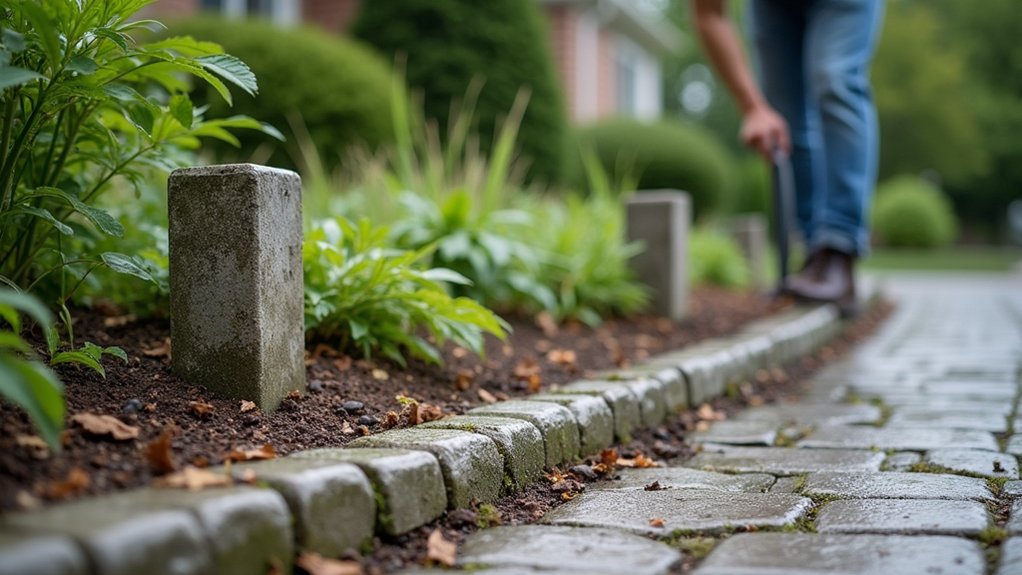
Protect your garden and driveway boundaries by checking them after storms, frost, and periods of extreme heat. Walk the full perimeter, look for cracks, leaning posts, loose gates, displaced bricks, and blocked drainage, then photograph defects and record changes. Use a level or moisture meter where needed, and don’t ignore signs that could create a safety or access risk. Before reinforcing anything, identify the material, likely cause, and any local compliance requirements—because the correct repair depends on what you uncover.
Inspect Garden and Driveway Boundaries for Damage
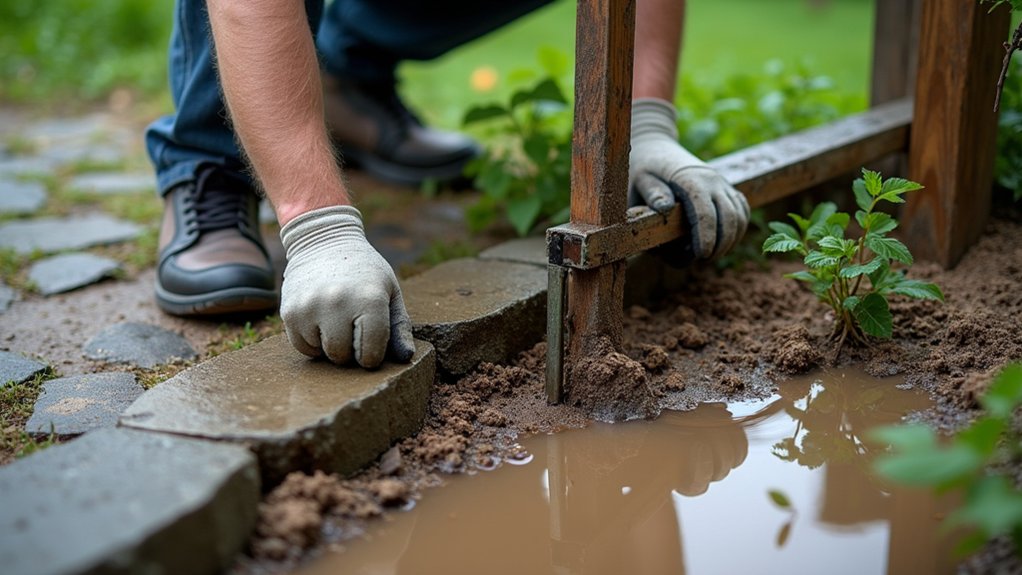
Before reinforcing any boundary, inspect garden edging, walls, fences, gates, and driveway borders for weather-related damage. Walk the full perimeter after rain, frost, high winds, or prolonged heat, and record locations that need attention. Check whether boundary materials remain aligned, secure, and suitable for local conditions. Use inspection tools such as a level, tape measure, flashlight, moisture meter, and camera to document measurements and access limitations.
Confirm that gates open safely, drainage paths remain clear, and driveway borders don’t create trip or vehicle hazards. Review property plans, easements, and local requirements before altering any boundary. Keep dated photographs and written notes for contractors, insurers, or inspectors.
If you find an immediate safety risk, isolate the area and arrange qualified assessment before proceeding with reinforcement work.
Spot Weather Damage in Fences, Walls, and Gates
After rain, frost, high winds, or heat, inspect fences, walls, and gates for movement, cracks, rot, corrosion, loose fixings, and water damage.
Check fence post stability by looking for leaning posts, widening gaps, soft ground, or failed concrete. Probe timber carefully for decay, especially near soil level and beneath caps where water collects.
Examine masonry walls for displaced blocks, stepped cracks, bulging faces, and eroded joints; record changes and seek qualified advice if movement threatens people or vehicles.
Inspect gates for sagging, binding, split rails, rusted frames, and damaged latches. Test gate hinge lubrication needs by listening for squeaking or feeling resistance, but don’t force seized hardware.
Photograph defects, note dates and weather conditions, and keep access routes clear. Follow local safety requirements and isolate unsafe areas until assessed.
Reinforce Garden and Driveway Boundaries Safely
Reinforce only after you’ve identified the cause of movement or damage and isolated any unsafe section. Wear gloves, eye protection, and sturdy footwear, then check local rules before altering a wall, fence, gate, or driveway edge.
For loose posts, expose the base, remove failed material, and reset each post plumb in suitable concrete, keeping drainage paths clear.
Repair masonry with compatible mortar, never covering active cracks without addressing movement or water entry.
Add approved brackets, rails, or anchors where the structure allows, and don’t obstruct sightlines, access routes, utilities, or rainwater flow.
Choose decorative boundary options that won’t become windborne or overload existing supports.
If you’re considering landscaping boundary ideas, secure edging firmly and avoid placing soil against walls or timber.
Hire a qualified professional for retaining structures, shared boundaries, or significant instability.
Maintain Boundaries Through Every Season
Seasonal maintenance helps you catch weather damage before it weakens a boundary: inspect walls, fences, gates, edging, and driveway margins after storms and during spring and autumn checks. Record cracks, leaning posts, blocked drainage, loose fixings, and soil erosion, then repair problems before they breach safety requirements or spread.
- Clear leaves, mud, and snow from drains, channels, and gate tracks to prevent standing water and frost damage.
- Prune branches that could strike structures, but confirm local rules before removing protected trees or hedges.
- Recoat timber, treat corrosion, and replace damaged materials with weather-resistant options suited to your landscaping design.
Check boundary heights, visibility, access, and shared-line responsibilities before making alterations. Keep dated photographs and receipts for inspections and repairs.
Regular cleaning and consistent finishes protect boundary aesthetics while helping you identify movement early. After severe weather, restrict unsafe areas and arrange qualified assessments where stability remains uncertain. Review maintenance before winter and summer extremes.
Frequently Asked Questions
Do I Need Planning Permission to Replace a Garden Boundary?
You usually don’t need planning permission to replace a garden boundary, but check local rules before starting. Permission may apply if the fence exceeds height limits, fronts a highway, borders a listed building, or sits in a conservation area.
Confirm ownership and any restrictive covenants too.
For durable garden boundary aesthetics, choose weather-resistant materials, set posts securely, and follow practical boundary maintenance tips.
Contact your planning authority if circumstances remain unclear before ordering materials or beginning work.
Which Boundary Materials Offer the Best Privacy?
For the best privacy, choose close-board timber fencing, composite panels, brick walls, or tall hedges. Timber and composite screens block views effectively, while brick provides excellent durability and sound barriers.
You’ll get the strongest protection from overlapping boards, sealed posts, and concrete-free drainage where appropriate. Check local height limits, restrictive covenants, and shared-boundary responsibilities before installing.
Choose wind-rated fixings, inspect joints annually, and maintain vegetation so it doesn’t damage your boundary during storms.
How Can I Resolve a Boundary Dispute With My Neighbour?
Start boundary dispute resolution by calmly discussing the issue with your neighbour and comparing deeds, plans, and approved boundary markers.
Use clear neighbor communication strategies: share dated photos, avoid assumptions, and propose a written agreement.
Don’t move fences, remove plants, or enter disputed land while matters remain unresolved.
Check local planning, title, and party-wall requirements, especially after storms.
If talks fail, use mediation, then seek professional legal advice before court.
Who Owns the Fence Between Two Properties?
You can’t determine fence ownership by appearance alone. Check your title deeds, property plan, and local land registry records; these may identify responsibility, though boundary markings aren’t always exact.
If documents remain unclear, ask your neighbour to compare records, then seek a surveyor or legal advice before altering anything.
Agree fence maintenance in writing, including storm repairs and boundary landscaping, and follow local planning or shared-boundary requirements to prevent disputes.
What Tools Are Needed for Boundary Installation?
You’ll need a tape measure, stakes, string line, spirit level, post-hole digger, shovel, hammer, drill, saw, screws, gravel, concrete, gloves, eye protection, and a utility-locating tool.
For fence installation, add post clamps and a level brace.
Before digging, check property lines, permits, underground services, and local setback rules.
For boundary repair, inspect drainage and weather damage, then choose treated, corrosion-resistant materials.
Measure twice; cut once, and document everything.
Conclusion
With each storm, frost, and heatwave, your garden and driveway boundaries face a quiet test. Walk the line, check for cracks, leaning posts, loose gates, and blocked drainage, then repair small faults before they become costly failures. Reset posts securely, use compatible mortar, and add suitable brackets or anchors where needed. Keep branches trimmed and surfaces clear, and don’t ignore unsafe damage. A seasonal inspection keeps your property stable, compliant, and ready for whatever weather brings.