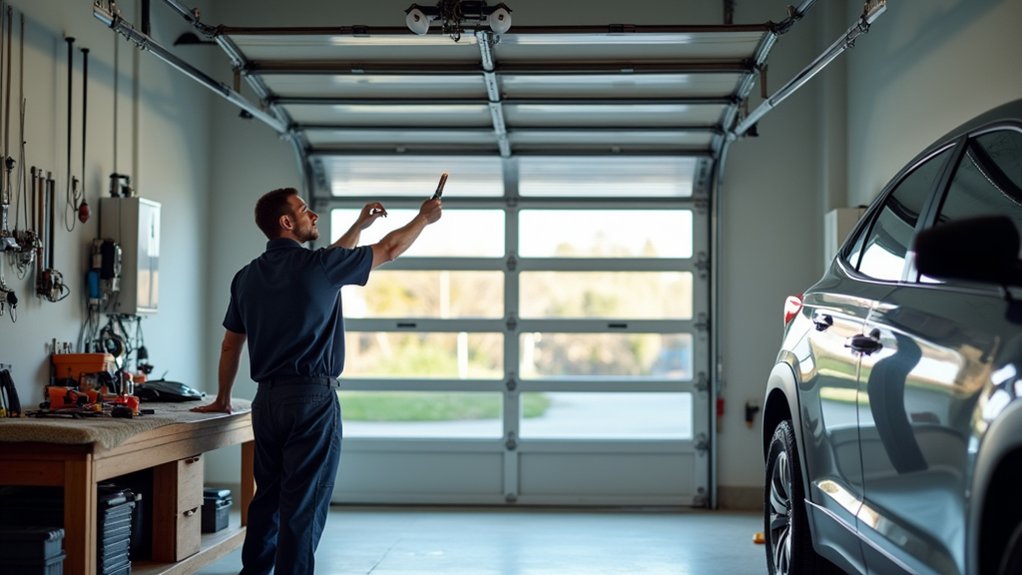
You’ll keep your garage door running smoothly by cleaning its panels, inspecting for rust or loose hardware, and lubricating hinges, rollers, and tracks with silicone spray. Test the door’s balance and safety reverse feature each month, then tighten fasteners and clear track obstructions. These simple steps reduce noise, friction, and wear, but certain warning signs—such as broken springs, bent tracks, or electrical faults—require professional attention. Recognizing them early can prevent costly damage and serious injury.
Clean and Inspect Your Garage Door
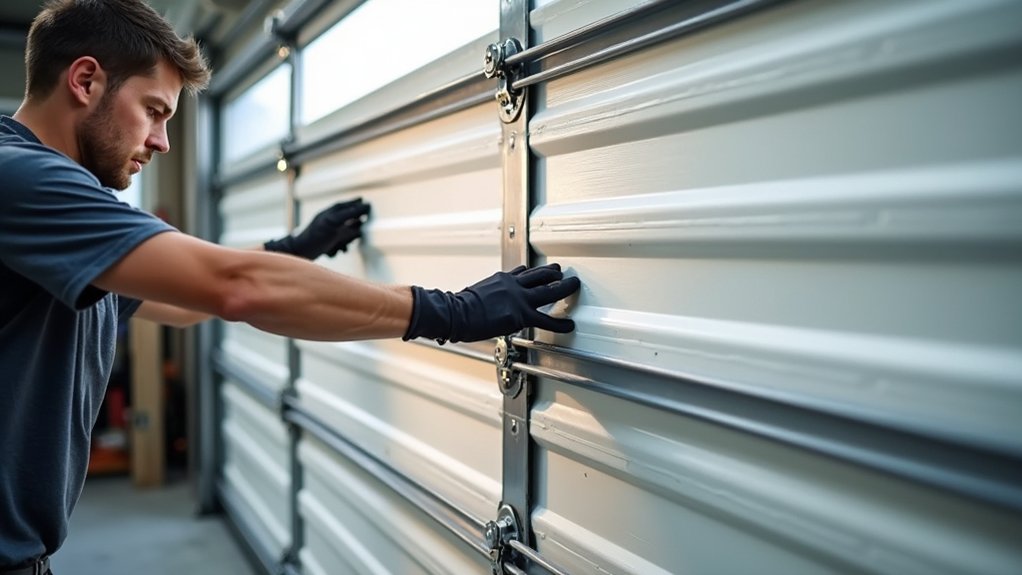
Start by cleaning and inspecting your garage door at least twice a year. Wash exterior panels with mild soap, water, and a soft brush; avoid abrasive cleaners that can damage finishes.
Check for rust, dents, peeling paint, cracked weatherstripping, and loose fasteners. Examine hinges, rollers, cables, and tracks for visible wear, but don’t adjust springs or cables yourself.
Test the door’s balance by disconnecting the opener only if you know the manufacturer’s procedure, then raise the door manually and confirm it stays in place.
Inspect bottom seals and perimeter weatherstripping for gaps or brittleness, replacing damaged sections to support insulation improvement and block drafts, moisture, and pests.
Cleaning also preserves garage door aesthetics. If you notice frayed cables, warped panels, or unusual movement, schedule professional service promptly rather than operating the door.
Lubricate Moving Parts the Right Way
After cleaning and inspecting the door, lubricate its moving parts to reduce friction, noise, and wear. Use a garage-door lubricant or lightweight silicone spray; avoid grease, which attracts dust and can harden. Apply a small amount to each hinge pivot, working the door manually afterward to distribute it. Proper hinge lubrication helps prevent stiff movement and premature wear.
For roller maintenance, place lubricant on the roller bearings or stems, not on the wheel’s outer surface or track. Wipe away excess so dirt won’t accumulate.
Lubricate the torsion or extension springs sparingly, along with the bearings and end plates, if accessible. Don’t spray the cables, belts, or the track itself. Keep the nozzle controlled, protect painted surfaces, and follow your door manufacturer’s recommendations.
Reapply every few months, or sooner if operation becomes noisy.
Test Garage Door Balance and Safety
A balanced garage door should stay in place when you lift it manually and release it around waist height. If it drops, rises, or feels unusually heavy, stop using it and have a professional adjust the spring tension. Never alter springs yourself; their stored energy can cause serious injury.
Test the opener’s safety reversal monthly by placing a solid object, such as a wood block, beneath the closing door. It should reverse immediately on contact. Also verify sensor alignment:
- Clean both sensor lenses with a soft, dry cloth.
- Ensure each sensor faces the other directly.
- Check that indicator lights remain steady.
- Remove boxes, tools, or debris from the doorway.
- Test reversal after any sensor adjustment.
Keep children and pets away during testing. If the door fails either test, disconnect the opener and schedule qualified service promptly.
Tighten Hardware and Check Door Tracks
With the door’s balance, sensors, and reversal function verified, inspect its hardware and tracks for looseness or damage. During your Hardware inspection, examine hinge screws, roller brackets, bearing plates, and fasteners. Tighten loose nuts and bolts with a wrench, but don’t overtighten them or distort the panels.
Check rollers for cracks, excessive wear, or binding, and replace damaged components according to the manufacturer’s specifications.
Next, assess Track alignment. Tracks should remain straight, parallel, and firmly attached to the wall and ceiling. Look for dents, gaps, or rubbing marks that could obstruct roller movement.
Loosen mounting bolts slightly to make small alignment adjustments, then retighten them securely. Don’t bend tracks into position or remove them while the door is loaded.
Wipe away debris, but avoid grease on track surfaces, since it attracts dirt and can impede smooth travel.
Know When Garage Door Repairs Need a Pro
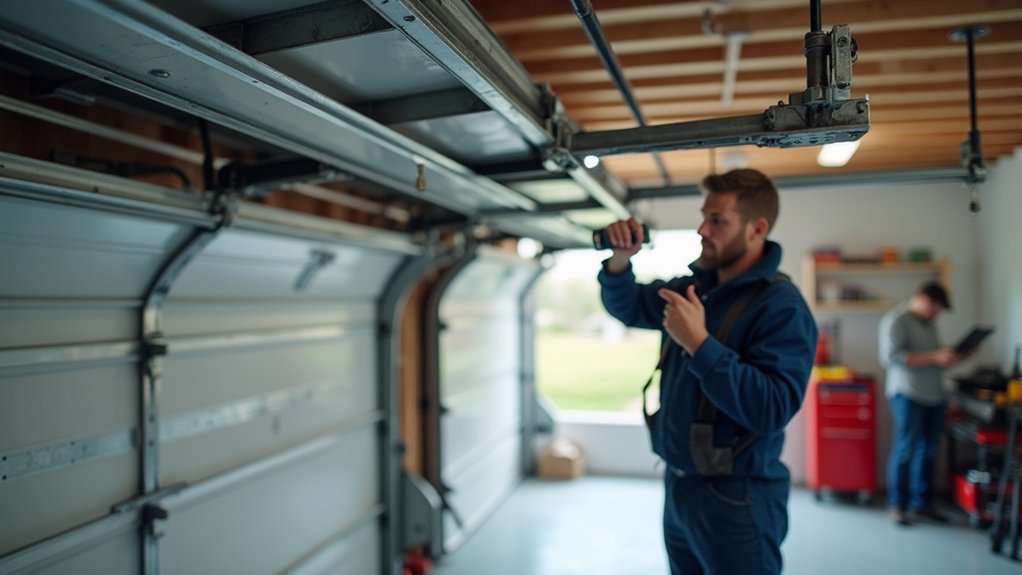
If a garage door has a broken spring, frayed cable, bent track, damaged panel, or motor that won’t respond, stop using it and call a qualified professional. These components carry substantial tension or weight, so DIY repairs can cause severe injury or additional damage.
Contact a technician when you notice:
- Loud snapping, grinding, or repeated popping
- Uneven movement, sagging, or sudden reversal
- A door that won’t stay open or close completely
- Loose cables, broken rollers, or visibly warped tracks
- Electrical odors, sparks, or unresponsive controls
A professional can balance the door, test safety sensors, replace worn parts, and verify opener force settings.
Ask for a written estimate and warranty before work begins. During service, discuss Garage door aesthetics, such as panel matching and updated hardware.
You can also request insulation upgrades to improve comfort and energy efficiency without compromising safe operation or curb appeal.
Frequently Asked Questions
How Often Should Garage Door Weatherstripping Be Replaced?
You should replace garage door weatherstripping every two to three years, or sooner if it cracks, hardens, shrinks, or no longer seals gaps.
Perform a weatherstripping inspection each season, especially after extreme heat or cold, and check for drafts, daylight, water, and pest entry.
Clean the threshold before installation, then confirm the seal contacts evenly.
While servicing the door, apply garage door lubrication to hinges and rollers, but keep lubricant off the weatherstripping.
What Type of Garage Door Opener Is Most Energy-Efficient?
The most energy-efficient choice is a DC-powered, direct-drive garage door opener with a high-efficiency motor and standby-sleep mode. A stitch in time saves nine: choose an ENERGY STAR-rated model, which minimizes electricity use during operation and idling.
You’ll also want battery backup, LED lighting, and smart controls that avoid unnecessary activation.
Confirm opener compatibility with your door’s weight and balance.
Regular garage door maintenance, including lubrication and spring checks, further reduces strain and energy consumption.
Can Smart Garage Door Technology Improve Home Security?
Yes, smart garage door technology can improve your home security. Smart sensors detect unexpected movement, a raised door, or forced entry, while security alerts notify you immediately through your phone.
You can verify the door’s status remotely, close it automatically, and grant temporary access without sharing permanent codes.
Choose encrypted communication, enable two-factor authentication, and update firmware regularly.
Don’t rely solely on automation; inspect hardware and keep manual locks maintained for dependable protection.
How Can I Reduce Noise From My Garage Door Opener?
Reduce opener noise by tightening loose hardware, lubricating moving parts, and isolating vibration.
Apply Garage door lubrication to rollers, hinges, springs, and the chain or screw drive with a manufacturer-approved product; don’t use grease on tracks.
For additional Noise reduction techniques, replace worn metal rollers with nylon versions, install anti-vibration pads beneath the opener, and adjust the chain or belt tension.
If grinding persists, have a technician inspect the motor, bearings, and balance.
What Should I Do During a Garage Door Power Outage?
During a garage door power outage, disconnect the opener and use the manual release to operate the door by hand. Pull the emergency-release cord only when the door is fully closed, then lift it smoothly and keep clear of its path.
Don’t force a jammed door; call a technician.
If your opener has Battery backup, test it regularly and replace its battery according to the manufacturer’s instructions.
Keep the door locked when unattended.
Conclusion
Keep your garage door running smoothly by cleaning panels, inspecting for rust or damage, lubricating hinges and rollers with silicone spray, and tightening loose hardware. Test the balance and monthly auto-reverse function; a door that slams shut is waving a warning flag. One homeowner avoided a costly spring failure after noticing that imbalance during a routine check. Don’t force repairs involving springs, bent tracks, or electrical components. Call a qualified professional to protect your family and extend the door’s service life.