
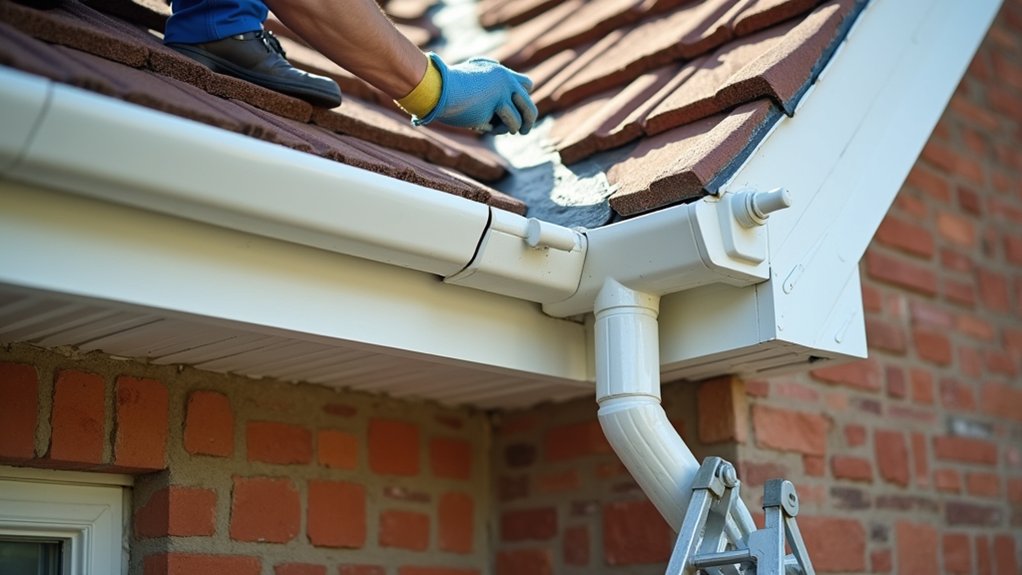
Your roofline may look sound from the ground, yet small cracks, blocked vents, or early rot can allow damp to spread unnoticed. Inspecting fascias and soffits safely starts with binoculars, a sturdy ladder, and a clear plan. Check for staining, peeling paint, sagging, pest damage, and faulty gutter joints, then clean and maintain the area regularly. Knowing which defects you can fix yourself—and which require a roofing professional—could prevent a far more costly repair.
Gather Tools and Plan a Safe Inspection
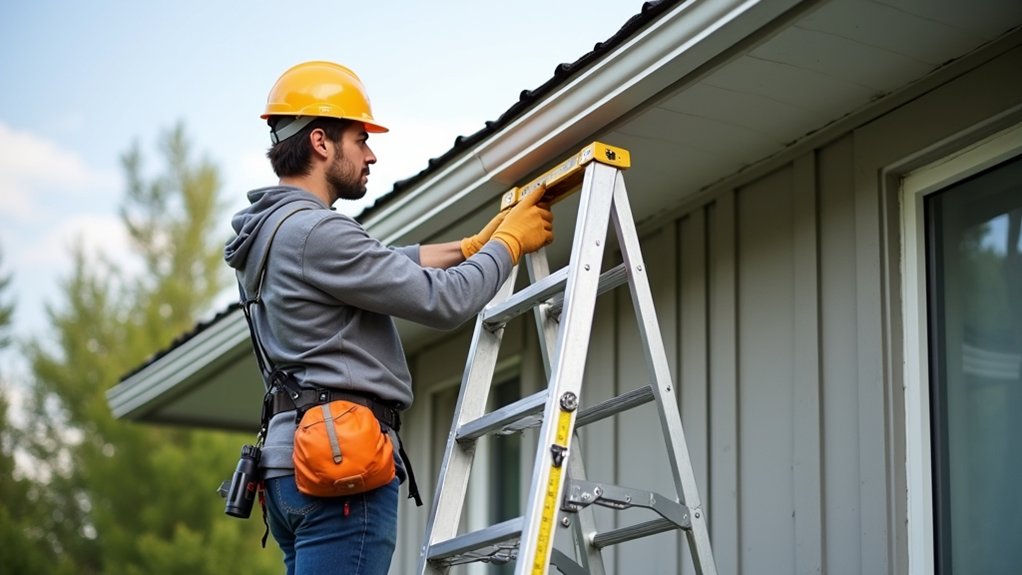
Before inspecting roofline components, gather a sturdy ladder, non-slip footwear, gloves, eye protection, a torch, binoculars, a tape measure, a camera or phone, and a notepad. Check every item before you leave the ground; tool selection affects both accuracy and safety.
Choose a ladder rated for your weight, with undamaged feet and clean, secure rungs. Position it on firm, level ground, away from slippery surfaces, overhead cables, and opening doors.
Follow essential Safety precautions: tell someone your plan, check the weather, and never climb in rain, strong winds, or icy conditions. Keep three points of contact while climbing, and don’t overreach.
If the roofline exceeds a safe working height, use a qualified roofer instead.
Plan your route, note access restrictions, and keep children and pets clear.
Inspect Fascias and Soffits From Ground Level
Start from the ground with binoculars and inspect the fascias and soffits along every elevation, looking for peeling paint, cracks, bowing, staining, mould, holes, or sections that have come loose.
Check whether joints, corners, and edges remain straight and secure, and note gaps beneath the roof tiles or along the gutter line.
Look for overflowing gutters, damaged sealant, and water marks that could indicate drainage problems, without climbing or probing the surfaces.
Walk around the property in daylight, then repeat the check after rain if possible.
Photograph anything unusual and record its location for closer assessment by a qualified roofer.
Consider how existing Color options suit your home, but prioritise Material durability when planning replacement work.
Don’t lean ladders against roofline boards; arrange safe access if further inspection is necessary.
Check for Rot, Cracks, and Pest Damage
Closer inspection can help identify whether discolouration or distortion points to rot, cracking, or pest damage. Use a stable ladder only if you’re confident working safely, and wear gloves when handling older timber.
Press suspect areas gently with a screwdriver. Soft, crumbly wood indicates Wood decay, often linked to prolonged dampness.
Check for splits, open joints in the material, bubbling paint, and holes surrounded by dust or droppings. These signs may indicate a Pest infestation, including beetles, wasps, or birds nesting behind the fascia or soffit.
Look for chewed edges and listen for movement, but don’t disturb active nests, particularly during spring and summer.
Photograph affected areas and note their location. Arrange a qualified roofer or pest controller if damage is extensive, structural, or unsafe to reach.
Examine Guttering, Joints, and Roof Edges
Inspect the guttering, joints, and roof edges for signs of leaks, sagging, rust, or separation. Check after heavy rain, when faults are easier to spot, and look for water marks on fascias, damp patches, or overflowing channels.
Clear leaves, moss, and silt by hand or with a suitable scoop, then flush each run with water. This basic gutter maintenance helps you identify blockages and confirm that outlets discharge freely.
Examine every union, stop end, corner, and downpipe connection: replace perished seals and tighten loose fixings, but don’t overtighten plastic fittings. Check joint integrity by watching for drips while water flows.
Inspect roof edges for lifted tiles, damaged mortar, and loose flashing. Arrange a qualified roofer for high or unsafe areas, especially on older UK properties.
Improve Roofline Ventilation and Prevent Damp
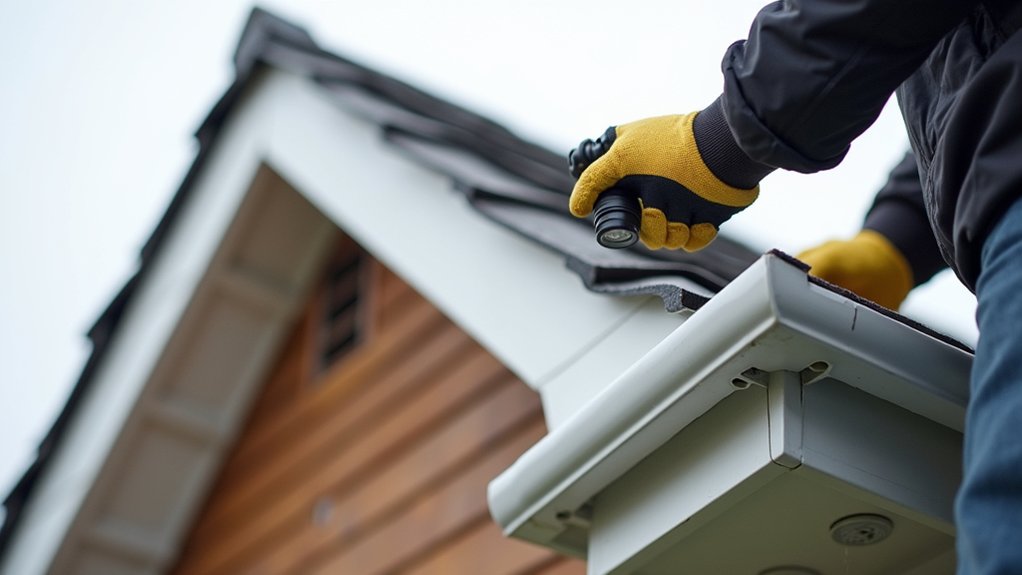
You should clear blocked roof and soffit vents so fresh air can circulate through the roof space.
Check that soffit openings remain unobstructed, particularly after insulation work or repairs.
Good airflow helps prevent moisture build-up, condensation, and damp in UK homes.
Clear Blocked Ventilation
Blocked soffit vents can trap warm, moist air in the roof space, increasing the risk of condensation, damp and timber decay.
Put on gloves and use a stable ladder to remove leaves, cobwebs, insect nests and other debris from vent openings. Brush gently with a soft tool, avoiding damage to the soffit, mesh or surrounding sealant.
If paint, mortar or nesting material has hardened inside the vents, don’t force it; arrange a roofer’s inspection.
Keep insulation away from eaves ventilation routes, but don’t compress or disturb it unnecessarily.
Check that guttering isn’t overflowing onto the soffits, as persistent wetting can undermine moisture prevention efforts.
Replace cracked vent strips or damaged grilles with suitable products for UK roofs.
If you find rot, staining or mould, seek professional advice before carrying out repairs.
Check Soffit Airflow
Once the vents are clear, check that air can move freely from the soffits into the roof space.
From a loft hatch, look along the eaves for insulation, stored items or replacement fascias blocking the ventilation gap. Keep insulation below the eaves tray, and fit trays where needed to preserve airflow pathways beneath the roof covering.
Outside, inspect each soffit vent for paint, dirt, cobwebs or insect mesh that restricts its openings. Don’t seal intentional ventilation gaps with mastic or expanding foam.
Compare both sides of the roofline, since uneven airflow can indicate a concealed obstruction or poorly fitted section. In older UK homes, check whether vents were installed during past roof work and ask a roofer to assess inaccessible areas.
Good ventilation efficiency depends on continuous, unobstructed intake along the eaves.
Prevent Moisture Build-Up
How can better roofline ventilation help prevent damp? It lets moist air escape from your loft, reducing condensation on rafters, felt and insulation. Check that soffit vents aren’t blocked by paint, debris or nesting materials, and confirm that ridge or tile vents remain clear.
Don’t push roof insulation into the eaves, as this can restrict airflow; fit eaves baffles where necessary to maintain a ventilation channel.
Look for water staining, mould, peeling surfaces or musty smells, and investigate leaks around tiles, valleys and roof penetrations promptly.
Keep gutters and downpipes clear so overflowing rainwater doesn’t saturate fascias and soffits.
Before exterior painting, replace rotten timber or damaged uPVC and allow surfaces to dry fully.
If condensation persists, improve loft ventilation and ask a qualified roofer to assess the roofline.
Clean and Maintain Fascias and Soffits
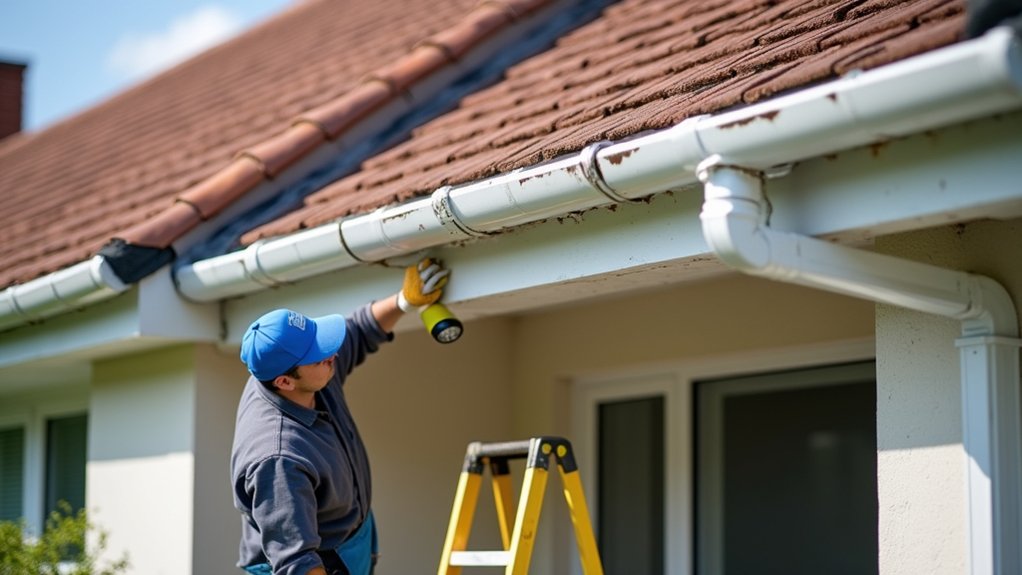
Clean fascias and soffits regularly to remove dirt, moss, cobwebs and bird deposits before they trap moisture or conceal damage. Use a soft brush, warm water and mild detergent, working carefully from a stable ladder or, preferably, ground-level equipment.
Don’t pressure-wash roofline boards, as forceful water can enter joints and vents. Include the eaves during gutter cleaning, clearing leaves and checking that water flows freely through outlets without splashing against the fascia. Rinse surfaces thoroughly and let them dry.
Schedule cleaning in mild weather, avoiding icy conditions and strong winds. For timber, inspect the coating annually and complete paint maintenance by lightly sanding flaking areas, applying suitable primer, and repainting exposed surfaces.
Keep soffit vents clear, but don’t block them with paint or sealant. Record your checks and arrange professional access where height or safety makes DIY work unsuitable.
Repair or Replace Damaged Roofline Components
Assess the damage to decide whether a minor repair will suffice or replacement is safer. Choose durable materials suited to your roofline and local UK weather conditions, and match existing finishes where possible.
If timber, uPVC or guttering is extensively split, rotten or loose, don’t delay professional replacement.
Assess Damage Severity
Before deciding whether to repair or replace a roofline component, examine the damage closely and identify its cause. Check fascias, soffits, bargeboards and guttering from ground level, then use a stable ladder only if it’s safe.
Look for cracks, splits, holes, peeling paint, staining, sagging and soft timber. Probe suspected rotten wood gently with a screwdriver, but don’t force it or disturb fixings.
Note whether roof damage, blocked gutters, leaks or condensation has caused the problem. Assess how far deterioration extends and whether adjacent sections feel loose or weakened.
Pay particular attention to exposed fixings, joints and areas around eaves, where hidden decay can affect structural integrity.
Photograph findings and record their location. If you spot widespread rot, movement, mould or water entering the building, arrange a qualified roofer’s inspection promptly.
Choose Repair or Replacement
Once you’ve established the damage and its cause, decide whether the roofline component can be repaired safely or needs replacing. You may repair a small crack, loose joint or isolated area of rot if the surrounding fascia, soffit or bargeboard remains sound.
Replace sections showing widespread decay, warping, splitting, persistent damp or weakened fixings, as patching won’t provide reliable protection.
Consider Cost considerations carefully: include access equipment, labour, waste removal and any related repairs, not just the material price.
Replacement often offers better value when defects keep returning or water has reached the roof structure.
Assess Material longevity too; a durable, weather-resistant product can reduce future maintenance in Britain’s wet, windy conditions.
Don’t compromise safety or ventilation. If damage affects structural support or you’re unsure, ask a qualified roofer to inspect it.
Match Materials and Finishes
Match the new or repaired fascia, soffit or bargeboard to the existing roofline for material, profile, colour and finish. Check whether you’re replacing uPVC, timber or fibre-cement components, and confirm Material compatibility with adjoining boards, gutters, fixings and sealants.
Measure the existing profile before ordering, because slight differences can leave gaps or prevent secure installation.
For timber, match the species, grain and preservative treatment, then prime and paint all faces and cut edges.
With uPVC, compare the manufacturer’s colour code and surface texture; sunlight may have faded older boards, so test samples against a clean section.
Good finish matching includes trims, joints, vents and corners, not just the main board.
Don’t mix incompatible products, and follow UK manufacturer guidance.
If an exact match isn’t possible, replace the complete visible run for a consistent appearance.
Know When to Call a Roofing Professional
Call a roofing professional when damage extends beyond a simple, accessible repair or when you’re unsure how serious the problem is. Contact one promptly if fascias or soffits feel loose, show widespread rot, sag, or expose the roof edge.
Water stains, damp insulation, mould, or nesting pests may indicate concealed damage requiring proper investigation. Don’t climb onto the roof or work near overhead cables; use a qualified contractor with suitable access equipment and public liability insurance.
Ask for a written quotation, including materials, labour, waste removal, and ventilation requirements. Check whether the work affects existing Roofing warranties, and keep photographs, invoices, and reports for potential insurance claims.
In England, Scotland, and Wales, confirm the contractor’s qualifications and check local requirements before structural alterations. Arrange regular inspections after repairs to prevent recurrence.
Frequently Asked Questions
How Often Should Fascias and Soffits Be Professionally Inspected?
You should arrange a professional inspection of your fascias and soffits every two to three years, creating a sensible inspection schedule for most UK homes. Book one annually if your property faces strong coastal winds, heavy rainfall, overhanging trees, or has older timber components.
Also request an inspection after severe storms, leaks, or visible damage.
Your maintenance frequency may increase when inspectors identify rot, blocked ventilation, loose fixings, peeling paint, or pest entry points requiring prompt repairs.
Which Materials Are Best for Replacement Fascias and Soffits?
uPVC is usually the best replacement for fascias and soffits because it offers strong material durability, low maintenance and good resistance to damp, rot and insects.
Choose aluminium when you want a lightweight, long-lasting option for larger rooflines or contemporary homes.
Timber suits traditional properties, but you’ll need to paint and inspect it regularly.
Compare warranties, ventilation requirements and Aesthetic options, and guarantee a qualified UK installer follows current building regulations.
Can Roofline Maintenance Affect My Home Insurance Coverage?
Could neglected fascias turn a small leak into an insurance headache? Yes, roofline maintenance can affect your home insurance coverage.
Insurers expect you to prevent foreseeable damage and meet your policy’s coverage requirements. Check fascias, soffits, gutters, and flashing regularly, then keep dated photographs, invoices, and contractor reports.
Report significant defects promptly. Insurance implications vary, so read your UK policy carefully and ask your insurer before work begins.
Are Planning Permissions Required for Replacing Fascias and Soffits?
Usually, you won’t need Planning permissions to replace fascias and soffits like-for-like, provided you don’t alter the roof’s shape, appearance, or structure.
However, listed buildings, conservation areas, and local restrictions may require consent, so check with your council before starting.
Building regulations generally don’t apply to straightforward replacements, but they can apply if you modify structural elements, insulation, ventilation, or fire safety.
Use competent installers and keep invoices and approvals.
How Much Does Professional Fascia and Soffit Replacement Typically Cost?
In today’s modern age, you’ll typically pay £1,500–£4,000 for professional fascia and soffit replacement on an average UK semi-detached house.
Your cost estimation depends on roof size, access, labour, scaffolding, removal, and repairs to underlying timber.
Use material comparison: uPVC usually costs less and needs minimal maintenance, while aluminium or timber costs more.
Ask for itemised quotes, check VAT, warranties, and whether contractors include waste disposal and scaffolding.
Conclusion
Regular roofline checks protect your home from costly damp and structural damage. In the UK, blocked or poorly ventilated roof spaces contribute to many avoidable moisture problems, so don’t overlook clean soffit vents and sound gutter joints. Inspect from the ground first, record changes, and tackle minor defects promptly. If you find widespread rot, loose sections, or unsafe access, don’t take risks—call a qualified roofing professional. A little maintenance now can extend your fascias and soffits’ service life.