
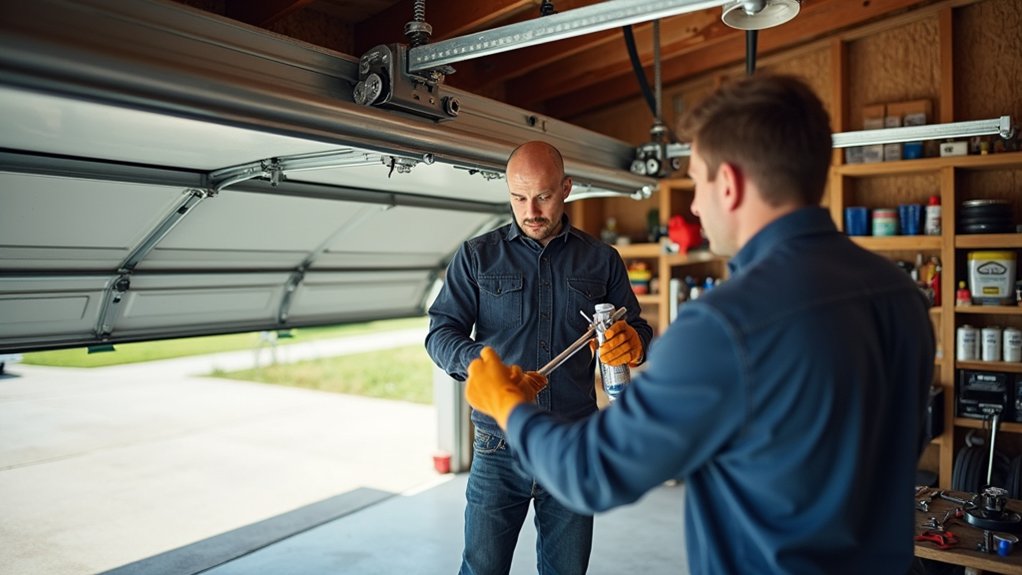
About 30,000 garage-door injuries occur in the United States each year, making routine servicing a safety issue rather than a simple convenience. Before you adjust an automatic opener or repair a manual mechanism, disconnect power, secure the door, and identify worn springs, cables, rollers, tracks, and hinges. You can handle basic inspection and lubrication, but one mistake around a spring or cable can cause severe injury—so knowing where to stop matters.
Identify Common Garage Door Mechanism Problems
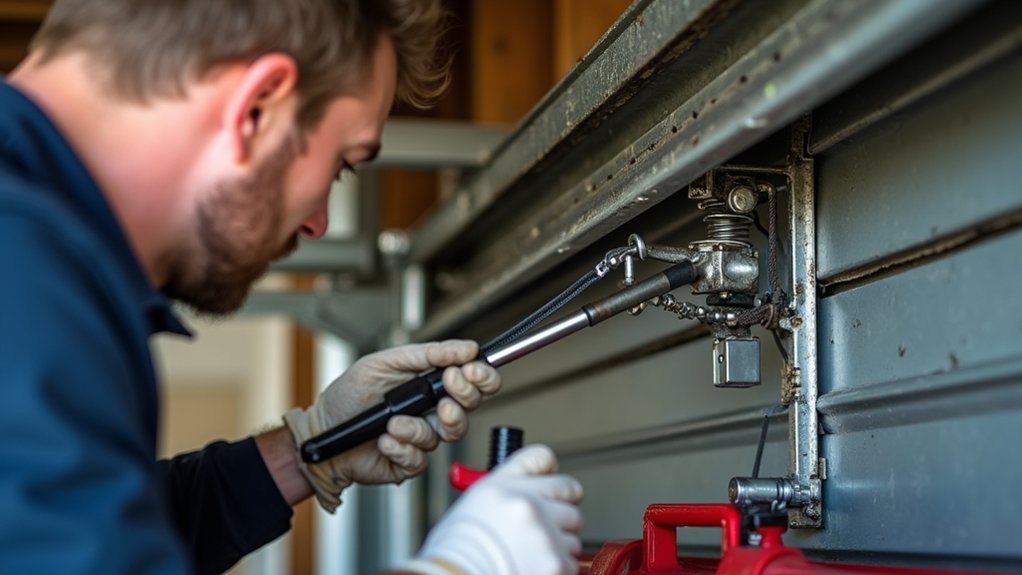
When your garage door starts sticking, grinding, shaking, or moving unevenly, inspect it promptly for common mechanism problems. Check the tracks for dents, loose fasteners, or debris that can obstruct travel.
Examine rollers for cracks, flat spots, or excessive wear, and look for frayed or slack cables. Test the springs visually for gaps, rust, or distortion, but don’t adjust or remove them yourself.
A weak opener may struggle because of worn gears, a damaged chain, or misaligned sensors. On manual doors, a heavy lift often indicates spring or balance trouble.
Listen for new squealing, popping, or grinding sounds and note when they occur. Don’t force the door or bypass safety sensors.
Although Garage door aesthetics and historical garage door designs matter, reliable operation and structural integrity must guide every service decision.
Prepare Safely for Garage Door Repairs
Before starting any garage door repair, disconnect the opener from power and keep children, pets, and vehicles away from the work area.
Close the door fully, if possible, and secure it against movement with appropriate clamps or locking devices.
Wear safety glasses, gloves, and sturdy footwear, and use a stable ladder on level ground.
Inspect the workspace for clutter, moisture, and trip hazards before gathering tools.
Don’t work alone when the door is heavy or unstable; arrange help or call a qualified technician.
Avoid loose clothing and keep hands clear of pinch points.
Protect nearby surfaces while preserving Garage door aesthetics.
When you finish, use weatherproofing techniques around exposed gaps only after confirming the repair is safe.
Never remove loaded components or force unfamiliar parts.
Service Manual Garage Door Components
Once the work area is secure, use the garage door’s service manual to identify each component and follow the manufacturer’s repair procedures. Disconnect manual-door hardware as directed, then inspect hinges, rollers, tracks, cables, brackets, and fasteners for wear, bending, or looseness.
Don’t remove a torsion spring, lift cable, or counterbalance part unless the manual specifically authorizes the procedure and you have the required tools; stored tension can cause severe injury. Tighten approved fasteners without overtightening, and replace damaged parts with manufacturer-specified equivalents.
Apply Garage door lubrication sparingly to hinges, rollers, bearings, and springs; keep lubricant off tracks and braking surfaces. Inspect seals, thresholds, and panels while Weatherproofing garage doors, replacing cracked or hardened weatherstripping.
Test the door manually for smooth, balanced movement before restoring normal use.
Troubleshoot Automatic Garage Door Openers
When your automatic garage door opener fails, check the power supply and confirm the safety sensors are aligned and unobstructed.
Test both the remote and wall control to identify whether the problem affects one device or the opener itself.
Keep clear of the door’s moving parts, and disconnect power before inspecting or servicing components.
Check Power and Sensors
Is your automatic garage door opener unresponsive or reversing unexpectedly? Start by checking the power supply, then inspect the safety sensors. Disconnect power before opening the motor housing, and call a qualified technician if you find damaged wiring or burning odors.
- Verify power: Confirm the opener’s plug sits firmly in the outlet. Check the circuit breaker and reset it once if tripped. Don’t use extension cords or bypass protective devices.
- Inspect sensors: Clean both lenses with a soft, dry cloth. Look for loose wires, cracked housings, or obstructed beams. Replace damaged components rather than improvising repairs.
- Correct sensor alignment: Position the sensors directly across from each other, at equal height, and tighten their brackets. Their indicator lights should remain steady when the door area is clear.
Test the opener only after restoring power and keeping people clear.
Test Remote and Wall Controls
Test the remote and wall control separately to identify whether the problem involves one control or the opener itself. Replace the remote’s batteries, then press its button while standing close to the opener. If it works, perform Remote programming for lost or inconsistent operation, following the manufacturer’s instructions. Keep the door’s path clear during every test, and never stand beneath a moving door.
Next, press the wall button. If it operates the opener but the remote doesn’t, inspect the remote, receiver, and programming. If neither control works, disconnect power before examining Wall control wiring. Look for loose terminals, damaged insulation, or pinched wires, but don’t bypass safety circuits.
Restore power and test again. Call a qualified technician if wiring appears damaged, the opener hums without moving, or controls behave unpredictably.
Fix Springs, Cables, Tracks, and Rollers
Garage door springs, cables, tracks, and rollers require careful inspection and precise repairs because a failure can cause serious injury or property damage. Don’t adjust torsion or extension springs unless you’re trained and have the correct tools; spring tension can release violently. Disconnect power and secure the door before inspecting other hardware.
- Inspect cables: Look for fraying, rust, kinks, or loose drums. Maintain cable alignment, and replace damaged cables as a matched set when required.
- Straighten tracks: Tighten mounting hardware, remove debris, and correct minor bends carefully. Replace severely damaged tracks rather than forcing them.
- Service rollers: Replace cracked or seized rollers, then lubricate bearings with a garage-door lubricant. Keep fingers clear of moving joints.
If a spring, drum, or cable needs adjustment, hire a qualified technician. Never remove bottom brackets or lift a door with disconnected cables; these components store dangerous energy and can cause sudden movement.
Test and Maintain Garage Door Safety Features
Keep the door’s safety features in working order by testing them regularly and correcting problems promptly. Place a solid object, such as a piece of lumber, beneath the open door’s path, then close it with the opener. The door should reverse immediately on contact.
Test the photoelectric sensors by interrupting their beam while closing; the door should stop and reverse. Keep sensor lenses clean, aligned, and free from obstructions.
Check the emergency-release handle, and confirm you can lift the door manually without excessive force.
Inspect wall controls and remotes for reliable operation, keeping children away from moving components.
Include these checks in seasonal maintenance, especially after temperature changes or storms.
Clean, intact weather seals support safety and garage door aesthetics.
Never bypass, disable, or tape over safety devices during testing or operation.
Know When to Call a Garage Door Professional
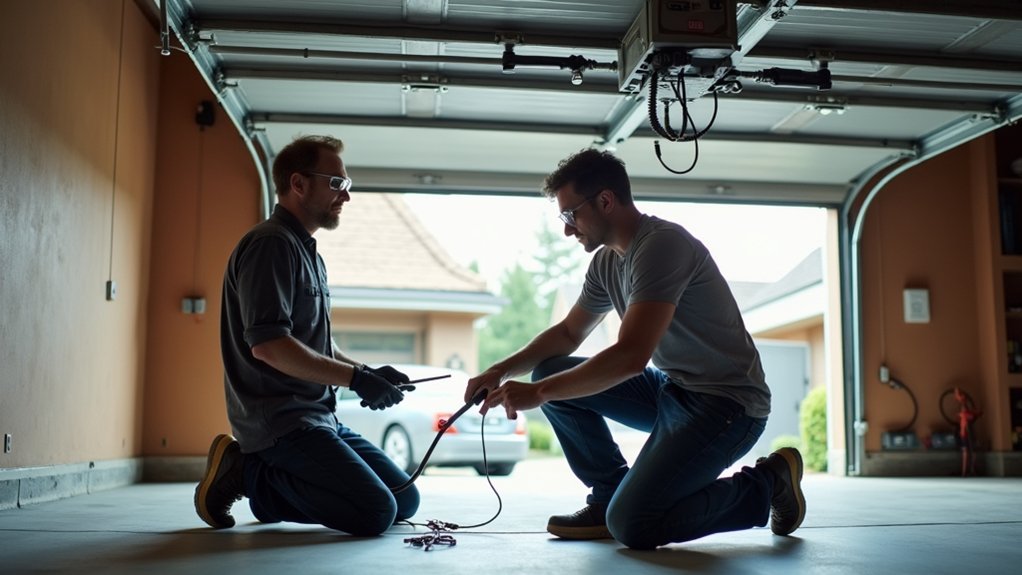
When a garage door binds, falls, operates unevenly, or makes loud grinding or snapping sounds, call a qualified professional instead of continuing to use it. These symptoms can indicate damaged springs, cables, tracks, or lifting hardware that may cause serious injury.
Contact a technician when you notice:
- Broken springs, frayed cables, bent tracks, loose drums, or doors that feel unusually heavy.
- A motor that hums, reverses unexpectedly, or fails after you’ve checked the batteries and power supply.
- Repeated safety-sensor failures, structural damage, or repairs requiring specialized tools.
Don’t adjust torsion springs, remove cables, or bypass sensors yourself. Secure the doorway, keep children away, and disconnect power only when instructed.
A professional can restore reliable operation while preserving your garage door aesthetics. Ask whether the work includes warranties and confirm that insurance coverage protects against related damage.
Frequently Asked Questions
How Much Does Professional Garage Door Repair Typically Cost?
Professional garage door repair typically costs $150–$350, though you’ll usually pay $80–$150 for minor adjustments.
Major component replacements can cost $300–$1,000 or more.
Garage door openers commonly cost $150–$500 to repair, while broken springs, cables, or panels can increase the bill.
Ask for a written estimate, confirm labor and parts warranties, and don’t bypass safety sensors.
A qualified technician can identify hazards and prevent further damage safely.
How Long Does a Garage Door Repair Usually Take?
You’ll usually spend one to three hours on a garage door repair, though complex damage can take longer. Think of your door as a tired gatekeeper: a simple adjustment lets it swing promptly, while a broken spring demands careful attention.
Technicians may need extra time to balance spring tension, replace cables, or complete opener installation. Don’t force movement or handle springs yourself; their stored energy can cause severe injuries.
Schedule professional service for safe, accurate repairs.
Which Garage Door Materials Offer the Best Durability?
For the best durability, choose galvanized steel or aluminum, depending on your climate and maintenance priorities.
This Garage door materials durability comparison shows steel resists impacts, warping, and daily wear, while aluminum resists rust and weighs less.
Fiberglass handles moisture well but can crack, and wood offers strength yet requires regular sealing.
You’ll get the longest service life by selecting quality hardware, scheduling inspections, and having damaged springs or cables professionally serviced.
How Can I Choose the Right Replacement Garage Door?
Choose a replacement garage door by matching your home’s architecture, climate, budget, and opener capacity. Think of it as selecting a reliable vehicle: the right fit matters more than flashy features.
Compare Garage door style options, including steel, aluminum, wood, and composite, for strength and maintenance needs.
Evaluate Window options for daylight, privacy, and security.
Measure the opening precisely, verify wind-load requirements, and hire a qualified installer; never reuse incompatible hardware or springs.
Should I Replace or Insulate My Garage Door?
Choose insulation if your door works reliably, seals properly, and you mainly want better temperature control or lower energy costs. Garage door insulation can improve comfort, but it adds weight, so verify that your opener, springs, and tracks can handle it.
Choose replacement when panels are warped, severely rusted, unsafe, or repeatedly failing. For Replacement vs repair, have a qualified technician inspect springs and cables; never adjust torsion springs yourself.
Also check manufacturer ratings before adding insulation.
Conclusion
Your garage door is a moving shield, so don’t treat repairs casually. Disconnect power, secure the door, and inspect each mechanism before servicing it. Lubricate sparingly, replace worn parts with approved components, and test the opener’s reversal and sensor functions every time. Never adjust torsion springs or lift cables without proper training. If the door remains unsafe, unbalanced, or unusually noisy, stop work and call a qualified professional. Safe maintenance protects your property, family, and warranty.