
Brixton’s property market remains competitive, with strong demand for Zone 2 access, period homes, well-connected flats, and its established food and cultural scene. You’ll find prices shaped sharply by street, condition, tenure, and proximity to the tube, while flats tend to respond more quickly to mortgage-rate changes. Rental demand is also resilient, although affordability is testing tenants. To judge whether Brixton suits your budget, you’ll need to compare its sub-areas, property types, and current pricing evidence.
What Is the Brixton Property Market Like Now?
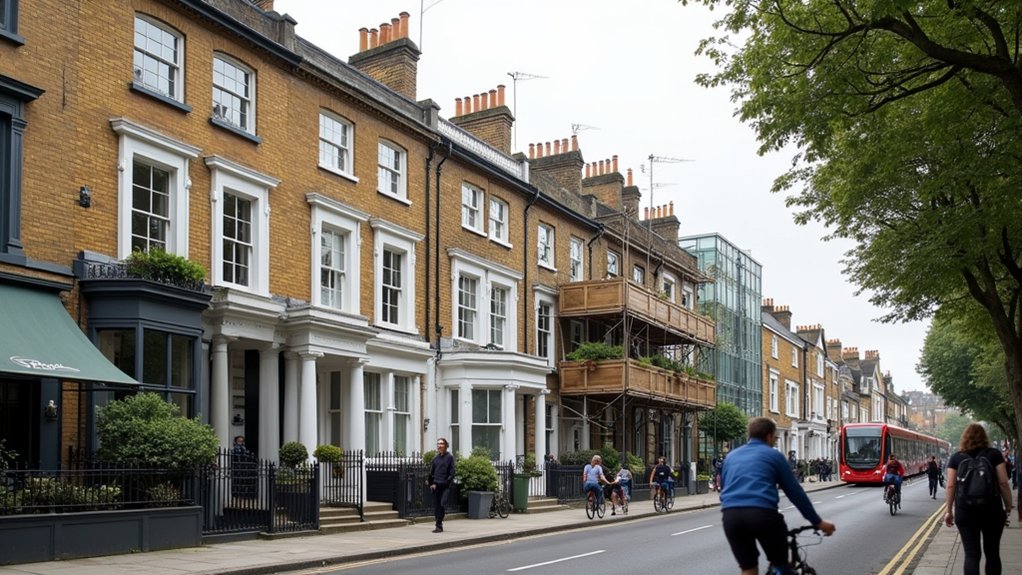
Brixton’s property market remains competitive, underpinned by strong transport links, a vibrant local economy, and sustained demand for period homes and well-connected flats. You’ll find a diverse market shaped by limited land, ongoing regeneration, and strong appeal among professionals, families, and renters.
Demand remains resilient because the Victoria line, Overground services, and extensive bus connections provide efficient access to central London and surrounding districts. However, you should expect market fluctuations as mortgage conditions, buyer confidence, and wider economic signals change.
Transaction activity can thus vary even when underlying demand stays healthy. For property investment, assess rental demand, tenant demographics, transport access, and potential planning or regeneration impacts.
Compare comparable listings, monitor achieved sales, and review local supply before committing. Competition rewards realistic pricing and thorough due diligence.
How Much Do Brixton Homes Cost?
You’ll find that Brixton home prices vary considerably by property type, with flats, terraces, and larger houses following distinct price patterns.
Recent trends can show whether values are rising, stabilising, or adjusting across each segment.
Your budget should also account for location, size, condition, transport links, and local demand.
Average Property Prices
How much do homes cost in Brixton? Current market data places the average property price at roughly £650,000, although your likely budget depends on location, condition, tenure, and floor area.
Houses typically command a substantial premium, while flats provide a lower entry point, making them popular with first-time buyers and investors.
You should treat this average as a market benchmark, not a valuation: renovated homes near Brixton Village, the tube, and Brockwell Park can achieve stronger pricing, whereas leasehold issues or high service charges can reduce value.
For property investment, compare achievable rents with purchase costs, financing, stamp duty, and maintenance before committing.
Market volatility also matters; changing mortgage rates and buyer confidence can shift affordability quickly.
A local valuation and recent comparable sales will give you a more reliable figure.
Price Trends by Type
Prices vary sharply by property type in Brixton: flats generally offer the lowest entry point, with one- and two-bedroom homes often attracting first-time buyers.
Larger period conversions and new-build apartments command higher prices per square metre.
For you, maisonettes and compact terraces typically sit in the middle of the market, offering more space without matching detached-house prices.
Historic conversions can achieve a premium when buyers value character, generous proportions, and distinctive architectural details.
At the top end, Luxury apartments tend to record the strongest asking prices, particularly where they provide substantial floor area and polished presentation.
Recent trends suggest smaller flats remain more price-sensitive, while well-finished family homes show greater resilience.
Comparing price per square metre alongside total price helps you judge whether a listing represents fair value.
Factors Affecting Costs
Several factors shape how much Brixton homes cost, including location, property type, floor area, condition, and tenure. You’ll typically pay a premium near Brixton Village, the Underground, and well-connected streets, while larger period houses command substantially more than flats.
Condition also matters: renovated kitchens, energy efficiency, and outdoor space can lift asking prices, whereas major works create negotiation leverage.
- Location: Proximity to transport, schools, parks, and amenities can materially widen values between neighbouring streets.
- Property characteristics: Bedrooms, extensions, balconies, parking, lease length, and service charges directly affect affordability.
- Market timing: Interest rates, buyer demand, supply, and market fluctuations influence achievable prices and selling speed.
You should compare recent, like-for-like sold prices rather than relying on listings.
A realistic budget must include stamp duty, surveys, legal fees, maintenance, and potential lease-extension costs.
For landlords, rental yields, regulation, and financing determine whether purchase prices create genuine investment opportunities.
Which Brixton Homes Are Most in Demand?
If you’re targeting demand, period properties remain attractive for their character and limited supply.
Family buyers prioritise well-proportioned homes near schools and green space, while transport-connected flats appeal to commuters seeking value and convenience.
Evaluating these three segments can help you identify stronger resale prospects and more resilient rental demand.
Period Properties
Victorian and Edwardian houses remain among Brixton’s most sought-after homes, particularly those with original fireplaces, high ceilings, bay windows and private gardens. If you’re buying, you’ll typically compete hardest for well-preserved properties near transport links, where character supports stronger pricing and quicker sales.
- Original joinery, cornicing and tiled floors can command a premium, provided surveys confirm their condition.
- Period conversions offer entry-level opportunities, but lease terms, service charges and limited storage can affect value.
- Historic architecture attracts buyers, yet renovation challenges—including listed-building controls, ageing services and insulation upgrades—can materially increase costs.
You should compare sold prices, not asking prices, and budget for specialist inspections before making an offer. Energy performance increasingly influences negotiations, especially where draughty windows or inefficient heating require improvement.
A property retaining authentic features while delivering modern systems generally offers the strongest resale appeal.
Family-Friendly Homes
For families, the most in-demand Brixton homes typically combine three or more bedrooms, usable outdoor space, strong local schools and convenient access to the Underground, Overground and major bus routes.
You’ll usually compete hardest for houses with private gardens, practical layouts and scope for a home office. Demand also extends to larger period conversions, provided they offer generous reception rooms, storage and manageable service charges.
Proximity to well-regarded nursery schools can strengthen buyer interest, particularly for households planning several years ahead. Homes near family parks, playgrounds and green space often attract a premium because they support daily routines without requiring a car.
As affordability remains stretched, you’ll find buyers weighing floor area and condition carefully; turnkey family houses consequently tend to secure quicker offers than properties needing substantial renovation.
Transport-Connected Flats
Transport-connected flats are among the most in-demand Brixton homes, particularly one- and two-bedroom apartments within a short walk of Brixton Underground, Brixton station or key bus corridors. If you’re buying, prioritise journey times, service frequency and walkability over headline floor area. These features support stronger tenant demand, broader resale appeal and, often, firmer pricing than comparable homes farther from transport.
- One-bedroom flats attract professionals seeking efficient links into central London.
- Two-bedroom apartments appeal to sharers, couples and investors targeting flexible rental income.
- Luxury apartments and well-presented Historic conversions can command premiums when they combine period character, secure entry, outdoor space and low service charges.
You should compare price per square foot, lease length and recent achieved rents—not asking prices alone.
Transport access won’t eliminate overpricing, but it can reduce vacancy risk and protect liquidity when market conditions soften.
What Are Brixton’s Current Rental Trends?
Brixton’s rental market remains highly competitive, with strong demand for well-connected flats and limited supply keeping rents elevated. If you’re searching now, expect asking rents to reflect sustained tenant demand, particularly for one- and two-bedroom homes. Available properties often attract multiple enquiries quickly, so you’ll need organised paperwork and a realistic budget.
Rental affordability remains the central pressure point. Higher mortgage costs have encouraged some landlords to retain properties rather than sell, yet operating expenses and financing costs continue to feed through into rents. You should compare total monthly costs, including council tax and utilities, rather than focusing solely on headline rent.
Lease renewal patterns also reveal persistent demand: many tenants are renewing to avoid moving costs and competing for scarce alternatives. That stability benefits landlords, although renters may negotiate more effectively when listings remain vacant for longer.
How Do Brixton’s Areas Compare?
Rental costs vary noticeably across Brixton, so location should be part of your budget calculation. Brixton Village and central Brixton offer the strongest transport access, nightlife, and cultural diversity, but typically command higher rents.
Herne Hill feels leafier and quieter, with period homes and a village-style high street. Tulse Hill and Streatham Hill often provide more space for your money.
- Central Brixton: Best-connected, busiest, and most exposed to premium pricing near the Tube and markets.
- Brixton Hill: A practical middle ground, combining Victorian terraces, independent shops, and improving amenities.
- Tulse Hill: More residential and generally less expensive, with urban renewal gradually supporting local demand.
You should compare walking times, property condition, and council-tax bands alongside headline rent. Regeneration can lift an area’s appeal, yet construction disruption and uneven investment still affect value between streets.
Is Brixton a Good Place to Buy or Rent?
Is Brixton a good place to buy or rent? For many buyers and renters, yes—provided you match the area’s pricing and pace to your priorities.
Renting gives you flexibility while you compare neighbourhoods, with demand supported by excellent transport, employers, nightlife, and local amenities. You’ll typically pay a premium for convenience, but you can access more space by considering nearby Streatham, Tulse Hill, or Camberwell.
Buying makes sense if you’re planning to stay several years and can absorb mortgage costs, service charges, and London’s transaction expenses. Brixton’s established community atmosphere, Zone 2 location, and ongoing investment support long-term appeal.
Although property values won’t rise uniformly across every street, it remains a promising area for long-term investment. Check lease length, building condition, noise, and comparable sold prices carefully.
Your best decision depends on affordability, holding period, and whether convenience outweighs competing value elsewhere.
Frequently Asked Questions
What Transport Links Serve Brixton Residents?
You’ll find Brixton residents well served by the Victoria line, reaching central London in roughly 15 minutes.
Plus, National Rail services toward London Bridge, Blackfriars, and Victoria are available.
Several bus routes connect surrounding neighbourhoods, while Brixton’s cycling infrastructure and proximity to major roads support flexible commuting.
These links strengthen buyer and renter demand, complementing the area’s Local amenities and nightlife venues.
They also help transport accessibility underpin resilient property values despite wider market fluctuations.
Which Schools Are Located in and Around Brixton?
You’ll find several well-regarded schools in and around Brixton. Local options include Sudbourne Primary School, Corpus Christi Catholic Primary School, and Hill Mead Primary School.
While secondary choices include Ark Evelyn Grace Academy and St Martin-in-the-Fields High School for Girls.
Nearby areas add Dunraven School and Elm Court School.
Check Ofsted ratings, admissions criteria, catchment boundaries, and travel times carefully.
Community diversity and local amenities also influence demand, rents, and resale appeal.
Are There Property Development Plans Affecting Brixton?
Yes—Brixton’s development pipeline is moving, with urban renewal reshaping selected sites around transport hubs, town-centre uses, and underused land.
You’ll see proposals involving new homes, affordable housing, workspace, public-realm improvements, and community facilities, though timelines depend on planning approvals, funding, and local consultation.
To assess opportunities, track Lambeth Council applications, developer consultations, delivery milestones, and market trends.
These indicators help you distinguish genuine supply growth from early-stage announcements and gauge likely effects on prices and rents.
What Council Tax Bands Apply to Brixton Properties?
You’ll find Brixton properties across council tax Bands A–H, with the band determined by the Valuation Office Agency’s 1991 valuation—not today’s Property pricing.
Most flats and smaller homes typically fall within Bands B–D, while larger or higher-value houses may reach E–H.
Your exact annual charge depends on Lambeth Council’s current rates and any applicable discounts.
Check your postcode online, especially when comparing the Rental market, because landlords may pass council tax responsibility to tenants.
How Safe Is Brixton for Families and Professionals?
You’ll find Brixton generally safe for families and professionals, though conditions vary street by street—like choosing the right carriage on a busy train.
Crime data shows higher reported incidents around transport hubs and nightlife areas, so you should compare exact postcodes.
Strong Community safety initiatives, active neighbourhood groups, excellent schools, parks, markets, and Local amenities support daily life.
Visit at different times, check council data, and assess your commute.
Conclusion
Ultimately, Brixton remains a fast-moving, competitive market where transport links, character homes and community appeal support demand. Think of it as a market with several lanes: period houses may command premiums, while flats give you more room to negotiate, especially when mortgage costs rise. If you’re buying or renting, compare streets, condition and long-term value—not just asking prices. With Zone 2 convenience and ongoing regeneration, Brixton can still reward decisive, well-informed decisions.