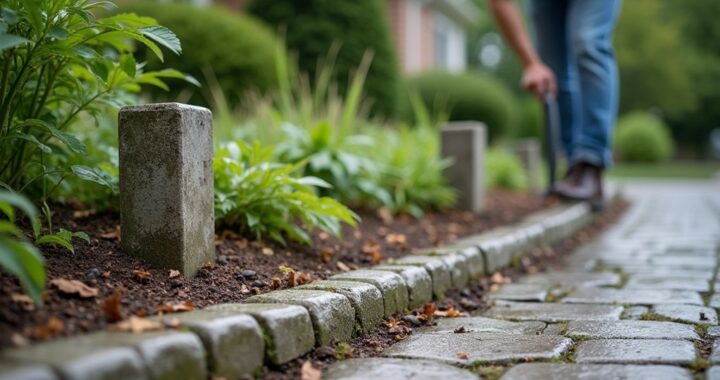
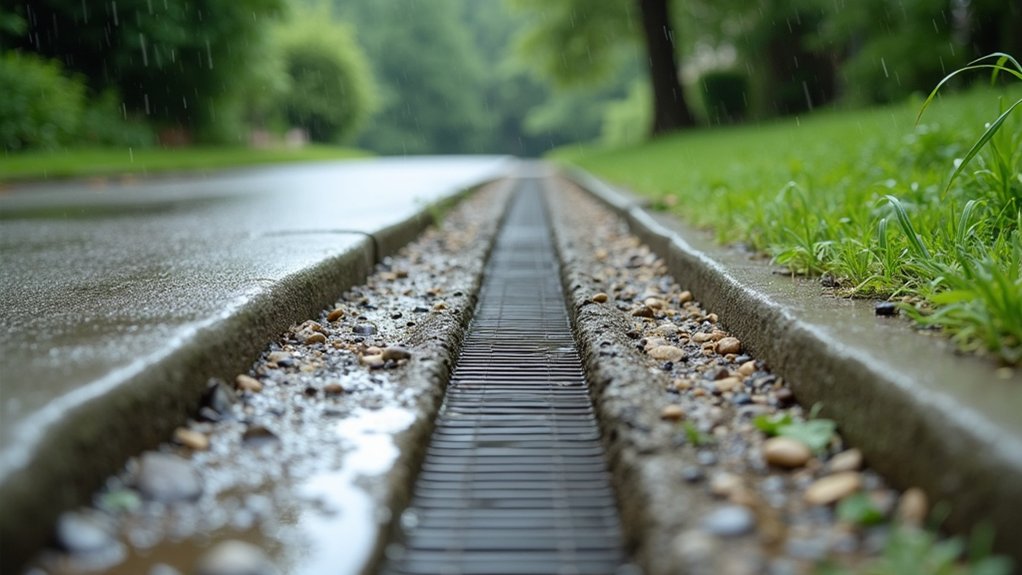
Protecting your driveway from flooding starts with routine checks, especially after heavy rain, leaf fall, and spring thaw. You’ll need to watch where water collects, clear debris from drains and gutters, and correct erosion before it damages the surface or foundation. Small changes, such as redirecting downspouts or improving the slope, can make a major difference. Start by inspecting your drainage system, because the first warning signs often appear before serious flooding does.
Inspect Your Driveway Drainage First
Before you install a drain or change the slope, inspect how water currently moves across your driveway. Watch rainfall during a storm, noting where puddles form, how quickly surfaces dry, and whether runoff reaches your garage, foundation, sidewalk, or street.
Check the high and low points with a level or straightedge, and photograph problem areas for comparison after repairs. Consider local conditions, including heavy seasonal rain, freeze-thaw cycles, clay soil, and nearby trees.
Different driveway materials shed water differently: sealed concrete may create fast runoff, while gravel can develop ruts and depressions.
Review your landscaping design, too; edging, planting beds, retaining walls, and compacted soil can redirect flow. Mark these observations before choosing improvements, so your solution addresses the actual drainage pattern rather than symptoms.
Record changes after each storm to guide future maintenance.
Clear Blockages and Restore Water Flow
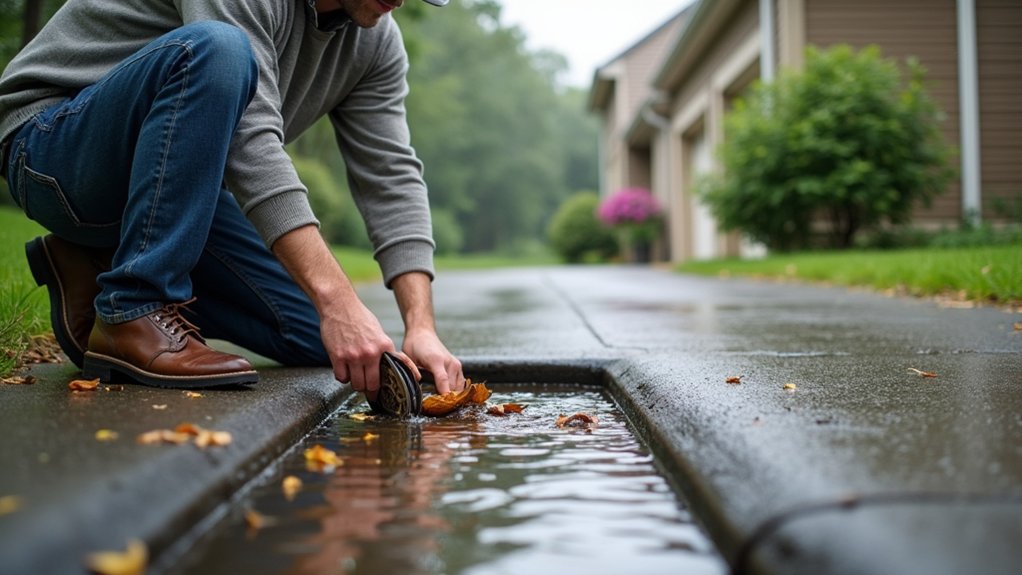
Once you’ve identified where water stalls, clear leaves, soil, gravel, and other debris from driveway drains, channel grates, catch basins, and nearby gutters. Wear gloves, lift grates carefully, and use a hand scoop or stiff brush for blockage removal.
Flush remaining sediment with a garden hose, directing runoff toward an approved outlet rather than a neighbor’s property. If water still backs up, probe the pipe with a drain rod, working gently to avoid damaging joints.
Empty catch basins before they overflow, and reseat each grate securely so vehicles won’t shift it. In areas with clay soil or frequent leaf fall, schedule drainage maintenance after autumn storms and again in spring.
Stop if you encounter collapsed piping, roots, or standing contaminated water; call a licensed drainage professional for safe, thorough clearing.
Improve Driveway Drainage Before Heavy Rain
With heavy rain in the forecast, improve your driveway’s drainage before saturated soil and sudden runoff overwhelm the system. In northern climates, spring thaw and summer storms can expose weak edges quickly. Prepare now:
- Shape the surface: Maintain a gentle crown so water flows toward a swale, ditch, or approved outlet instead of pooling in wheel tracks.
- Strengthen the shoulders: Add compacted gravel reinforcement along vulnerable edges, matching your driveway material and slope.
- Guide runoff: Use landscaping improvements, such as a shallow rain garden or planted channel, to slow water and encourage infiltration away from the pavement.
Check that downspouts discharge well beyond the driveway and that nearby soil slopes away from your foundation. Compact loose aggregate, secure edging, and replace washed-out material before the storm arrives.
These steps help your drainage system handle intense rainfall without costly surface damage.
Spot Flooding Risks and Know When to Call a Pro
Watch for standing water after a storm, eroded shoulders, sinking pavement, or runoff crossing toward your garage or foundation—signs that your driveway’s drainage may be failing. In regions with intense rainfall, frozen ground, or clay soil, small problems can quickly become costly flooding.
Check whether clogged inlets, crushed pipes, or blocked swales force water onto neighboring lots or public roads. Review your landscape design, too; compacted soil, steep beds, and misplaced edging can redirect runoff.
Driveway materials also matter: porous pavers may drain better than sealed asphalt, but poor installation still causes pooling.
Call a drainage professional when water reaches your foundation, pavement settles repeatedly, or repairs require excavation near utilities. A pro can measure grades, inspect underground lines, and recommend durable solutions suited to local soil, rainfall, and regulations.
Don’t wait for the next storm to expose hidden damage.
Frequently Asked Questions
How Much Does Professional Driveway Drainage Installation Typically Cost?
You’ll typically pay $1,000–$5,000 for professional driveway drainage installation, though complex projects can exceed $10,000. Your cost estimate depends on drainage type, trench length, soil conditions, excavation, permits, and local labor rates.
A French drain often costs $20–$35 per linear foot, while channel drains may run $30–$100.
Ask local contractors for itemized quotes, confirm whether disposal and restoration are included, and compare warranties before choosing an installer.
Which Driveway Materials Provide the Best Long-Term Drainage Performance?
Your best long-term drainage starts with permeable pavement, which lets rain soak through the surface instead of pooling. Think of it as giving stormwater a doorway home.
Permeable concrete, porous asphalt, or interlocking permeable pavers work well when you install them over properly graded, compacted aggregate.
Add trench drainage at garage thresholds or low edges to capture runoff.
You’ll need periodic vacuuming, especially in areas with heavy Kansas City sediment and winter grit.
Do Local Permits Apply When Modifying Driveway Drainage Systems?
Yes, you may need permits when modifying driveway drainage systems. Check your city or county’s permit requirements before excavating, adding a drain, changing the driveway slope, connecting to a street inlet, or directing runoff toward neighboring property.
Local regulations often govern stormwater discharge, easements, setbacks, and erosion control. Contact your building or public works department, describe your proposed work, and request written guidance.
Don’t begin construction until officials confirm approvals and inspections.
Can Driveway Drainage Improvements Increase My Property’s Resale Value?
You can boost your property’s resale value with well-designed driveway drainage improvements. Like a strong foundation beneath your home, they protect curb appeal and reduce costly water damage.
Drainage system upgrades, including channel drains, catch basins, and properly graded surfaces, reassure buyers and inspectors.
Pair them with landscaping enhancements that direct runoff and complement local conditions.
Keep permits, invoices, and maintenance records; clear documentation helps demonstrate quality and may support a stronger asking price.
How Often Should Driveway Drainage Systems Receive Professional Maintenance?
You should schedule professional driveway drainage maintenance at least once a year, ideally before your region’s wet season. Arrange a Drainage system inspection every spring to identify sediment, root intrusion, cracked pipes, or blocked catch basins.
Properties near wooded areas, steep slopes, or flood-prone streets may need inspections twice yearly. Create a Maintenance scheduling reminder, and request service after major storms.
Regular upkeep helps prevent flooding, driveway damage, and costly emergency repairs.
Conclusion
Don’t wait for a major storm to test your driveway drainage. Walk the slope, clear leaves from drains, and watch where water collects after each heavy rain. You might think occasional pooling isn’t serious, but small washouts and clogged inlets quickly become costly damage. Redirect downspouts, reinforce weak edges, and add a rain garden where practical. If water still reaches your foundation or the driveway settles, call a local drainage professional before the next storm makes repairs harder.