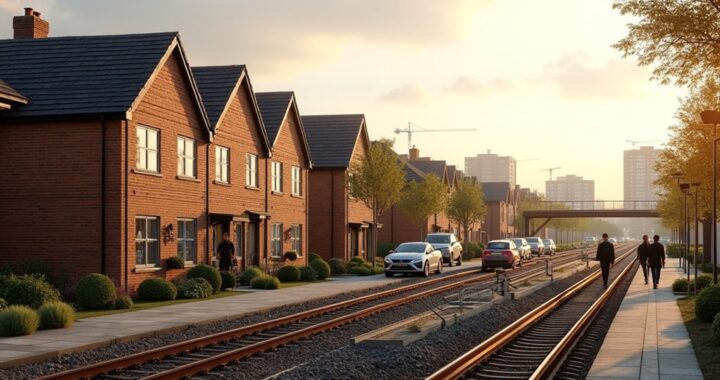

If you’re weighing Crawley as a home for commuting and family life, you’ll find relatively affordable housing, direct trains to London, Gatwick Airport nearby, and quick access to the M23. Families also benefit from parks, schools, leisure centres, and established neighbourhood amenities. However, aircraft noise, congestion, and differences between local areas can affect your experience. The key question is whether Crawley’s convenience outweighs these drawbacks for your budget and daily routine.
Is Crawley a Good Place to Live?
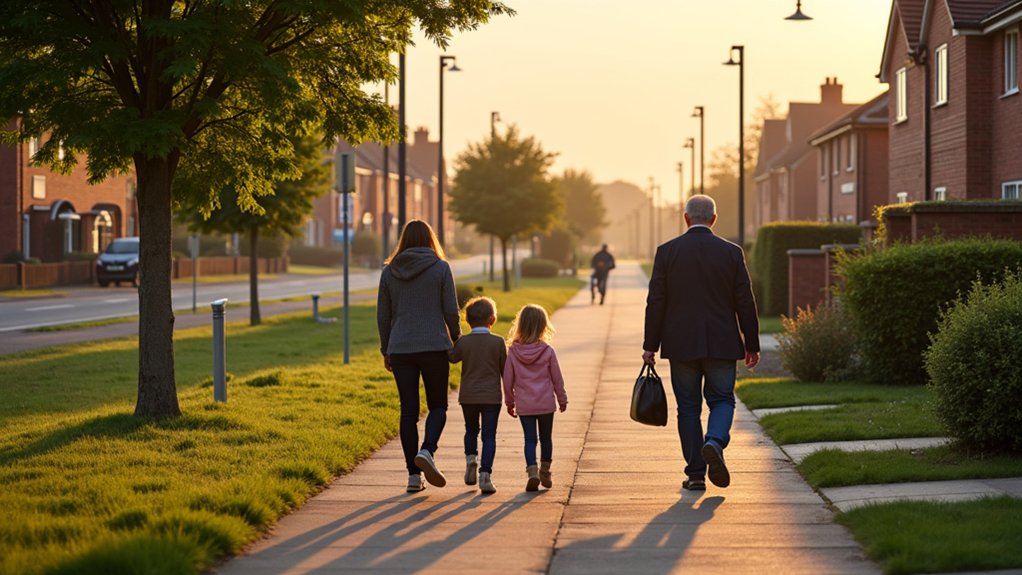
Is Crawley a good place to live? For you, the answer depends on priorities. The town offers practical housing choices, established neighbourhoods, and everyday services, while nearby countryside provides space for walking and recreation.
Families can compare primary and secondary schools through Ofsted reports, catchment areas, and recent performance rather than relying on general impressions.
You’ll find supermarkets, healthcare facilities, leisure centres, and community amenities across Crawley, although quality varies between districts.
Local nightlife remains modest but useful, with pubs, restaurants, and a small selection of evening venues rather than a major-city scene.
Cultural events add variety throughout the year, including performances, exhibitions, festivals, and activities at venues such as The Hawth.
Check council data, local groups, and residents’ views before choosing an area, because streets can feel noticeably different.
How Easy Is Commuting From Crawley?
How easy is commuting from Crawley? For many residents, it’s one of the town’s strongest advantages. Crawley station offers frequent Southern and Thameslink services, reaching London Bridge and St Pancras in roughly 45–55 minutes, while faster trains can get you to Victoria in about 35 minutes. Gatwick Airport is only one stop away, making international travel and airport employment especially convenient.
Public transport also includes regular local buses linking neighbourhoods, Manor Royal, and Gatwick. However, evening and Sunday services can be less frequent.
If you drive, the M23 provides direct access to London and the south coast, while the M25 is nearby. However, traffic congestion can build around the airport, major junctions, and the A23 during peak periods.
You’ll find commuting practical, but hybrid workers may enjoy greater reliability and flexibility.
What Is Housing Like in Crawley?
Crawley’s housing market offers more choice than its compact size might suggest, from post-war estates and practical flats to newer developments around the town centre, Forge Wood, and Maidenbower. You’ll find property types ranging from studio apartments and modern two-bedroom flats to terraces, semis, and detached houses.
Prices generally sit below nearby Horley and many parts of West Sussex, although demand from Gatwick workers and London commuters keeps well-located homes competitive. Affordable housing remains available, particularly in older terraces and flats, but you’ll need to compare service charges, lease lengths, and maintenance costs carefully.
New-build properties can offer energy efficiency and warranties, yet often command a premium. Rental choice is broad, with furnished flats popular among airport staff.
Check flood risk, parking provision, and rail or road noise before committing to a purchase.
Which Crawley Areas Suit Families?
For families, Maidenbower, Pound Hill, and Forge Wood are among Crawley’s strongest options, offering newer housing, schools, parks, and relatively easy access to shops and transport.
You’ll find Maidenbower particularly practical for modern estates, playgrounds, and rail access via Three Bridges.
Pound Hill offers a more established feel, with varied housing, green spaces, and convenient links towards Crawley town centre.
Forge Wood provides newer homes, open areas, and a growing community, although some services are still developing.
If you prefer central convenience, Northgate and Goffs Park put shops, leisure facilities, and the town centre closer at hand, but roads can feel busier.
Check parking, walking routes, and local transportation before choosing.
Community events, residents’ groups, and nearby parks can also help you judge whether an area feels welcoming and suits your family’s routine.
How Good Are Crawley’s Schools?

School quality varies across Crawley, so your shortlist should go beyond an area’s housing and parks. You’ll find a mix of academies, maintained schools and sixth forms, with outcomes differing by establishment and year. Check the latest Ofsted reports, Progress 8 scores, GCSE results and published admission criteria rather than relying on reputation alone.
Primary-school choices are spread across neighbourhoods, but demand can make popular places competitive. Your address doesn’t guarantee a place, so review catchment boundaries and recent allocation distances before you commit.
Secondary options include comprehensive and selective-feeling pathways through differing performance profiles, while sixth-form results can help older pupils plan ahead.
Visit shortlisted schools to assess leadership, support for additional needs, class culture and extracurricular activities.
Local school quality changes, so verify current data directly and ask about transport, wraparound care and admissions timelines.
What Amenities Can Crawley Residents Enjoy?
Crawley gives you convenient shopping and dining, from County Mall and the town centre to restaurants serving varied cuisines.
You’ll also find parks, sports centres and leisure facilities supporting everyday recreation across the borough.
Availability is strong overall, though your experience will vary by neighbourhood, budget and preferred activities.
Shopping and Dining Options
Where can you shop and dine in Crawley? You’ll find the main retail hub at County Mall, beside Crawley station, with more than 80 shops, cafés, and restaurants. The town centre adds high-street essentials, independent retailers, supermarkets, and regular markets, making weekly errands convenient without travelling to Brighton or London.
For luxury shopping, you’ll have a broader selection in nearby Gatwick and central London, both reachable by rail, although Crawley itself focuses on practical value rather than designer brands.
Dining choices range from familiar chains and quick lunches to independent Indian, Italian, Mediterranean, and British restaurants. You can also find fine dining, but options are more limited than in larger regional centres.
Residents benefit from varied price points and delivery services, while nightlife and peak-time parking can feel restricted.
Parks and Leisure Facilities
How much outdoor space and recreation you get in Crawley depends on where you live, but residents have several practical options. Tilgate Park is the standout: you’ll find woodland, a lake, nature trails, a café, Go Ape, and a water-sports centre, making it useful for weekends and family outings.
Memorial Gardens and Buchan Country Park offer quieter walks, while Bewbush, Maidenbower, and Broadfield provide playing fields and neighbourhood green space.
For indoor exercise, K2 Crawley includes swimming pools, a gym, climbing facilities, and sports courts. You can join clubs covering football, cricket, rugby, athletics, and cycling, so local sports are accessible for children and adults.
Community events, including park activities and seasonal celebrations, add social value. However, facilities vary by neighbourhood, and popular venues can become busy during peak periods.
Are Crawley’s Parks and Green Spaces Family-Friendly?
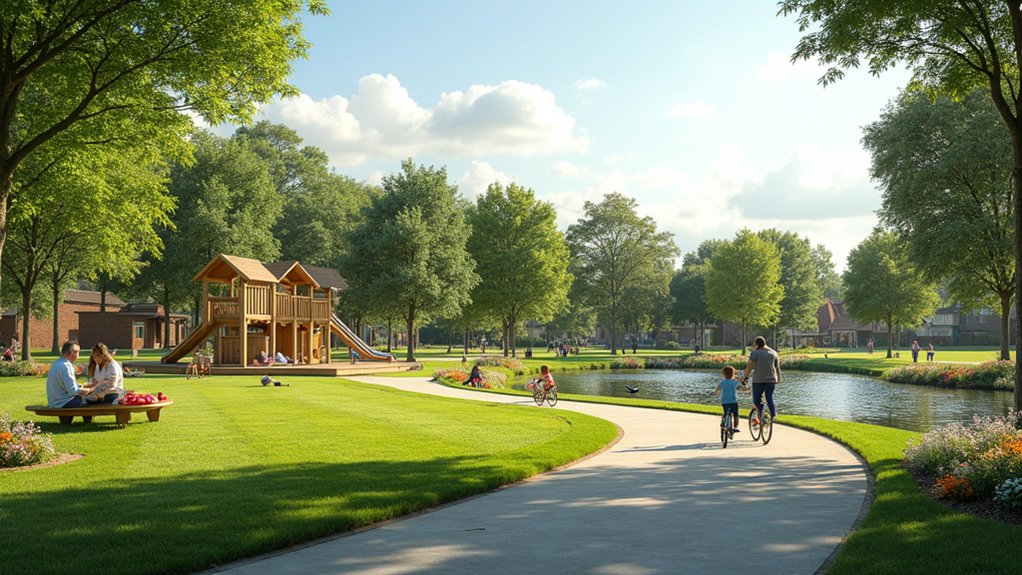
Crawley’s parks give you accessible play areas for children, with facilities varying by neighbourhood and age range. You’ll find suitable routes for walking and cycling, though traffic-free sections and path conditions differ between sites.
Nature trails and picnic spots add family appeal, but you should check maintenance, weather, and busy-period conditions before visiting.
Play Areas for Children
Families in Crawley have access to a good range of play areas, from equipped playgrounds in neighbourhood parks to larger green spaces such as Tilgate Park and Buchan Country Park.
You’ll find swings, slides, climbing frames and imaginative play equipment across several local parks, giving children varied ways to stay active.
Tilgate’s play facilities benefit from the park’s wider attractions, while Buchan offers a quieter woodland setting.
Provision differs by site, so check equipment, age suitability and opening information before visiting.
For younger children, toddler play areas with lower platforms and simpler apparatus can make play more manageable.
On wet days, indoor playgrounds provide a practical alternative, although availability and prices vary.
Safe Walking and Cycling
Beyond play equipment, Crawley’s parks and green spaces give families opportunities to walk and cycle together. You’ll find traffic-free paths in places such as Tilgate Park and Buchan Country Park, although routes vary in width, surface, and lighting. Check maps before setting out, particularly if you’re using a balance bike, wheelchair, or pram.
Crawley’s Bike friendly infrastructure includes shared-use paths, cycle routes, and links towards neighbourhoods and the town centre. However, junctions and crossings can feel busy during school and commuting hours. Look for marked crossings, separated sections, and Pedestrian safety measures, while teaching children to slow down and give way.
The borough’s compact layout helps families combine short journeys with exercise. Still, you should supervise younger riders, use lights in darker months, and treat park paths as shared spaces where walkers have priority.
Nature Trails and Picnic Spots
For a quieter family outing, nature trails and picnic areas in Tilgate Park, Buchan Country Park, and local commons offer a useful mix of woodland, ponds, open lawns, and short walking routes.
You’ll find accessible paths around Tilgate Lake, while children can combine a picnic with the nature centre, playground, or treetop activities.
Buchan’s forest walks feel more secluded, though uneven surfaces and muddy sections can challenge pushchairs after rain.
Local commons provide informal space for games, but facilities and parking vary, so check arrangements before travelling.
In spring and summer, wildflower meadows and pond margins add interest for young explorers; you’ll still need to supervise children near water and wildlife.
These green spaces make Crawley family-friendly, although busy weekends can mean crowded car parks and limited picnic tables.
What Are the Pros and Cons of Crawley Living?
Crawley offers a practical mix of affordability, transport links and employment, with Gatwick Airport, the M23 and direct rail services supporting commutes to London and Brighton. You’ll also find established neighbourhoods, schools, healthcare and comparatively accessible housing, although prices vary sharply near the station and airport.
- Connectivity: Local transportation includes frequent trains, buses and road access, but congestion can affect peak journeys.
- Employment: Aviation, logistics and service industries provide jobs, though airport-related work may involve shifts.
- Family life: Parks, leisure centres and Community events help you settle in, while some estates feel busier than others.
- Noise: Aircraft noise and traffic are genuine drawbacks, particularly beneath flight paths.
- Value: You may get more space than in nearby Surrey, but service charges, commuting costs and rising rents require careful budgeting.
Frequently Asked Questions
What Healthcare Services and Hospitals Are Available to Crawley Residents?
You’ll find strong Healthcare facilities in Crawley, including Crawley Hospital, which provides urgent treatment, outpatient clinics, diagnostics, maternity, and rehabilitation.
For serious or specialist care, hospital options include East Surrey Hospital in Redhill, around 15 miles away, and Princess Royal Hospital in Haywards Heath, roughly 12 miles distant.
Local GP practices, pharmacies, dentists, mental-health services, and community clinics support everyday needs, though appointment availability can vary, so register early.
How Safe Is Crawley, and What Are the Local Crime Rates?
You’ll find Crawley reasonably safe overall, though conditions vary by neighbourhood. Imagine a town crier announcing today’s incidents: official Crime statistics typically show theft, violence, and antisocial behaviour as the leading categories, especially around the town centre, station, and nightlife areas.
Your Neighborhood safety improves in residential districts such as Pound Hill and Maidenbower. Check Sussex Police’s latest ward data before choosing a home, and consider lighting, transport routes, and local reporting patterns.
What Is Crawley’s Weather Like Throughout the Year?
You’ll find Crawley’s weather temperate and changeable year-round. Summers usually bring mild warmth, with daytime highs around 22°C.
While winters stay cool, averaging 8°C by day and occasional frost overnight. Rain can arrive in every season, though autumn and winter often feel wetter and windier.
Snow rarely settles for long. Pack layers and waterproofs so you can enjoy Crawley’s outdoor activities and local cultural events despite unpredictable showers.
How Diverse and Welcoming Is Crawley’s Community?
You’ll find Crawley’s community particularly diverse and generally welcoming, with residents representing many nationalities, languages, and faiths. Cultural diversity is especially visible around the town centre, neighbourhood shops, schools, and annual events.
Community engagement varies by area, but residents can join volunteering projects, sports clubs, faith groups, and local associations. Some neighbourhoods feel strongly connected, while others are more transient.
What Council Tax Rates Apply to Crawley Properties?
Your Crawley council tax bill starts with two anchors: council tax bands and property valuation.
For 2024/25, Band D costs about £2,276 annually, including West Sussex County Council, Crawley Borough Council, police, fire, and parish charges where applicable.
You’ll pay less in Bands A–C and more in Bands E–H.
Check your exact band through the Valuation Office Agency, as location-specific precepts and annual rises can change the final figure.
Conclusion
Ultimately, Crawley gives you a practical, well-connected base for work and family life. You’ll benefit from comparatively affordable homes, fast trains to London, Gatwick access, good schools, and plenty of parks and leisure facilities. However, you shouldn’t overlook aircraft noise, peak-time traffic, and differences between neighbourhoods. Visit at rush hour and after dark, compare catchments, and check flight paths before buying. For connected, cost-conscious living, Crawley could be a smart, sensible choice.