
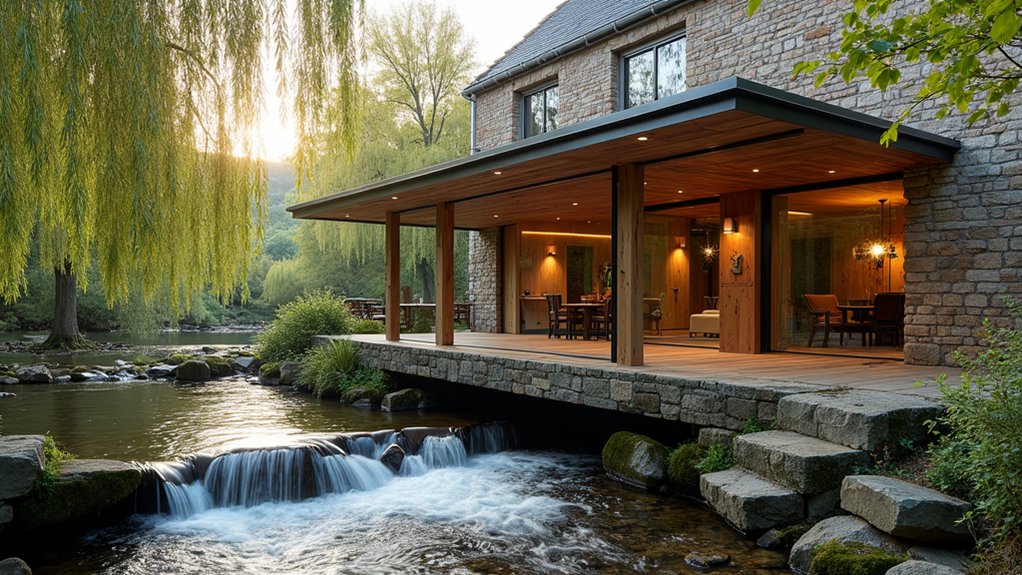
Restoring a water mill can feel like rebuilding an entire village, stone by stone, while keeping its machinery alive. Start by surveying the structure, tracing defects, and securing planning or listed-building consent before work begins. Then repair masonry, beams, and mill features with compatible materials, while discreetly upgrading plumbing, insulation, and heating. Protect the waterway throughout, because the final decisions can determine whether your historic home truly works for modern life.
Survey the Mill and Secure Planning Permission
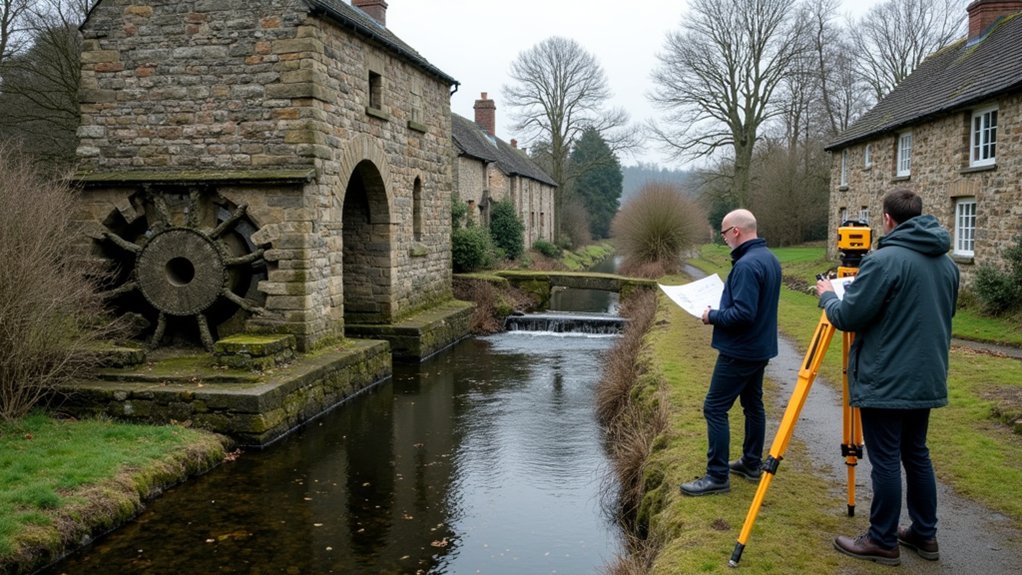
Before any repairs begin, survey the mill thoroughly and document its historic fabric, structural condition, watercourse, machinery, and later alterations. Engage a conservation architect, structural engineer, hydrologist, and ecologist to identify risks, legal constraints, and opportunities for sensitive adaptation.
Record dimensions, materials, defects, ownership boundaries, access routes, flood exposure, and wildlife habitats, using photographs, measured drawings, and a condition report.
Check national and local registers, title documents, water rights, environmental designations, and building-control requirements.
Begin community consultation early; local knowledge can reveal overlooked stories, hazards, and valued views.
Use this evidence to prepare a conservation-led proposal, then seek pre-application advice from the planning authority.
Submit applications for planning permission, listed-building consent, environmental approvals, and watercourse works before commissioning construction or altering the site in any way.
Restore Historic Stonework, Beams, and Mill Features
Once permissions and the condition survey are in place, stabilise historic stonework, timber beams, floors, and surviving mill machinery according to the approved conservation plan.
Record every defect before work begins, then consult a conservation specialist for structural decisions.
Use compatible lime mortar for stone restoration; avoid hard cement, which can trap moisture and damage masonry.
Retain original stones wherever possible, replacing only those beyond repair.
For beam preservation, support weakened timbers, remove decay carefully, and use discreet, reversible repairs rather than wholesale replacement.
Treat floorboards, joists, and wheel housings with the same restraint.
Clean mill machinery gently, preserve tool marks, and document each component before dismantling.
Protect finishes with breathable coatings, and keep historic scars that explain the mill’s working life.
Reassess stability throughout the project.
Upgrade Plumbing, Insulation, and Energy Systems
Upgrade services without compromising the mill’s historic fabric or moisture balance. Have a conservation-minded plumber survey existing pipes before routing new lines through floors or masonry. Choose compact, accessible runs, insulated hot-water pipes, low-flow fixtures, and leak detection to support water conservation without sacrificing pressure or comfort.
Improve thermal performance with breathable insulation, such as wood fiber or hemp, where walls and roof construction permits. Avoid impermeable foams that trap moisture against historic stone and timber. Seal drafts carefully, but preserve necessary ventilation around structural members.
Install an efficient heat pump, discreet controls, and appropriately sized radiators or underfloor zones. Pair demand management with renewable energy, such as roof-integrated solar panels only where their placement won’t harm significant views.
Commission every system, document routes, and retain access for future maintenance.
Protect the Waterway and Finish the Modern Home
With the home’s services commissioned, protect the mill’s waterway while completing the living spaces. Begin Waterway preservation by clearing debris without disturbing historic masonry, sluice gates, or fish passage. Ask an ecologist to assess flow, bank stability, and protected species, then secure any required permits before modifying channels.
Use sympathetic repairs—lime mortar, local stone, and timber—rather than concrete or impermeable finishes. Fit screens and guards around turbines, pumps, and intakes, and monitor levels after storms.
Inside, let Modern interior design support the building’s character. Choose restrained cabinetry, durable natural materials, and discreet lighting that won’t compete with exposed beams or original machinery.
Install kitchens and bathrooms with accessible service panels, efficient ventilation, and moisture-resistant finishes. Before occupation, test drainage, heating, alarms, and electrical systems, document maintenance schedules, and confirm that every intervention remains reversible where practical.
Frequently Asked Questions
Can I Insure a Restored Water Mill as a Standard Residential Property?
You may insure a restored water mill as a standard residential property, but insurers often treat its structure, machinery, heritage status, and water exposure differently.
Compare specialist Insurance options before choosing ordinary buildings cover.
Obtain an independent Property valuation that reflects rebuilding costs, conservation materials, listed-building requirements, and operational features.
Tell insurers about historic fabric, alterations, occupancy, flooding, and working equipment.
They’ll likely require surveys, maintenance records, and tailored exclusions or endorsements.
What Specialist Professionals Should I Hire for Water Mill Restoration?
Hire a conservation architect to lead the design, permissions, and Historic preservation strategy.
You’ll need a Structural engineering specialist familiar with timber frames, masonry, foundations, and water forces.
Engage a hydro-engineer or millwright to assess the leat, wheel, sluices, and flood risks.
Add a building surveyor, archaeologist, services engineer, and experienced heritage contractor.
Consult your insurer, local authority, and environmental regulators early to coordinate compliance, costs, and conservation requirements.
How Long Does a Complete Water Mill Restoration Typically Take?
You’ll typically need two to four years for a complete water mill restoration—think of turning a sleeping stone giant back into a working home. Historic preservation requirements, structural repairs, water-management work, and planning approvals set the pace.
You’ll move faster with an experienced team and clear decisions, but hidden defects can extend schedules.
Budget carefully, because restoration costs often rise 20–30% beyond initial estimates. Protect original fabric throughout.
Can I Install Modern Technology Without Damaging the Mill’s Historic Character?
Yes, you can install modern technology without damaging the mill’s historic character. Prioritize reversible upgrades, conceal wiring within existing cavities, and choose discreet fixtures that complement original materials.
Work with preservation specialists before altering masonry, timber, or machinery. Historical preservation should guide every decision, while Modern integration improves comfort, safety, and efficiency.
Document changes, obtain required approvals, and avoid removing significant features. Thoughtful planning lets you enjoy contemporary systems while protecting the mill’s authenticity for future generations.
What Maintenance Schedule Does a Restored Water Mill Require?
A stitch in time saves nine: schedule inspections seasonally and after severe weather. Check the roof, masonry, timber, foundations, sluice gates, wheel, and drainage for movement, leaks, rot, or corrosion.
Test water quality quarterly, clearing debris without disturbing historic fabric.
Service bearings and mechanical components according to manufacturer guidance, using reversible methods.
Review electrical, fire, and flood systems annually.
Document every intervention, and consult a conservation professional before altering original materials or structures.
Conclusion
When you restore a water mill, you’re not erasing its past—you’re turning its wheel toward the future. Careful surveys, permissions, and specialist guidance give the project a firm foundation. Compatible repairs protect stone, timber, and machinery, while discreet modern systems bring comfort without silencing the building’s character. By safeguarding the waterway and respecting every surviving detail, you create more than a home: you keep a working symbol of ingenuity flowing for generations to come.