

Keeping your conservatory roof panels clean, secure, and watertight starts with a careful inspection. Look for cracks, loose fixings, failed seals, staining, or signs of leaks before you begin any work. Clean panels with warm water, mild detergent, and a soft sponge, and avoid harsh chemicals or pressure washers. You can repair minor damage, but extensive cracks or weak panels may need professional replacement—and some problems aren’t obvious until you know where to look.
Check Your Conservatory Roof Panels First
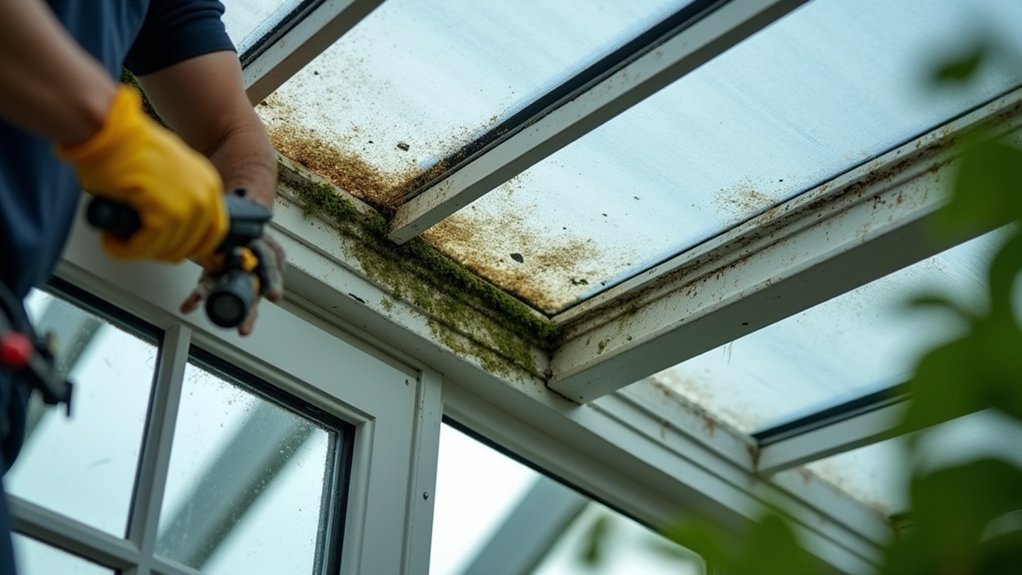
Before cleaning or repairing your conservatory roof panels, inspect them carefully from inside and outside. Look for cracks, chips, clouding, loose fixings, bowed sections, and gaps around the frame. Check for daylight, damp patches, mould, or dripping water beneath joints, as these signs may indicate failed seals or hidden damage.
Identify the roof panel materials, such as polycarbonate, acrylic, or glass, because each responds differently to impact, movement, and repair products. Consider recent weather impact, including hail, high winds, heavy rain, frost, and prolonged sunlight.
Don’t walk on panels or press damaged areas; they may fail without warning. Photograph defects and note their locations before you decide on repairs. If a panel feels unstable, leaks extensively, or sits above a difficult access area, contact a qualified conservatory professional promptly.
Clean Conservatory Roof Panels Safely
Start by choosing a dry, overcast day and removing loose dirt with a soft brush or a gentle hose spray.
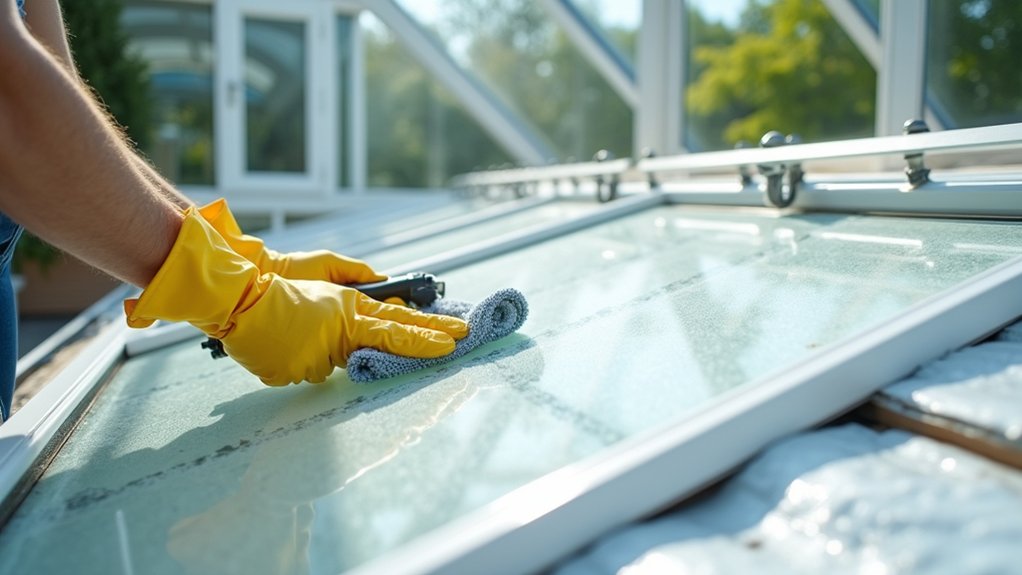
Mix warm water with mild, non-abrasive detergent, then wash each panel with a soft sponge. Rinse thoroughly to prevent residue and dry with a clean microfiber cloth.
Use these Cleaning techniques and safety precautions:
- Work from ground level whenever possible.
- Wear non-slip footwear and protective gloves.
- Use a stable, secured ladder if access is unavoidable.
- Never stand on panels, frames, or fragile roof sections.
- Keep water away from electrical fittings and outlets.
Avoid pressure washers, harsh chemicals, abrasive pads, and metal scrapers, which can scratch surfaces or damage protective coatings.
Clean in small sections, checking your cloth frequently for trapped grit. If algae or stubborn staining remains, use a manufacturer-approved cleaner and follow its instructions carefully.
Stop if conditions become slippery or windy.
Repair Leaks, Cracks and Damaged Seals
Once the panels are clean and dry, inspect them closely for leaks, hairline cracks, loose fixings, and perished seals.
Begin leak detection inside the conservatory, checking for damp patches, staining, and drips after rainfall. Trace moisture back to its highest visible point, as water can travel along rafters.
Tighten loose fixings carefully, but don’t overtighten and stress the panel. Remove failed sealant and clean the joint thoroughly before applying a compatible exterior-grade product.
During sealant application, keep the bead continuous, tool it smoothly, and follow the manufacturer’s curing time.
For small, stable cracks, use a repair resin or approved patching compound designed for your panel material. Don’t seal over dirt or trapped moisture.
If damage spreads, leaks persist, or the panel flexes, consult a qualified conservatory specialist for advice.
Replace Severely Damaged Roof Panels
When a panel is badly cracked, warped, loose or repeatedly leaking, replacement is safer and more reliable than further patching. Arrange panel replacement promptly, especially if water reaches electrical fittings or interior finishes. Before ordering, measure the opening, thickness, profile, and fixing locations accurately. Your material selection should match the existing roof system, frame, weight limits, and light requirements. Ask a qualified installer to confirm compatibility and safe access.
- Remove furniture and protect flooring beneath the work area.
- Isolate nearby electrical equipment before work begins.
- Use matching glazing bars, gaskets, and approved fixings.
- Don’t force a panel into a distorted frame.
- Check every joint for a weatherproof seal afterward.
Handle polycarbonate carefully to avoid scratching its coating; glass requires specialist lifting equipment. Dispose of broken material responsibly, and inspect the surrounding frame for damage before installation. Follow the manufacturer’s instructions and local safety requirements.
Reinforce Weak Conservatory Roof Panels
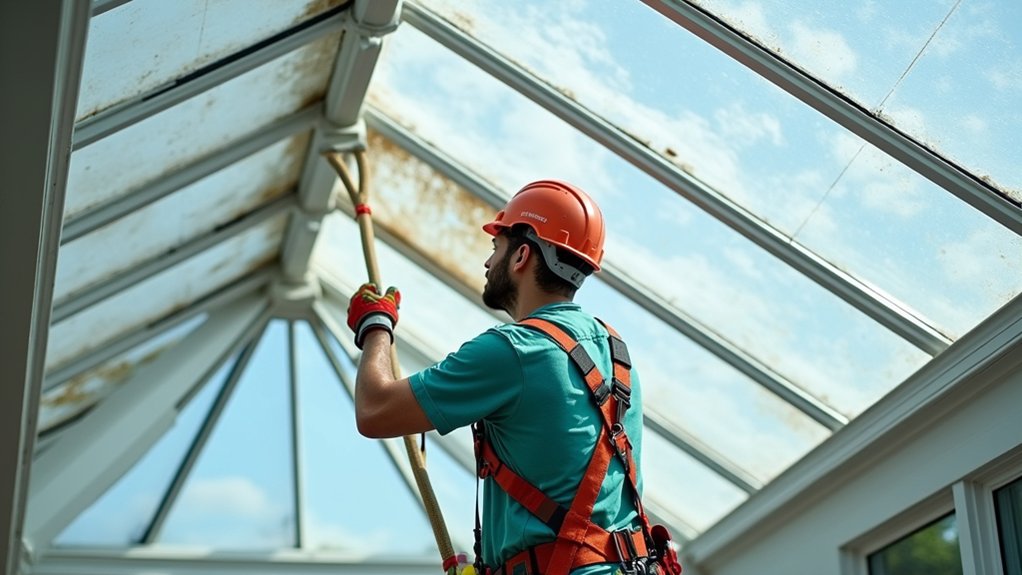
If a roof panel is intact but flexes under light pressure, reinforcing it may prevent further movement and extend its service life. First, clean and dry the panel, then inspect its edges, fixings, and supporting bars.
Tighten loose fasteners carefully, replacing worn washers with compatible weather-resistant ones. Add approved glazing bars, reinforcing profiles, or support strips beneath the panel, following the manufacturer’s spacing and fixing guidance.
Don’t drill through polycarbonate or glass without confirming the correct method, as stress can cause cracking. Seal joints with a compatible neutral-cure sealant to improve weatherproofing techniques, while allowing for normal thermal movement.
If you’re adding roof insulation, avoid blocking ventilation routes or placing excessive weight on the panel. Check the reinforcement after heavy weather and retighten fasteners if movement returns.
Know When to Call a Roofing Professional
Call a roofing professional if you spot serious damage, such as widespread cracks, leaks, sagging, or loose panels.
Don’t attempt complex structural repairs yourself, as incorrect work can worsen the damage and create safety risks.
Choose a qualified roofer with relevant conservatory experience, proper insurance, and strong references.
Spotting Serious Roof Damage
Serious conservatory roof damage often shows up as cracked or displaced panels, sagging, persistent leaks, or damp insulation and ceiling finishes. Don’t climb onto the roof or attempt a temporary fix if you notice these warning signs. Inspect from ground level and arrange a professional assessment promptly.
- Water stains spreading across ceilings or walls
- Panels that flex, rattle, or no longer align
- Broken seals, flashing, or roofline joints
- Mould, rot, or wet Roof insulation
- Failed Weatherproofing materials around vents or glazing
A roofer can identify hidden damage, check whether leaks threaten surrounding frames, and recommend safe repairs. Call urgently after storm damage, especially if panels have shifted or could fall.
Until help arrives, keep people away from the affected area and place containers beneath drips. Avoid sealing over visible problems, as trapped moisture can worsen deterioration and conceal the source.
Handling Complex Structural Repairs
Once damage affects the roof structure rather than a replaceable panel, a roofing professional should handle the repair. You shouldn’t attempt to straighten distorted rafters, replace failing supports, or repair movement around the roof’s connection to the house. These problems can affect load distribution, weatherproofing, and the conservatory’s stability.
A professional can inspect concealed damage, calculate appropriate reinforcement, and secure structural members without placing you at risk. Call for help if you notice sagging, spreading joints, persistent leaks near beams, cracked framing, or movement during strong winds.
Structural work may also provide an opportunity for ventilation improvements, better insulation, or aesthetic enhancements, but safety must come first. Until assistance arrives, keep people out of the area, remove fragile items, and cover exposed sections temporarily without adding weight to the roof.
Choosing A Qualified Roofer
How do you choose the right roofing professional for conservatory repairs? Look for a roofer with proven experience in conservatories, relevant qualifications, and strong local references. Ask for a written quotation explaining the fault, proposed repair, roofing materials, labour, and timescale. Confirm they understand polycarbonate, glass, tiled, and insulated panel systems before agreeing to work.
Check these essentials:
- Verify trade memberships and public liability insurance.
- Request recent conservatory repair examples.
- Confirm insurance coverage for accidental damage and workmanship.
- Guarantee access equipment and safety procedures are included.
- Get warranties and payment terms in writing.
Call a professional when panels are cracked extensively, the frame has shifted, leaks persist, or you suspect structural damage. Don’t climb onto fragile panels or attempt complex reinforcement yourself. A qualified roofer can identify hidden problems, recommend suitable materials, and complete repairs safely without worsening the roof.
Frequently Asked Questions
Can Conservatory Roof Panels Be Cleaned During Winter?
Yes, you can clean conservatory roof panels during winter, but choose a mild, dry day and avoid freezing temperatures. Cold weather can make panels brittle, create slippery surfaces, and cause cleaning solutions to freeze.
For safe winter cleaning, use lukewarm water, a soft brush, and a non-abrasive detergent.
Don’t climb onto the roof; work from inside or use an extendable tool.
Rinse thoroughly, then dry panels to prevent streaks and ice formation.
How Often Should Conservatory Roof Panels Receive Routine Maintenance?
You should schedule routine conservatory roof-panel maintenance twice yearly, ideally in spring and autumn—like tending a garden before each season changes.
During each visit, complete a thorough Roof panel inspection for cracks, movement, discolouration, blocked channels, and loose fixings.
Check gutters and framing, too.
Arrange professional servicing after severe weather or if you notice leaks.
Repeat Sealant application whenever joints show gaps, peeling, or failed adhesion, rather than waiting for water damage.
Are Conservatory Roof Panels Energy-Efficient in Different Seasons?
Conservatory roof panels can perform efficiently across seasons, but their results depend on material, glazing, seals, and installation quality.
In summer, tinted or solar-control panels reduce solar heat, helping prevent overheating.
During winter, multiwall polycarbonate or insulated glass improves insulation efficiency and retains warmth better than older single glazing.
You’ll still need ventilation, shading, and properly maintained seals.
Inspect panels regularly, because damage, dirt, and gaps can quickly reduce seasonal energy performance and comfort.
What Tools Are Needed for Basic Conservatory Roof Panel Maintenance?
You’ll need a soft brush, non-abrasive sponge, bucket, mild detergent, hose, and squeegee for routine Cleaning techniques.
For safe access, use a stable ladder, work gloves, and non-slip footwear.
Keep a utility knife, sealant gun, exterior-grade silicone, replacement screws, washers, and compatible patching tape among your Repair materials.
Add a cordless drill, screwdriver, measuring tape, and safety glasses for minor repairs.
Don’t pressure-wash or walk on panels.
Can Household Insurance Cover Conservatory Roof Panel Damage?
Household insurance may cover conservatory roof panel damage, but your policy’s terms decide. Around one in five home Insurance claims involves weather-related Roof damage, so check your buildings cover, exclusions, excess, and maintenance requirements.
You’ll usually need evidence showing a storm, falling object, or accidental event caused the damage; gradual deterioration, leaks, and poor upkeep often aren’t covered. Photograph everything, prevent further damage safely, and contact your insurer before arranging permanent repairs.
Conclusion
Keep your conservatory roof clean, secure, and serviceable by checking panels regularly for cracks, leaks, loose fixings, and failing seals. Clean gently, repair minor damage with suitable products, and replace panels that are beyond safe repair. Don’t climb on fragile roofing or ignore worsening problems. If the work feels risky or repairs seem extensive, call a qualified roofing professional. With careful checks and timely treatment, you’ll protect your conservatory, prevent costly damage, and enjoy it confidently year-round.