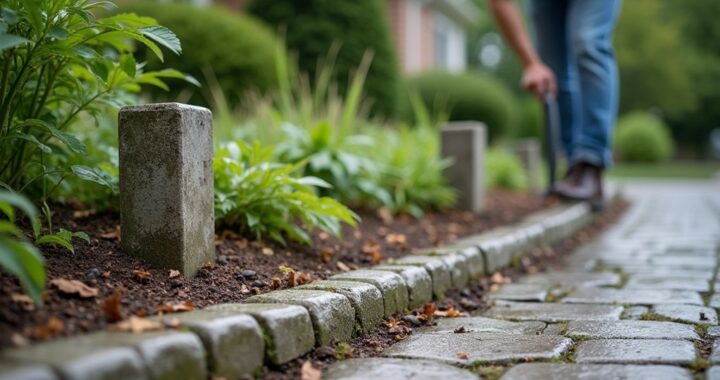
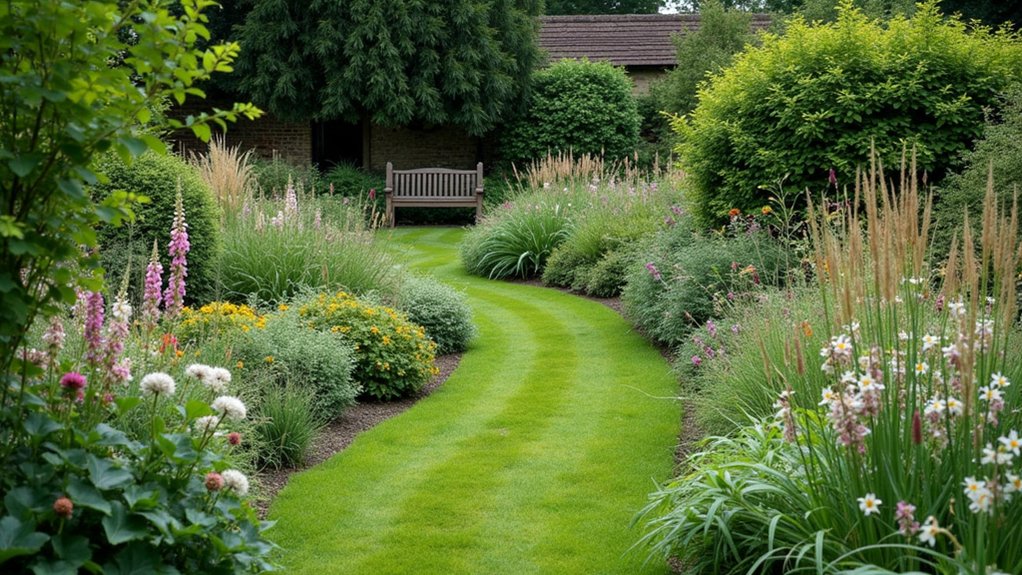
You can create a lower-maintenance UK garden by working with your site rather than against it. Start by matching native plants to your soil, light, wind exposure, and rainfall, then group species with similar water needs. Dense ground cover, organic mulch, layered planting, and restrained pruning will reduce weeds and watering while supporting wildlife. Leave seed heads standing through winter, and choose trees and shrubs for structure. The most important decision comes before you plant a single thing.
Match Native Plants to Your Garden
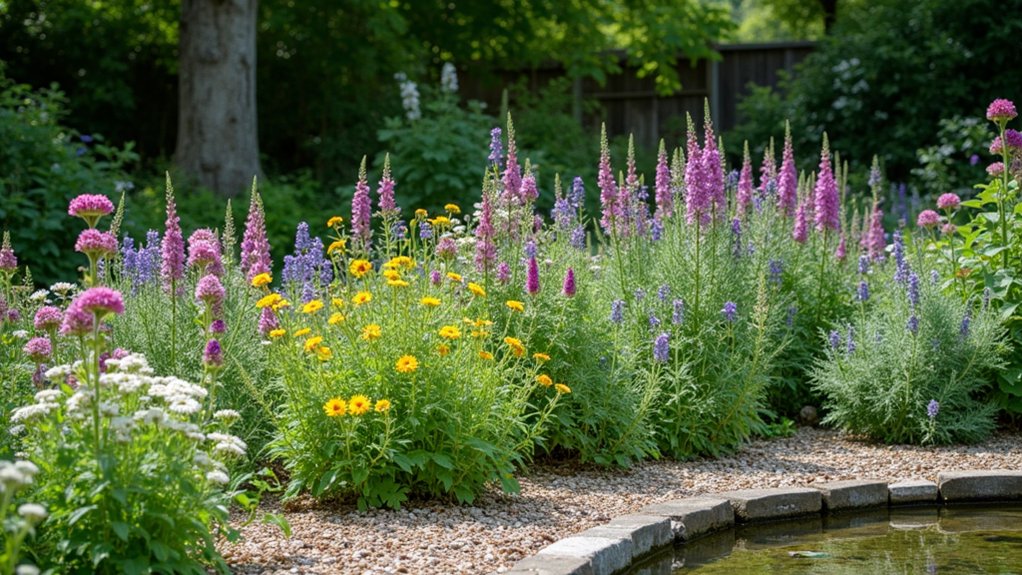
Start by matching each native plant to your garden’s soil, light and moisture levels rather than choosing solely for appearance. Observe where winter shade lingers, where summer drought develops, and which areas face prevailing winds. Then select species adapted to those conditions, such as foxglove for partial shade, bird’s-foot trefoil for sunny, lean ground, or meadowsweet for reliably damp corners.
This approach reduces watering, staking, and replacement, while supporting native plant diversity and resilience during increasingly erratic UK weather. Layer trees, shrubs, perennials, grasses, and climbers to create structure, food, and shelter for wildlife throughout the year.
You’ll also achieve a balanced garden aesthetic by repeating key forms and colours instead of scattering unrelated specimens. Choose mature sizes carefully, so vigorous plants don’t overwhelm smaller neighbours or crowd paths and windows.
Read Your Soil Before Planting
Before planting, test your soil’s pH, texture, drainage, and organic matter so you can choose native species that will thrive without constant amendment or watering. Soil testing kits provide useful guidance, while a laboratory analysis gives more reliable results, especially on unfamiliar ground. Check several spots because construction, compost heaps, and foot traffic can create sharply different conditions.
Feel the soil when it’s moist, not wet: crumbly loam usually drains well, clay holds water, and sandy soil dries quickly. Dig a small hole to inspect roots, compaction, and standing water after rain.
Add organic matter gradually where it improves structure, but don’t endlessly modify naturally poor soil. If results show unsuitable acidity, make pH adjustment slowly with measured lime or sulphur, then retest before planting. This saves resources and protects soil life.
Choose Drought-Tolerant Native Plants
Once you understand your soil, choose drought-tolerant native plants suited to its conditions rather than trying to recreate a wetter habitat. Look for drought resistant varieties that cope with your region’s rainfall, wind, and changing summer temperatures.
Sea thrift, kidney vetch, wild marjoram, oxeye daisy, yarrow, and field scabious can bring colour and wildlife value without demanding regular irrigation once established. Check each plant’s mature size, flowering period, and light requirements before buying, and favour locally sourced seed or nursery-grown stock.
Young plants still need thorough watering during their first growing season, especially through prolonged heat. Add organic matter only where appropriate, because excessive enrichment can weaken plants adapted to lean soils.
With sensible plant choices, water wise gardening supports pollinators while reducing mains-water use and maintenance during increasingly unpredictable UK summers.
Group Plants by Water Needs
Group plants with similar water needs together so you can irrigate precisely and avoid wasting water on species that prefer drier conditions. Position drought-tolerant natives on free-draining ground, while moisture-loving plants sit in deeper soil or low spots that collect rain. Check each plant’s needs before planting, then mark zones clearly for easier seasonal care.
During the UK’s increasingly erratic summers, this layout helps you direct water where roots need it most and reduce inefficient watering. Water newly planted groups deeply until established, but let drought-adapted plants dry between applications.
Avoid overwatering, which can cause weak growth, fungal problems, and overgrown foliage. Adjust schedules after rainfall, and use a rain gauge to track conditions.
As plants mature, reassess shade, soil moisture, and root competition so every group remains healthy.
Use Ground Cover to Beat Weeds
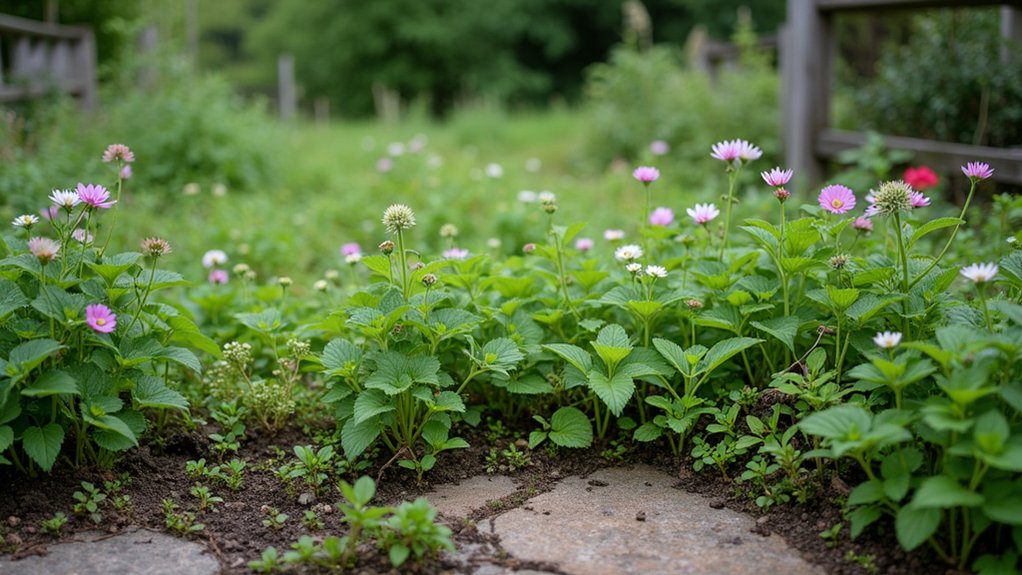
Choose dense native ground covers such as wild strawberry, bugle and lesser periwinkle to fill bare soil.
Their spreading growth blocks light, suppresses weeds naturally and protects soil from drying winds.
You’ll also reduce maintenance while supporting UK wildlife and building climate resilience.
Choose Dense Native Covers
A dense layer of native ground cover shades the soil, suppresses weeds, and helps it retain moisture during increasingly dry UK summers. Choose plants suited to your region, soil, and light, then match spreading habits to each space.
Wild strawberry thrives in sun or partial shade, while bugle and wood sorrel suit damper, woodland-style borders. For dry, sunny ground, consider thyme, self-heal, or kidney vetch.
Plant plugs closely enough to knit together, but leave room for mature spread and airflow. Grouping several species strengthens native plant diversity, supports insects, and creates resilient seasonal interest.
Vary leaf shape, height, and flower colour to improve garden aesthetics without demanding constant attention. Water new plants during their first summer, then let established covers rely mainly on rainfall.
Trim only when paths or neighbouring plants need space.
Suppress Weeds Naturally
Once native ground covers knit together, they block light from reaching weed seedlings and reduce the bare soil where weeds take hold.
Choose plants suited to your soil, rainfall, and light, so they establish without constant watering. Wild strawberry, creeping thyme, bugle, and selfheal can provide effective weed prevention while supporting pollinators.
Plant in autumn or during a mild, damp spell, then water deeply until roots settle. Mulch the gaps with leaf mould or well-rotted compost, keeping material away from crowns and stems.
Don’t cultivate the soil unnecessarily; disturbance exposes dormant seeds. Pull persistent perennial weeds before planting, removing their roots where possible.
As the cover thickens, natural suppression improves and maintenance drops.
During drought, check plants regularly and water at the base, prioritising new growth over established, resilient patches.
Plant for Sun, Shade and Shelter
Match each native plant to the conditions it will actually face, because the right place matters more than constant care. Check sunlight, soil moisture and wind before you buy.
Choose hawthorn, wild marjoram or oxeye daisy for exposed, sunny ground; prefer wild garlic, primrose or hart’s-tongue fern where shade stays cool.
In dry shade, improve establishment with compost and water deeply during the first summer, then reduce watering as roots settle.
Use hedges, walls and fences to shelter tender newcomers from prevailing winds, but leave enough space for healthy airflow.
Climate-aware garden design also means anticipating hotter summers and heavier rainfall: group plants with similar needs, raise beds on wet ground, and mulch open soil.
Good planting techniques, including autumn planting, help roots establish before weather becomes extreme.
Create Wildlife-Friendly Native Layers
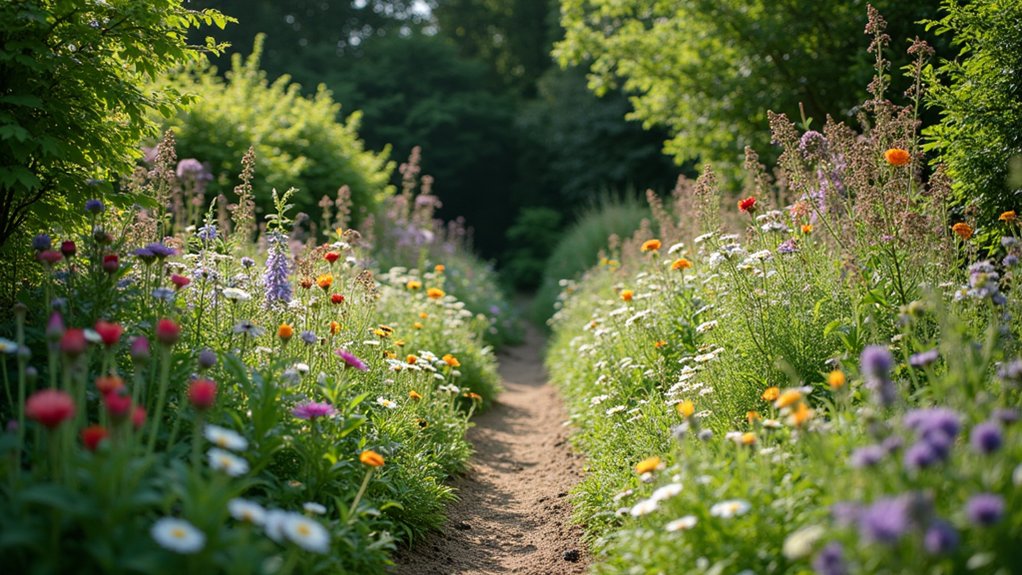
Build wildlife habitat in layers, with native trees or tall shrubs forming a canopy, dense hedges and smaller shrubs creating cover, and flowering plants, grasses and leaf litter filling the ground level.
Choose species such as hawthorn, hazel, holly, dogwood, oxeye daisy and knapweed to support birds, insects and small mammals across seasons.
Native plant diversity strengthens resilience during wetter winters, summer droughts and sudden temperature swings.
Stagger flowering times for continuous Pollinator attraction, and include seed-bearing plants for autumn and winter food.
Let some stems stand through winter, while a small pond or shallow water dish supports amphibians and insects.
Match each layer to your soil, aspect and available space.
You’ll create shelter, nesting sites and feeding opportunities without demanding intensive upkeep, while improving your garden’s ecological value.
Add Mulch to Cut Garden Maintenance
A 5–8cm layer of organic mulch can suppress weeds, reduce evaporation and protect soil from heavy rain and temperature swings. Choose well-rotted compost, leaf mould, or chipped bark, avoiding fresh manure, which can damage roots and encourage unwanted growth.
Before mulch application, remove perennial weeds, water thoroughly, and leave a clear gap around each plant’s crown and stems to prevent rot. Spread the material evenly beneath shrubs, trees, and herbaceous plants, topping it up when it thins.
As it breaks down, mulch supports soil improvement by adding organic matter, feeding soil organisms, and improving structure. This helps your garden cope with increasingly erratic UK weather while reducing watering and hoeing.
Check moisture beneath the surface during dry spells, because mulch reduces evaporation but can’t replace watering newly planted plants.
Plan Native Plants for Year-Round Interest
Choose native plants that flower, fruit, or provide structure in different seasons, so your garden supports wildlife and stays attractive throughout the year. Map Seasonal flowering from early spring to late autumn, combining primrose, hawthorn, foxglove, knapweed, and ivy.
Select plants suited to your soil, sunlight, and local rainfall; climate change makes drought-tolerant choices increasingly valuable, while wet areas need moisture-loving species.
Add trees and shrubs for height, berries, bark, and winter silhouettes. Wildlife attractors such as hawthorn, guelder rose, holly, and rowan offer food and shelter when insects and seeds become scarce.
Include evergreen natives, but avoid creating dense shade that suppresses ground flora. Group plants with similar needs to reduce watering and replacement.
Check flowering times annually and fill seasonal gaps with locally sourced native species.
Prune Less With Naturalistic Planting
Choose naturally compact native plants, so you won’t need frequent cutting to control their size.
Let relaxed shapes develop, as informal growth supports wildlife and handles the UK’s changing weather more resiliently.
You’ll reduce maintenance while creating a garden that looks settled and natural.
Choose Naturally Compact Plants
When you’re planning a low-maintenance UK garden, select naturally compact native plants that keep a tidy shape without regular cutting. Match mature dimensions to each planting space, allowing room for airflow and rainfall to reach the soil.
- Choose dwarf hawthorn, guelder rose, or compact hazel cultivars for native shrubbery that won’t outgrow paths quickly.
- Plant wild thyme, self-heal, or bugle as compact groundcover, reducing exposed soil and suppressing weeds.
- Check each plant’s eventual height and spread, not its size at purchase, before positioning it near windows, drives, or boundaries.
- Prefer species suited to your soil, wind, and rainfall; climate-adapted plants establish faster and need less intervention.
Space plants sensibly, mulch around—not over—their crowns, and water deeply during the first dry seasons.
You’ll gain structure, habitat, and easier maintenance without relying on frequent pruning.
Embrace Relaxed Plant Shapes
Let native plants keep their natural, slightly informal shapes rather than pruning them into rigid forms. You’ll reduce maintenance, protect flowering wood, and create shelter for insects and birds.
In borders, combine plants with different heights and textures, allowing seed heads and stems to stand through winter. This structure catches frost, protects soil, and provides valuable food when natural resources are scarce.
Use wildflower meadows as a model: let grasses and perennial flowers mingle, then cut once annually after seeds mature.
Arrange native shrubbery with enough space for each plant to spread without constant correction. Remove only damaged, diseased, or genuinely obstructive growth, and prune during suitable weather to minimise stress.
A relaxed shape also handles wind, drought, and heavy rain better than tightly clipped growth, supporting a resilient UK garden.
Frequently Asked Questions
When Is the Best Time to Plant Native Species in the UK?
You’ll usually get the best results by planting native species in autumn, from October to November, while the soil remains warm and rainfall supports root growth.
You can also plant in early spring, between March and April, once heavy frost and waterlogging have passed.
For successful seasonal planting, prepare soil by removing weeds, loosening compacted ground, and adding compost where needed.
Avoid planting during frozen, drought-stricken, or saturated conditions, and water new plants thoroughly.
How Can I Source Ethically Grown Native Plants?
To source ethically grown native plants, start by choosing Ethical nurseries that list UK provenance, peat-free compost, pesticide-free methods, and sustainable water use.
Don’t put all your eggs in one basket: compare supplier policies and ask where seed originated.
Support local Wildflower propagation groups, seed libraries, and reputable conservation organisations.
Avoid wild-collected plants unless suppliers prove legal, responsible harvesting.
Select peat-free plugs, reuse pots, and buy only what your site can support.
Are Native Plants Safe for Pets and Children?
Native plants aren’t automatically safe for pets and children, so check each species before planting.
For Pet safety, avoid toxic UK natives such as foxglove, yew, monkshood, and autumn crocus; keep berries, bulbs, and fallen leaves away from curious mouths.
Choose Child friendly plants such as thyme, lavender, chamomile, and marigold, while confirming suitability for your animals.
Label beds, supervise young children, and contact a vet or poison service after suspected ingestion.
How Do I Control Invasive Plants Without Harming Native Species?
Control invasive plants by removing them early, before they set seed, while protecting neighbouring natives. Think of your garden as a village: evict the invader carefully, so its native residents can flourish.
Identify the Invasive species accurately, then hand-pull small outbreaks, digging out roots. For larger patches, cut repeatedly or use targeted herbicide, shielding native foliage.
Dispose of debris securely, monitor regrowth, and replant bare soil to strengthen Native preservation and climate resilience.
Can Native Plants Thrive in Containers or Balcony Gardens?
Yes, native plants can thrive in containers and balcony gardens when you match species to light, wind, and moisture. Use peat-free, free-draining compost, containers with drainage holes, and drought-tolerant natives for exposed sites.
Helpful Container gardening tips include grouping pots to reduce drying and insulating roots during frost.
Explore Balcony planting ideas such as thyme, wild marjoram, oxeye daisy, and bird’s-foot trefoil.
Water deeply during dry spells, but don’t waterlog roots.
Conclusion
A low-maintenance UK garden starts with observation, not effort. Match native plants to your soil, light, wind and rainfall; group similar water needs; then layer trees, shrubs, ground cover and seasonal perennials. Mulch generously, leave seed heads standing, and prune only when necessary. You’ll support wildlife while reducing watering and weeding. With gardens covering more than 400,000 hectares in Britain, each resilient plot can become a meaningful refuge for nature in a changing climate.