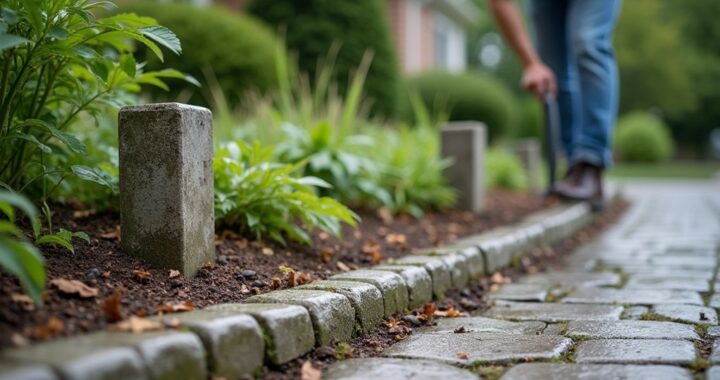

Many shrubs suffer from poor drainage rather than lack of water, so check the soil before adjusting your irrigation. Start by evaluating sunlight, space, and soil conditions, then clear weeds and debris before planting or renovating borders. Water deeply, prune according to flowering time, mulch carefully, and feed plants only when needed. Regular pest inspections and seasonal maintenance will keep the area healthy, but timing each task correctly is where the real difference begins.
Plan Your Garden Borders and Shrub Areas
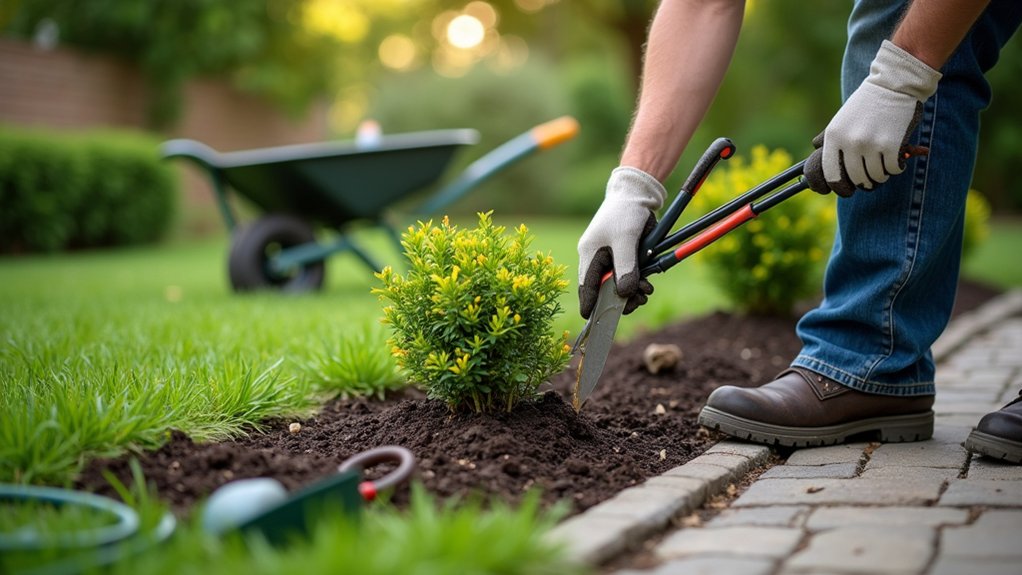
Before planting, assess your garden’s sunlight, soil drainage, mature plant sizes, and access for maintenance. Map the area, noting existing trees, structures, utilities, and seasonal shade.
Develop a Garden border design that creates clear edges, balanced proportions, and sufficient room for pruning, watering, and inspection. Keep taller shrubs behind shorter perennials, and repeat key forms or colors to establish visual unity.
During Shrub species selection, match each plant’s mature height, spread, hardiness, and moisture preference to the site rather than its container size. Choose disease-resistant varieties suited to your climate, and avoid invasive species.
Sketch spacing on paper, allowing air circulation between plants and clearance from paths, walls, and windows. Mark planting positions with temporary stakes so you can evaluate the layout from several viewpoints before purchasing.
Clear Weeds and Prepare the Soil
Once you’ve marked the layout, clear the planting area of weeds, turf, roots, and debris so new shrubs won’t compete for water or nutrients. Use a sharp spade to lift perennial weeds, removing every fragment of persistent roots. For effective weed removal, avoid simply chopping or burying invasive rhizomes, which can regrow.
Skim turf separately and shake loose soil back into the bed. Test the exposed soil, then follow the results before adding compost or a suitable soil conditioner. Loosen compacted ground with a garden fork, working to the depth of the shrub’s root ball without turning over distinct soil layers. This soil aeration improves drainage and root penetration.
Rake the surface level, break up large clods, and remove stones. Leave the bed clean and friable before planting.
Water Garden Borders and Shrubs Properly
Water garden borders and shrubs deeply enough to moisten the root zone, rather than wetting only the soil surface. Apply water slowly at the base, allowing it to penetrate instead of run off. Check moisture several inches down with your finger or a trowel, then water again when the soil begins to dry.
Young plants usually need more frequent irrigation, while established shrubs benefit from thorough, less frequent soaking. Adjust your schedule for rainfall, temperature, soil type, and exposure.
Mulch around plants to conserve moisture, but keep it away from stems and trunks to discourage rot.
Consider water feature placement carefully; nearby features may increase humidity but don’t replace irrigation.
Finally, match watering practices to shrub species selection, since drought-tolerant plants need less water than moisture-loving varieties.
Use drip lines or soaker hoses for efficient, even delivery.
Prune Shrubs at the Right Time
Learn when your shrubs bloom so you’ll know the safest time to prune them.
Prune spring-flowering shrubs after blooming, while summer-flowering shrubs typically benefit from late-winter or early-spring pruning.
Use seasonal techniques to protect flower buds, maintain shape, and encourage healthy growth.
Know Shrub Blooming Times
Knowing when a shrub blooms helps you prune without sacrificing its flowers. First, identify whether your shrub flowers on old wood or new growth.
Spring-blooming shrubs, such as lilac, forsythia, and weigela, usually form flower buds during the previous summer. If you prune them in winter or early spring, you’ll remove those developing buds.
Shrubs that bloom in summer often produce flowers on current-season stems, giving you a later pruning window.
Check plant labels, reputable horticultural references, or your local extension service to confirm each species’ blooming cycles. Record flowering dates in a garden notebook, then compare them with recommended plant schedules.
Watch the shrub itself, too: fading flowers and finished displays signal that its bloom period has ended.
Accurate timing protects next season’s flower production and keeps borders attractive.
Use Seasonal Pruning Techniques
Prune shrubs according to their flowering cycle, growth habit, and seasonal condition. Use seasonal timing to protect buds and encourage vigorous regrowth.
Prune spring-flowering shrubs, such as lilac and forsythia, immediately after blooms fade; they set next year’s flowers on older wood.
Trim summer-flowering shrubs in late winter or early spring, before new growth begins.
Remove dead, damaged, or diseased branches anytime, cutting back to healthy tissue.
For evergreen shrubs, limit major shaping to late spring, after frost risk passes.
Apply clean, sharp tools, and disinfect blades between plants to prevent disease spread.
Use thinning cuts to open crowded interiors, and make heading cuts just above outward-facing buds.
Don’t shear flowering shrubs indiscriminately, because you’ll remove developing blooms.
Water thoroughly after pruning and mulch the root zone.
Apply Mulch to Protect Garden Borders
Choose a mulch suited to your border’s plants and local conditions.
Prepare the soil by removing weeds and watering it thoroughly before application.
Maintain a 5–8 cm layer, keeping mulch away from stems and replenishing it as it settles.
Choose the Right Mulch
Mulch protects garden borders by conserving moisture, moderating soil temperature, and suppressing weeds, but the right material depends on your soil and planting scheme.
Choose well-rotted bark or wood chips for shrubs, where a durable layer gradually improves structure. Use composted garden waste around established perennials, but avoid fresh material, which can temporarily reduce available nitrogen.
Gravel suits Mediterranean plants and free-draining beds, while leaf mould works well beneath woodland species.
Select a mulch that complements your planting design; mulch color can make foliage stand out or soften strong contrasts.
In exposed borders, heavier materials resist wind and reduce soil erosion.
Avoid dyed products of uncertain origin and any mulch containing weed seeds.
Whatever you choose, use clean, well-matured material and keep it away from stems, trunks, and crowns.
Prepare Border Soil
Before applying mulch, prepare the border soil so moisture and nutrients can reach plant roots effectively. Remove weeds, fallen leaves, and debris, taking care not to disturb established roots.
Loosen compacted soil gently with a hand fork, especially around shrubs, where digging deeply could cause damage.
Conduct Soil testing to identify pH levels and nutrient deficiencies; use the results to guide any necessary corrections.
Incorporate well-rotted compost or other Organic amendments into poor, sandy, or clay-heavy soil, but avoid burying plant crowns or exposing roots.
Water the prepared soil thoroughly if it’s dry, allowing moisture to penetrate before you spread mulch.
Keep the surface reasonably smooth, and repair erosion or exposed roots with suitable soil.
Complete these steps first, because mulch works best over clean, fertile, properly conditioned ground.
Maintain Mulch Depth
Once the soil is prepared, spread mulch evenly to maintain a consistent depth of about 5–8 cm (2–3 inches) across the border. This depth insulates roots, conserves moisture, suppresses weeds, and moderates soil temperature. Keep mulch 5–8 cm away from stems, trunks, and plant crowns to prevent rot, pests, and fungal problems.
Check the border each season, because rain, wind, and decomposition gradually reduce coverage. Rake displaced material back into thin areas, then top up with fresh, compatible mulch. Don’t pile new material over compacted layers; loosen the surface first so water and air can penetrate.
These mulch essentials support healthy shrubs and perennials. Use layering techniques carefully: apply one even layer rather than several thick applications, and avoid mixing woody mulch deeply into soil, where decomposition can temporarily reduce nitrogen.
Feed Plants and Improve Soil Health
Healthy borders start with fertile, well-structured soil, so feed plants according to their needs rather than applying fertilizer routinely. Begin with a soil test to identify pH and nutrient deficiencies, then choose amendments that address specific results.
Compost application improves structure, drainage, moisture retention, and microbial activity. Spread a 2–5 cm layer around established plants, keeping it clear of stems, and work it gently into the surface without disturbing roots.
Use Organic fertilizers, such as well-rotted manure, bone meal, or seaweed-based products, according to label rates and seasonal requirements. Feed actively growing shrubs in spring, and avoid stimulating soft growth late in the season.
Water thoroughly after applying dry products. Replenish organic matter annually, but don’t overfeed: excessive nutrients can weaken plants and pollute waterways. Monitor growth and adjust your routine.
Check Garden Borders for Pests and Disease
Inspect garden borders regularly for signs of pests and disease, including chewed leaves, distorted growth, discoloured foliage, sticky residue, mould, and dieback. Check leaf undersides, stems, buds, and soil surfaces, where insects and eggs often hide.
Accurate pest identification helps you choose an effective treatment rather than applying broad-spectrum chemicals unnecessarily. Remove badly affected leaves and isolate infected container plants promptly.
Improve disease prevention by spacing shrubs for airflow, watering at soil level, and clearing fallen debris that may harbour pathogens. Encourage beneficial insects by avoiding unnecessary insecticides, and hand-pick larger pests when practical.
Photograph unfamiliar symptoms and compare them with reliable horticultural references before acting. Disinfect pruning tools between plants, especially after cutting diseased tissue.
Monitor affected areas frequently, and follow product instructions if treatment becomes necessary.
Follow a Seasonal Garden Maintenance Routine
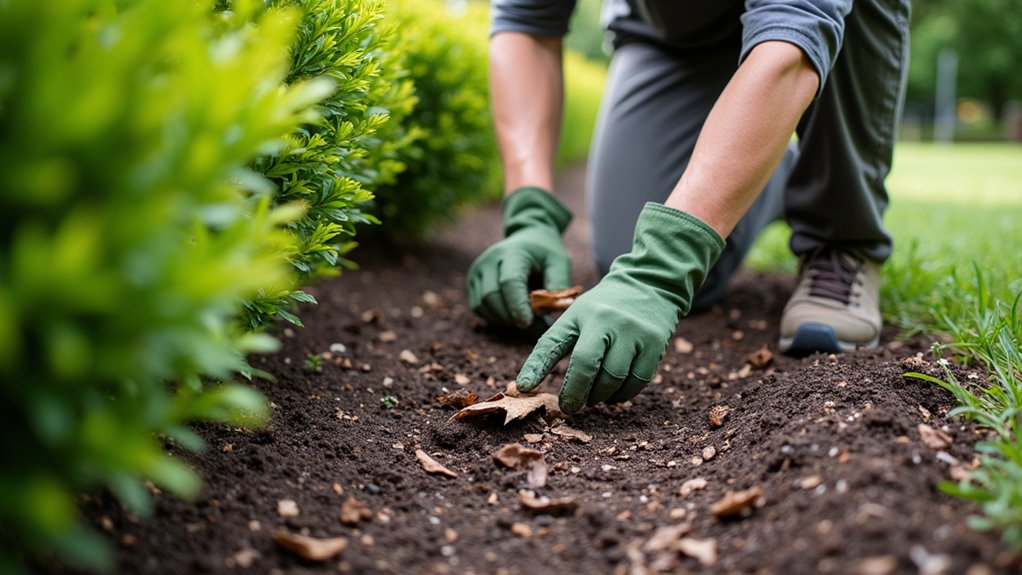
Follow a seasonal garden maintenance routine to keep borders and shrubs healthy throughout the year.
In spring, remove winter debris, inspect emerging growth, divide overcrowded perennials, and apply compost before mulch. Review your garden border design, ensuring plants have adequate space, light, and airflow.
During summer, water deeply during dry spells, deadhead flowers, tie in loose stems, and monitor pests weekly. Prune spring-flowering shrubs after blooming, but avoid cutting into old wood unnecessarily.
In autumn, remove diseased foliage, collect fallen leaves, and plant replacement shrubs while soil remains workable. Use sound shrub planting techniques, including wide planting holes, firm root contact, and thorough watering.
In winter, protect tender plants from frost, avoid working saturated soil, and check supports after storms. Keep tools clean and sharpened throughout every season.
Frequently Asked Questions
How Do I Choose Garden Border Plants Suitable for a Shady Location?
Choose garden border plants for shade by evaluating light levels, soil moisture, and mature size.
Select Shade loving perennials such as hostas, heucheras, hellebores, and astilbes for reliable foliage or flowers.
Match each plant to conditions: dry shade favors hellebores and epimediums, while moist shade suits astilbes and ferns.
Add evergreen shrubs, including sarcococca or skimmia, for year-round structure.
Check hardiness, spacing, drainage, and deer resistance before planting, and improve soil with compost.
What Tools Are Essential for Maintaining Garden Borders and Shrub Areas?
Essential tools make garden maintenance easier—because apparently plants won’t prune themselves.
Start with sharp bypass pruners for clean cuts, loppers for thicker stems, and a pruning saw for large branches.
Use a sturdy hand trowel, fork, spade, and hoe for planting, weeding, and soil preparation.
Add gloves, a kneeling pad, watering can, and wheelbarrow.
Keep blades disinfected and sharpened to support precise pruning techniques and prevent disease spread.
How Can I Design Borders to Attract Bees, Butterflies, and Other Pollinators?
Design borders with layered planting that supplies nectar, pollen, shelter, and water from spring through autumn. Choose diverse, regionally adapted Pollinator friendly plants, including native perennials, flowering shrubs, herbs, and annuals.
Use Seasonal bloom planning to prevent gaps between flowering periods. Group plants in broad drifts for efficient foraging, and include varied flower shapes.
Avoid pesticides, especially during bloom, and leave some stems, leaf litter, and bare soil for nesting and overwintering.
When Should I Replace Overcrowded or Declining Shrubs?
Replace overcrowded or declining shrubs when pruning no longer restores vigor, flowering weakens, disease recurs, or stems die back extensively.
Assess shrubs’ health in late winter or early spring, when structure is visible and plants face less transplant stress.
Follow your local planting schedule: early spring or autumn usually offers the best conditions.
Remove competing roots, improve drainage, and replant with suitable spacing.
Dispose of diseased material, and water replacements consistently during establishment.
How Do I Protect Garden Borders From Pets and Foot Traffic?
Protect borders with Pet proof fencing and Foot traffic barriers before damage begins. Imagine your new lavender edging crushed where children shortcut across the bed; a low, sturdy barrier prevents both problems.
Install mesh fencing around vulnerable plants, bury its base slightly to deter digging, and choose openings too narrow for pets’ heads.
Add decorative edging, stepping stones, or a narrow path to direct visitors.
Mulch exposed soil to reduce compaction and erosion.
Conclusion
Keep your garden borders and shrub areas healthy by planning carefully, clearing weeds, watering deeply, pruning at the proper time, and replenishing mulch and nutrients. Inspect foliage and stems regularly, because early action can stop pests or disease before they spread. Follow a seasonal routine, too, adapting care to weather and plant needs. One overlooked task may undo months of work—but consistent attention will reveal the reward: vigorous plants and borders that stay attractive year-round.