

Tired decking and timber walkways can become slippery, unattractive and unsafe, but you can often restore them without replacing everything. Start by inspecting the structure for rot, cracked boards, loose fixings and raised splinters. Then clean away dirt, mould and algae before making repairs, sanding rough areas and applying a suitable protective finish. The right order matters, particularly in the UK’s damp weather, and one overlooked fault could undermine all your hard work.
Inspect Decking and Timber Walkways

Before cleaning or treating your decking or timber walkway, inspect every board, step and handrail for rot, cracks, loose fixings and raised splinters. Press suspect areas with a screwdriver; sound timber feels firm, while soft wood needs replacement.
Check posts, joists and supports for movement, water damage or insect activity, and test handrails and balustrades for stability. Tighten suitable fixings, but don’t conceal structural faults with coatings.
Mark damaged sections and photograph them before starting repairs. Your findings may influence decking material selection: pressure-treated softwood, hardwood or composite boards each require different repair methods and maintenance expectations.
Follow Seasonal maintenance tips by inspecting in spring and autumn, particularly after frost, heavy rain or storms.
Keep children away from unsafe areas until you’ve completed repairs or arranged a qualified professional’s assessment.
Clean Decking and Remove Mould
Once damaged boards are identified and repaired, sweep the decking thoroughly to remove leaves, dirt and loose debris. Pay particular attention to gaps, corners and areas beneath furniture, where moisture and organic matter collect.
Mix a suitable decking cleaner with water, following the manufacturer’s instructions, then apply it with a stiff brush. Don’t use a pressure washer on a powerful setting, as it can damage timber fibres and drive water into joints.
Treat visible mould, algae and mildew with a proprietary wood-safe solution, allowing the recommended contact time before scrubbing and rinsing. Keep runoff away from ponds, drains and planted borders.
Let the surface dry completely before replacing Decorative accessories. Include this cleaning routine in your Seasonal maintenance plan, especially during damp UK autumns and winters.
Repair Damaged Boards and Fixings
Inspect the deck closely for split, rotten or badly cupped boards, and check that every fixing sits firmly below the timber surface. Mark unsafe sections, then lift damaged boards carefully without disturbing sound timber. Replace rotten or cracked lengths rather than patching them, using matching dimensions and suitable exterior-grade timber.
Your decking material selection matters: choose a species or composite with comparable strength, moisture resistance and movement characteristics. Cut replacement boards accurately, leaving the manufacturer’s recommended drainage gaps.
Use corrosion-resistant stainless-steel or galvanised screws suitable for your board type, and fix into sound joists. Countersink heads neatly, but don’t drive them too deep, as this encourages water retention.
Check joists for decay before refitting; replace compromised sections first. Preserve the existing layout where possible, so your repairs support both safety and aesthetic design.
Sand and Treat the Timber
After repairs have cured, sand the timber to remove splinters, raised grain and loose remnants of old finish. Work along the wood grain, starting with medium-grit abrasive paper before smoothing with a finer grade.
For larger areas, use a powered sander carefully, keeping it moving to prevent dips. Sweep, brush and vacuum away every trace of dust, then wipe the surface with a slightly damp cloth and let it dry fully.
Check the forecast before applying treatment; the timber must be dry, and temperatures should meet the product’s instructions. Stir your chosen decking oil, stain or Weatherproof coating thoroughly, then apply an even, thin layer with a brush or roller.
Pay particular attention to end grain, joints and exposed edges. Don’t leave puddles, and allow adequate drying time between coats.
Protect Decking and Walkways Long Term
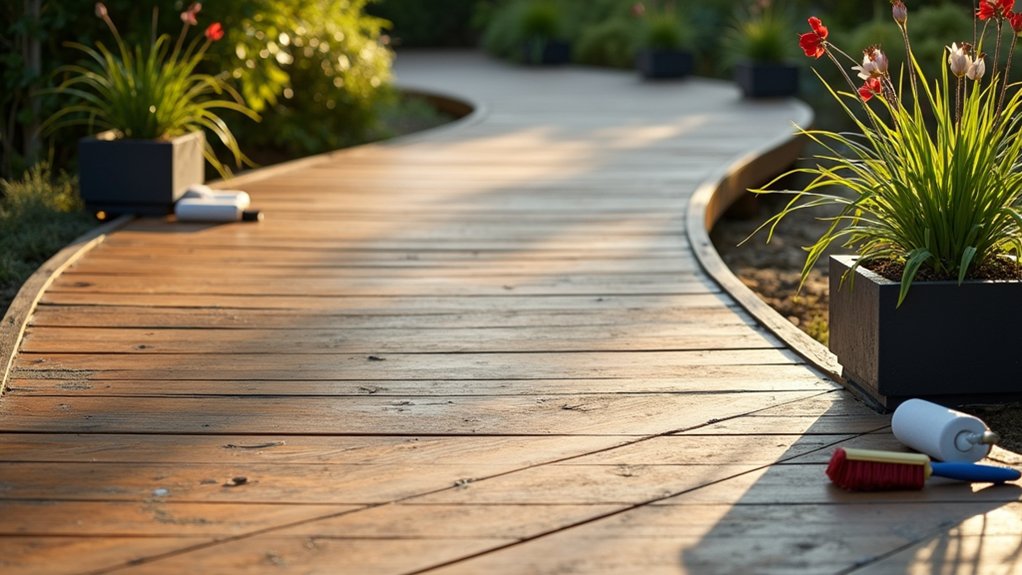
To protect decking and timber walkways long term, keep them clear of leaves, dirt and standing water so moisture can’t settle into the wood. Sweep weekly, particularly beneath furniture and along edges, then wash away algae with a suitable timber cleaner.
Inspect boards, fixings and supporting joists each spring; replace split, rotten or loose components promptly. Apply a quality exterior decking stain or oil when the timber is clean and completely dry. Follow the manufacturer’s coverage and recoat guidance, using staining techniques that produce an even, durable finish.
Choose weatherproofing methods suited to the UK’s wet, changeable climate, and avoid coating damp wood. Improve drainage around paths and raise planters off the surface.
Don’t use rock salt during frosts, as it can damage timber and corrode fixings. Schedule annual maintenance.
Frequently Asked Questions
Can Decking and Timber Walkways Be Refreshed During Wet or Cold Weather?
Yes, you can refresh decking and timber walkways during cold or wet weather, but you’ll get better results by waiting for a dry, mild spell.
Damp timber prevents cleaners, stains and oils from bonding properly, while low temperatures slow drying and curing. Check the product label for minimum application temperatures, and avoid rain for at least 24 hours afterwards.
Good seasonal timing, suitable weather conditions and proper preparation will help you achieve a durable finish.
How Long Does a Typical Decking Refresh Project Take?
A typical decking refresh takes one to three days, depending on size, condition, weather and drying time.
Picture 20 square metres: you’ll usually spend a day cleaning and sanding, then apply treatment over another day, allowing proper curing.
Check forecasts before starting, because damp timber delays progress.
Quality Maintenance tools speed preparation and improve results.
Regular care can extend your Decking lifespan by several years, helping you avoid premature replacement across the UK.
Should Furniture and Plants Be Removed Before Refreshing Decking?
Yes, you should remove furniture and relocate plants before revitalizing decking. Furniture removal gives contractors clear access, prevents damage from cleaners or coatings, and helps achieve an even finish.
Plant relocation protects foliage from dust, pressure washing, and chemical products; cover any items you can’t move. Store everything safely until the surface has fully dried and cured.
In the UK, check weather forecasts first, as damp conditions can delay preparation and drying.
Are Refreshed Timber Walkways Safe for Pets and Children?
Yes, refreshed timber walkways can be safe for pets and children when you prepare them properly.
For Pet safety, choose a pet-friendly, water-based finish. Remove splinters and prevent access until the surface dries fully.
For Child safety, secure loose boards, countersink protruding screws, and improve grip with a suitable anti-slip treatment.
Check the walkway regularly, especially after wet weather, and follow the product’s UK safety guidance before reopening it.
When Is Replacing Decking More Cost-Effective Than Restoring It?
Replace decking when restoration costs approach half the price of new boards, or when rot, movement and structural damage run deep. If your decking lifespan is nearly over, repeated sanding, staining and repairs only postpone inevitable replacement.
Look for soft joists, split boards, loose fixings and persistent damp—especially in Britain’s wet climate. You’ll usually save more by renewing unsafe timber than repeatedly patching it.
Obtain two written quotes before deciding.
Conclusion
Refresh tired decking and timber walkways methodically, and you’ll improve both safety and kerb appeal. Check for rot, clean away mould, secure loose fixings, sand splinters, and apply a suitable weatherproof finish. For example, if your garden path has turned green and slippery after winter, a thorough clean, light sanding and decking oil can make it safer and smarter in a weekend. Keep sweeping regularly and recoat as needed to withstand Britain’s changeable weather.