
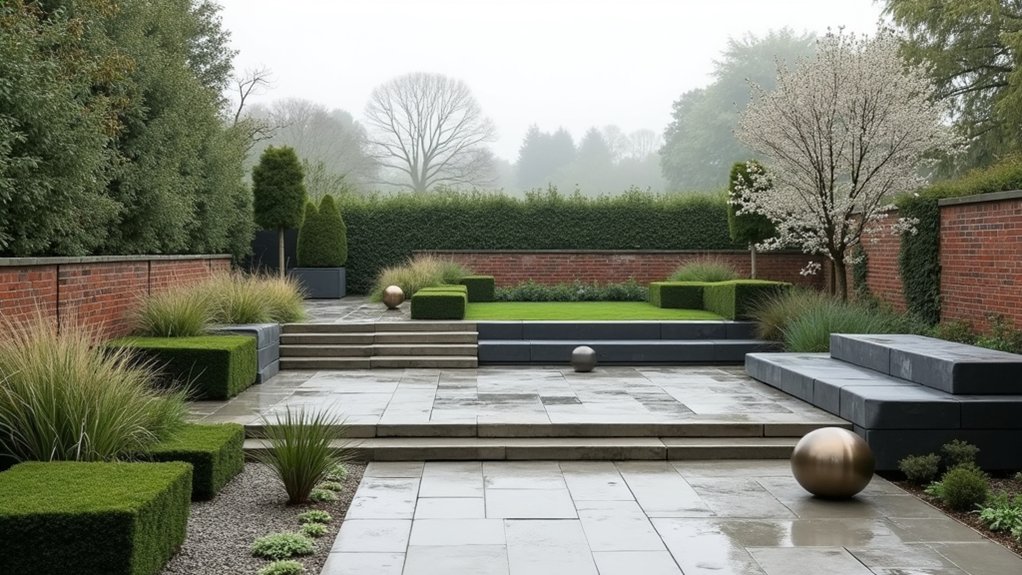
You can create a garden that feels both sharply designed and naturally relaxed. Modern British landscaping combines clean geometry with weathered textures, seasonal planting, and practical features suited to changing weather. Start by defining your style, evaluating your soil and aspect, and dividing the space into useful zones. Then choose resilient plants, sustainable materials, and lighting that support year-round appeal. The right sequence matters, and the next decisions will shape how your garden performs in every season.
Define Your Modern British Garden Style
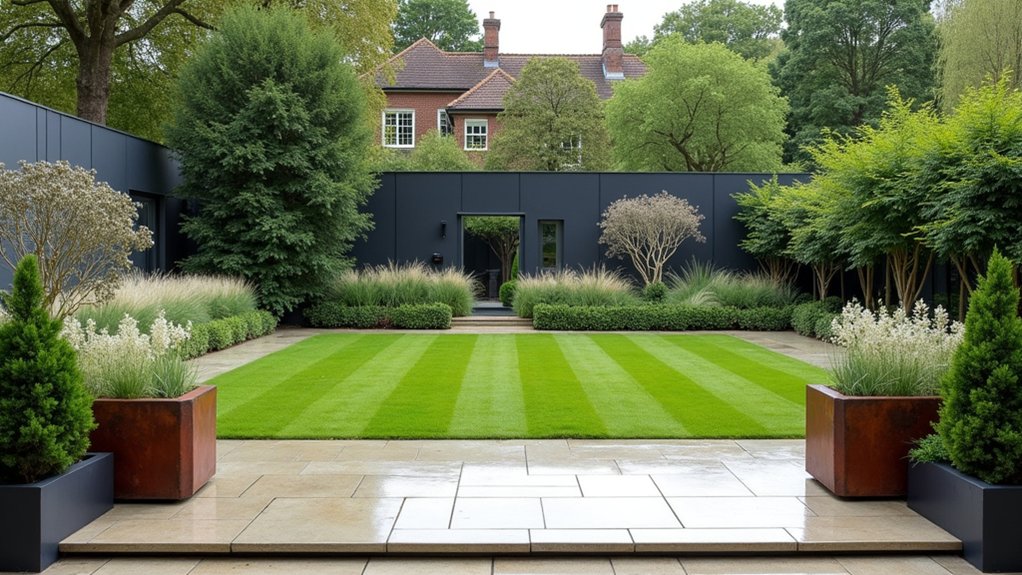
Define your modern British garden style by balancing clean structure with the character of the landscape. Choose a clear visual direction before selecting materials, planting, or decorative details.
For Contemporary aesthetics, favour restrained colours, strong geometric forms, and durable finishes such as porcelain, timber, steel, or concrete. Soften these crisp elements with native grasses, hedging, ferns, and seasonal perennials that reflect Britain’s changing weather.
Consider Cultural influences without copying them literally: draw from formal English gardens, cottage planting, Arts and Crafts principles, or urban design, then interpret each through your property’s setting. Keep your choices consistent in scale, texture, and colour.
Select plants suited to your soil, exposure, and rainfall, and prioritise year-round structure. Your finished style should feel intentional, locally responsive, and practical to maintain.
Plan a Garden Layout for UK Living
Start by evaluating your garden’s aspect, dimensions, soil, drainage, and existing features.
Next, assign functional zones for seating, dining, planting, storage, and children’s play, keeping access routes clear.
Plan for UK weather with reliable drainage, sheltered areas, wind-tolerant planting, and surfaces that remain safe in wet conditions.
Assess Your Garden Space
Before choosing plants or features, assess how your garden works throughout the day and across the seasons. Measure the garden size, noting boundaries, access points, slopes, drainage, and prevailing winds. Sketch the space to scale, recording where sunlight reaches in morning, midday, and evening. Revisit your observations in winter, when low light and waterlogging can change conditions.
Inspect existing features, including walls, fences, sheds, paving, mature trees, and utility covers. Decide what deserves protection, repair, removal, or improvement before planning anything new.
- Capture sunlight patterns that reveal hidden opportunities.
- Identify damp corners before they become costly problems.
- Record views you’ll love seeing from indoors.
- Notice exposed areas that need shelter.
- Protect mature features that give your garden character.
Check local boundaries and access constraints carefully. Accurate notes now will help you create a realistic, resilient layout later.
Choose Functional Zones
Divide your garden into functional zones that match how you use it, such as dining, relaxing, growing, play, storage, and access. Sketch each area on your measured plan, then connect zones with clear routes wide enough for comfortable movement and equipment.
Position dining near the kitchen or back door to simplify serving, while placing play areas where you can supervise them easily. Give seating enough space for garden furniture without blocking circulation.
Group beds, containers, and composting facilities in a practical growing zone, keeping storage discreet but accessible. Use paving, gravel, planting, or changes in level to define boundaries without making the garden feel divided.
Reserve focal points for outdoor art, specimen plants, or attractive views. Check every zone supports your daily routines before finalising the layout.
Plan For UK Weather
Once your zones support everyday routines, shape them around Britain’s changeable weather. Position seating near a south-facing wall for warmth, but add shade for bright summer days. Grade paths and patios gently towards drains, choose permeable paving, and keep doorways clear of pooling water. Build storm preparedness into your layout with secure fencing, flexible planting, and sheltered storage for furniture.
- Let rain nourish a planted swale.
- Hear wind soften through native grasses.
- Step safely across non-slip paths.
- Protect tender plants in a sunny courtyard.
- Enjoy sheltered meals despite sudden showers.
Choose resilient materials that tolerate frost, damp, and temperature shifts. Use evergreen structure for winter interest, then coordinate seasonal planting so beds recover quickly after heavy rain. Raise vulnerable containers, anchor trellises, and prune weak branches before autumn gales.
Your garden will feel calmer, safer, and more enjoyable in every season.
Choose Climate-Smart British Planting
Choose native British plants suited to your soil, sunlight, and local conditions to support wildlife and reduce maintenance.
Select resilient species that can tolerate wetter winters, summer droughts, and temperature swings.
You’ll create a stronger, more adaptable garden by combining regional planting with careful weather planning.
Select Native Plants
Select native British plants that suit your soil, sunlight, drainage, and local rainfall, rather than relying on appearance alone. Choose species naturally adapted to your region, then group them according to their growing needs.
Native wildflowers can soften paving, support pollinators, and create seasonal colour, while local shrubbery provides structure, shelter, and valuable nesting sites. Check mature height and spread before planting, and buy from reputable nurseries to avoid invasive lookalikes.
You’ll create a garden that feels rooted in its landscape and rewards careful observation.
- Foxgloves bring dramatic spires and welcome bees.
- Hawthorn offers blossom, berries, and nesting cover.
- Primroses brighten shady, damp corners.
- Hazel supplies structure and wildlife value.
- Yarrow tolerates lean soil and attracts butterflies.
Improve soil only when necessary; preserve existing conditions wherever suitable plants can thrive.
Label young specimens, mulch lightly, and water thoroughly after planting.
Plan for Changing Weather
After matching plants to your site, plan for the weather patterns your garden may face in the years ahead. Choose drought-tolerant perennials, deep-rooted shrubs, and trees that cope with wind, heavy rain, or brief cold snaps.
Group plants with similar watering needs, then improve soil with compost to support drainage during storms and moisture retention during dry spells. Use mulch to protect roots and reduce evaporation, but keep it away from stems.
Add seasonal plant rotations so beds recover between demanding crops and remain productive through unpredictable conditions.
Select weather resistant materials for paths, raised beds, fencing, and furniture; galvanised steel, treated hardwood, and frost-resistant paving withstand Britain’s wet, changeable climate.
Check forecasts before planting or pruning, secure young trees, and keep rainwater available for essential watering during prolonged dry periods.
Combine Clean Lines With Natural Texture
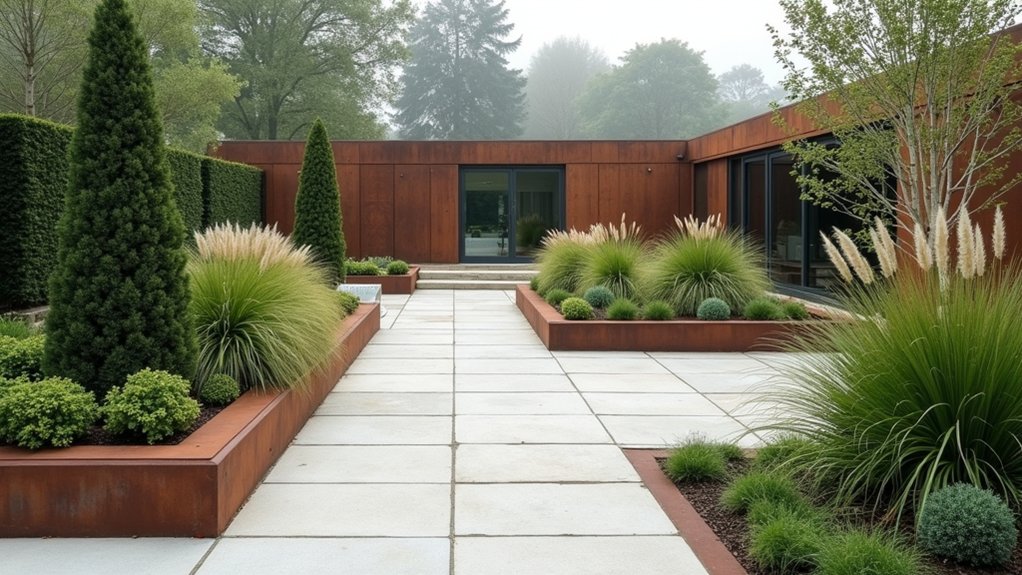
Clean-lined paving, rendered walls, and geometric planting beds give a British garden structure, while natural textures prevent the design from feeling severe. Balance hard edges with planting that moves, softens, and changes through the seasons. Pair crisp paths with grasses, clipped shrubs, weathered bark, and stone aggregates to create contrast without clutter.
- Feel calm as grasses ripple beside precise paving.
- Add warmth through timber, woven bark, and tactile foliage.
- Frame views with restrained planting and Organic forms.
- Use Minimalist textures to keep small gardens visually spacious.
- Create character with repetition, rhythm, and seasonal movement.
Choose one dominant material for paving, then repeat its tone in walls or edging. Vary plant heights around straight borders, but maintain clear sightlines and disciplined spacing. Let foliage overlap slightly, so the garden feels established rather than rigid.
You’ll achieve a modern British landscape that looks ordered, welcoming, and naturally connected.
Build With Sustainable British Landscaping Materials
Choose reclaimed brick, locally quarried stone, FSC-certified timber, and permeable paving to reduce transport emissions and help your garden handle British rainfall. Check each product’s source, durability, and maintenance requirements before you buy.
Reclaimed brick adds character while avoiding new manufacturing, but select frost-resistant stock and match its dimensions carefully.
Locally quarried stone suits retaining walls, steps, and paving with fewer delivery miles.
Choose FSC-certified timber for decking, screens, and raised beds, then protect it with a low-toxicity finish.
Permeable paving lets rain soak into the ground, reducing standing water and pressure on drains.
Specify recycled materials, including composite boards and recycled aggregate, where performance meets your needs.
Finish seating areas with durable, eco-friendly furnishings made from responsibly sourced or recycled components.
Repair, reuse, and locally source materials wherever possible to limit waste.
Add Lighting, Water, and Wildlife Features
With durable, responsibly sourced materials in place, add features that extend your garden’s use after dark and support local wildlife. Plan garden lighting carefully: use warm, low-level LEDs along paths, steps, and seating, and angle fittings downward to limit glare and protect nocturnal species. Choose timers or motion sensors rather than leaving lights on all night.
Select water features with wildlife in mind. A shallow pond, gently sloping edge, and submerged stones let birds, frogs, and insects drink safely. Avoid chemicals, provide oxygenating plants, and include a discreet escape ramp.
- Warm light makes evening meals feel intimate.
- A pond brings soothing movement and birdsong.
- Native plants give pollinators reliable shelter.
- Logs and stones create valuable microhabitats.
- Gentle details make your garden feel alive.
Keep electrics weatherproof, position pumps safely, and check local guidance before installation. Don’t introduce fish into wildlife ponds, as they’ll disturb delicate ecosystems.
Maintain Year-Round Modern British Appeal
To maintain a modern British garden’s appeal throughout the year, build the design around evergreen structure, resilient planting, and materials that weather well. Use clipped yew, holly, or pleached hornbeam to provide reliable form, then layer grasses, ferns, and perennials for changing texture.
Plan seasonal plant rotations in containers and borders, choosing spring bulbs, summer colour, autumn seed heads, and winter stems that complement your restrained palette.
Protect the layout’s crisp appearance with defined edging, permeable paths, and durable stone or timber.
Follow consistent garden maintenance routines: prune at the correct season, remove damaged growth, refresh mulch, clear drainage channels, and clean lighting. Check irrigation during dry spells, support young plants, and replace failures promptly.
Your garden will remain inviting, functional, and distinctly British in every season.
Frequently Asked Questions
How Much Does Modern British Landscaping Typically Cost?
Modern British landscaping typically costs £5,000–£25,000, depending on garden size, materials, access, planting, and labour.
For a modest redesign, you might spend £3,000–£8,000; larger, high-specification projects can exceed £30,000.
Obtain at least three written quotes and request itemised cost estimates covering design, groundwork, drainage, paving, planting, lighting, and waste removal.
During budget planning, reserve 10–15% for unexpected ground conditions, revisions, or price changes.
Regional labour rates also affect your final total.
Do I Need Planning Permission for My British Garden Redesign?
Usually, you won’t need planning permission for a British garden redesign, but the rules can hide like stones beneath the soil. You may need approval for substantial level changes, retaining walls, raised platforms, outbuildings, listed properties, conservation areas, or boundary structures exceeding permitted heights. Check your local council before work starts.
Protect garden privacy while prioritising ecological sustainability, drainage, and wildlife. Building regulations may also apply to structures, electrical installations, and paving.
How Long Does a Modern British Landscaping Project Usually Take?
A modern British landscaping project usually takes four to twelve weeks, depending on your garden’s size, design complexity, access, and weather.
Simple planting and paving work may finish within two to four weeks, while drainage, retaining walls, lighting, or bespoke structures can extend the schedule.
Allow extra time for garden lighting installation, material deliveries, and careful plant selection.
Your contractor should provide a phased programme, confirm contingencies, and update you regularly if conditions change.
Can Modern Landscaping Increase My Property’s Value?
Yes, modern landscaping can increase your property’s value by improving kerb appeal, usability, and buyer confidence. You’ll gain the strongest return from durable materials, well-designed planting, effective drainage, and lighting that enhances safety.
Incorporate eco-friendly features such as rainwater harvesting, permeable paving, and native plants to reduce running costs.
Plan garden maintenance carefully, because neglected lawns, paving, or hedges can quickly undermine your investment and diminish your home’s overall appeal.
Should I Hire a Professional British Garden Designer or Landscaper?
Yes—hire a professional British garden designer or landscaper when your dream garden currently resembles a jungle wearing a blazer.
A designer develops the layout, plant selection, drainage, materials, and planting plan. A landscaper then builds it efficiently.
Choose someone with local references, insurance, and a portfolio matching your property. Ask for itemised costs, timelines, and maintenance guidance.
Professional garden maintenance advice can protect your investment and improve resale appeal.
Conclusion
A modern British garden should look beautiful, work hard, and improve with age. Consider this: gardens can support hundreds of species when you combine native planting, water, shelter, and seasonal structure. You’ll create a stronger result by planning clear zones, choosing weather-resistant materials, and matching plants to your soil and microclimate. Add efficient lighting, wildlife-friendly features, and a realistic maintenance routine. With these decisions, your landscape won’t merely survive Britain’s seasons—it’ll become more useful and inviting each year.