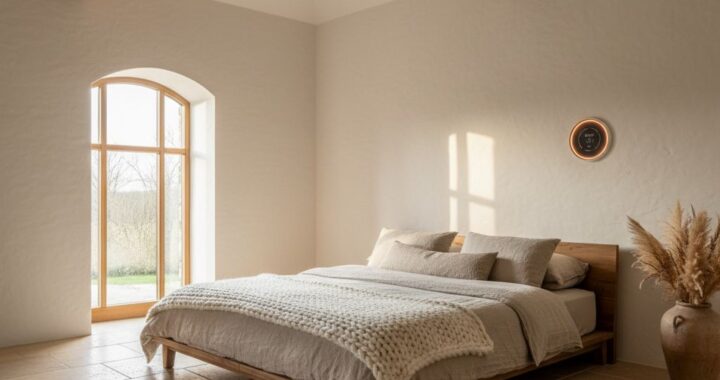
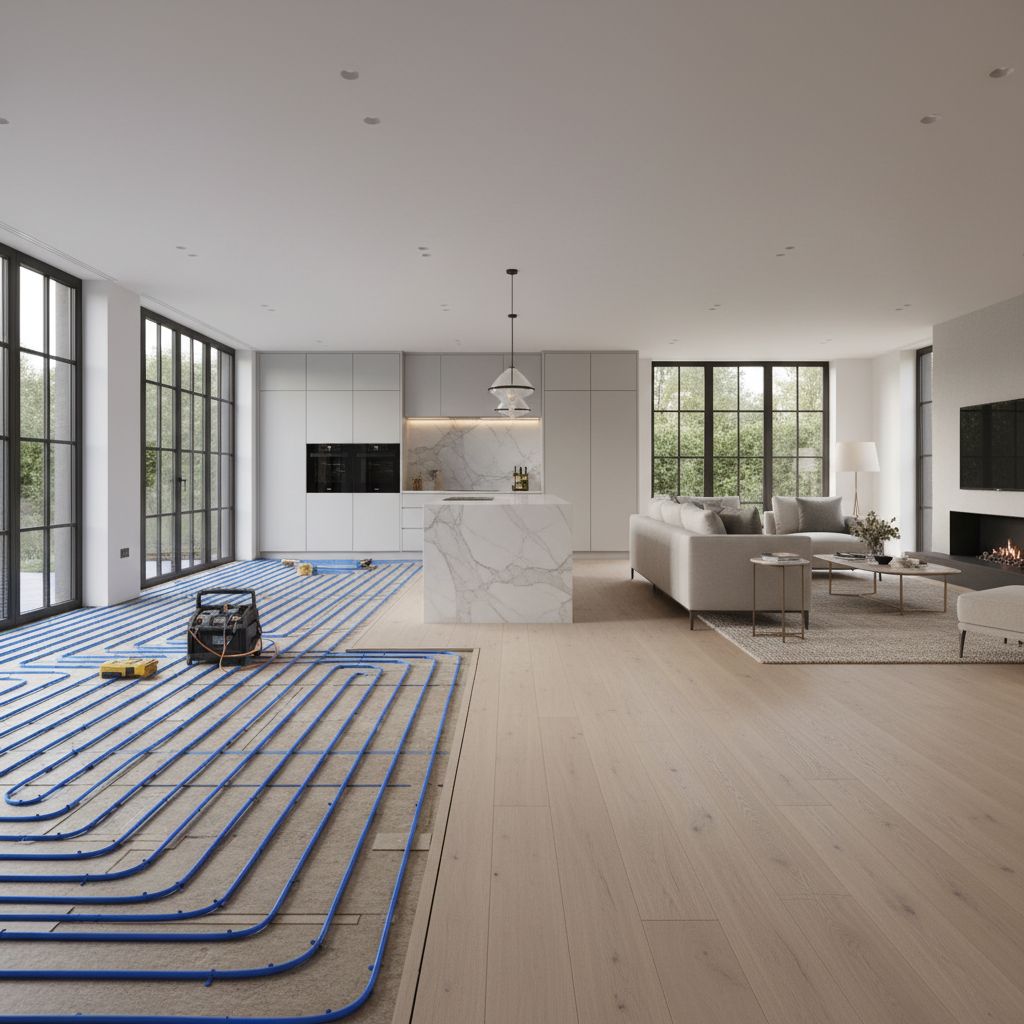
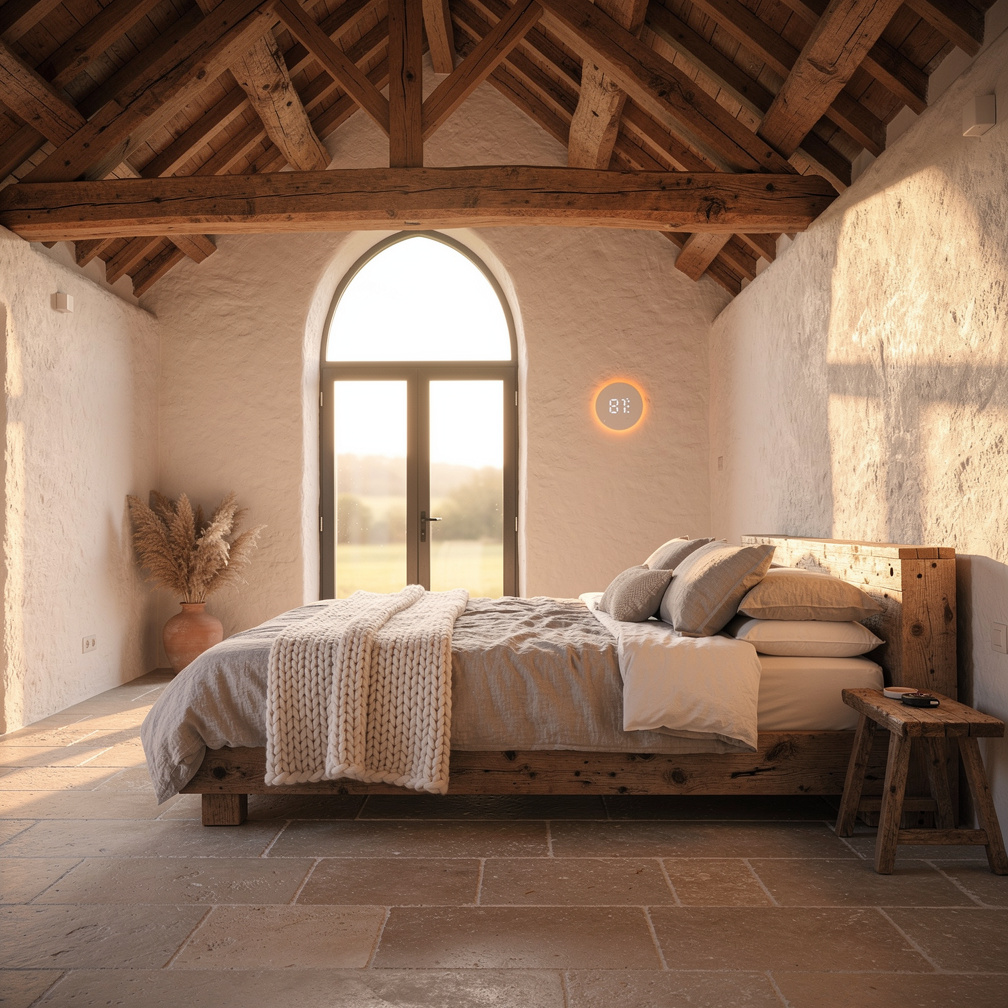
One popular home improvement upgrade that adds value to your property while improving your quality of life is electric underfloor heating. We did a great barn conversion and added UFH as part of the build-out.
You step onto the bathroom tile in winter and flinch at the cold bite underfoot, a daily discomfort most accept as inevitable. That moment vanishes with underfloor heating, a quiet transformation that replaces drafts and uneven warmth with consistent, radiant heat rising from the floor. This is not just a luxury addition, but a rethinking of how warmth moves through your home, starting from the ground up. A mid-sized SaaS firm retrofitting its office space reported improved employee comfort during winter months after installation, noting fewer complaints about cold workstations near exterior walls.
The Cold Floor and the Morning Light
The bite of the winter stone
That first step onto the bathroom tile in winter carries a shock few forget. Your feet meet unyielding cold, a stark contrast to the warmth of bed just left behind. Stone, ceramic, and even sealed concrete pull heat instantly from bare skin, making mornings feel like endurance tests rather than fresh starts.
A secret fire in the ground
Underfloor heating transforms that moment with warmth rising evenly from below. You feel it before you see it, a gentle lift in temperature that replaces the chill with comfort. No more recoiling from the floor; instead, your feet meet a surface that feels alive with subtle, consistent heat.
Electric mats or water-filled pipes weave beneath the flooring, activated by a simple thermostat setting. A mid-sized SaaS firm retrofitting its open-plan office reported a 30% drop in employee complaints about cold during winter months after installation. The system operates silently, invisible once laid, delivering heat without drafts or noise, changing not just how a room feels but how it functions from the ground up.
The Two Ways of the Heat
Copper wires and the electric spark
Electric underfloor heating uses a network of thin copper wires installed beneath the floor surface, activated by an electrical current to produce instant warmth. You feel the heat rise evenly across the tile or stone, making it ideal for bathrooms or smaller rooms where quick response times matter most.
The flow of the warm water
Hydronic systems rely on heated water circulated through a series of flexible PEX pipes embedded in the floor. This method delivers consistent, energy-efficient warmth across large areas, often integrating with your home’s existing boiler or heat pump for sustained comfort.
Water retains heat longer than electrical elements, allowing hydronic systems to operate with fewer cycles and lower energy spikes. A mid-sized SaaS firm retrofitting its open-plan office with hydronic heating reported noticeably stable temperatures throughout winter, even during extended use. The system’s thermal mass sustains warmth long after the pump stops, reducing strain on the heating unit and smoothing out demand peaks.
The Labour of the Installation
Stripping the room to the bone
You remove every trace of existing flooring, from baseboards to underlayment, exposing the subfloor in full. Old adhesive, nails, or uneven patches must be cleared, creating a clean, level surface. A mid-sized SaaS firm retrofitting its office lounge found this phase took longer than expected due to hidden moisture damage beneath vinyl tiles.
Laying the lines true
Each loop of PEX tubing follows a precise spacing pattern, typically 6 to 9 inches apart, secured with fasteners or mounting plates. The layout avoids sharp bends and maintains consistent elevation changes across the room. In a historic renovation in Edinburgh, installers adjusted spacing near exterior walls to compensate for higher heat loss.
Proper alignment ensures even thermal distribution and prevents cold spots or overheating. You anchor the tubing to insulation boards using plastic clips, maintaining tension without kinking. Manifold connections are pressure-tested before the next phase, confirming integrity. One contractor in Devon reported a 15% efficiency gain simply by optimizing loop length and minimizing bends in a two-story townhouse.
The Rising of the Warmth
Heat that starts at the feet
Warmth rises gently from the floor, wrapping around your feet the moment you step out of bed. Unlike forced air that blasts from vents above, this heat moves upward evenly, creating a consistent layer of comfort across the entire room. You feel it first on your skin, then in the air, never as a gust but as a steady presence.
A house without the wind
Absent are the drafts that slip under doors and past window frames. With no air being pushed through ducts, the movement that stirs dust and cools surfaces disappears. You notice it in the stillness-curtains hanging motionless, the air holding its breath, your skin no longer reacting to unseen currents.
Convection currents from radiators and vents create micro-winds that circulate allergens and dry out mucous membranes. Underfloor systems eliminate this cycle by relying on radiant transfer, warming solid surfaces instead of air. A mid-sized SaaS firm retrofitting its office in Bristol reported fewer employee complaints about dry eyes and throat irritation within three weeks of switching. The absence of airflow doesn’t just feel quieter-it changes how the space interacts with your body.
The Silver Saved
Using less of the fuel
Lower energy consumption becomes inevitable when heat rises evenly from the floor, eliminating the need to overcompensate for cold spots. You run the system longer at a lower temperature, drawing fewer kilowatts per hour while maintaining comfort, especially in well-insulated spaces where thermal retention is strong.
The worth of a good home
Prospective buyers often view underfloor heating as a premium feature, one that signals thoughtful design and long-term planning. Homes equipped with it tend to move faster in competitive markets, particularly in regions where winter comfort heavily influences purchasing decisions.
A mid-sized SaaS firm relocating its headquarters to a renovated office park in Manchester noted a 15% increase in employee satisfaction scores after switching to underfloor heating in workspaces, citing fewer distractions from temperature swings. This kind of measurable impact on daily experience translates directly into residential value, where consistent warmth affects not just comfort but perceived quality of life. Over time, the system contributes to a quieter, more stable indoor environment, one where the absence of clanking radiators and dry air becomes part of the home’s appeal.
Final Words
You experience the difference the first time you step barefoot onto a floor that greets you with warmth instead of shock. Underfloor heating transforms not just comfort but the way you interact with your space, replacing drafts and uneven temperatures with consistent, invisible warmth. A mid-sized SaaS firm retrofitting its office noted fewer complaints about cold workstations and increased employee satisfaction during winter months. Your decision to install it isn’t just about luxury, it redefines how warmth functions in your daily routine.
FAQ
Q: How does underfloor heating compare to traditional radiators in terms of energy efficiency?
A: Underfloor heating systems operate at lower water temperatures than conventional radiators, typically between 35°C and 45°C, because they distribute heat evenly across the entire floor surface. Radiators often require water above 60°C to effectively warm a room, increasing boiler strain and energy use. A mid-sized SaaS firm retrofitting its office space in Bristol reported a 20% reduction in gas consumption during the first winter after switching to underfloor heating, with employees also noting fewer cold spots near exterior walls.
Q: Can underfloor heating be installed in an existing home without major renovations?
A: Yes, retrofit systems such as ultra-thin electric mats or modular dry systems can be installed directly beneath floor finishes like engineered wood or tile without raising floor levels significantly. One homeowner in Edinburgh added electric underfloor heating to a second-floor bathroom, using a 15mm profile system that fit over the existing joists, preserving door clearances and eliminating the need for structural adjustments. These systems are especially effective in rooms with high heat loss, such as those with large windows or poor insulation.
Q: Is underfloor heating suitable for all types of flooring?
A: Most flooring types work with underfloor heating, but thermal conductivity varies. Ceramic and stone tiles transfer heat most efficiently, making them ideal partners for both wet and electric systems. Engineered wood with a thickness under 18mm also performs well, while solid timber requires careful acclimatization to avoid warping. A renovation project in a Victorian terrace in Manchester used limestone flooring over a water-based system, achieving surface temperatures of 27°C, comfortably warm underfoot without excessive energy draw.
Q: Do I need a different boiler or heat source to run underfloor heating?
A: Modern condensing boilers and heat pumps integrate seamlessly with underfloor systems, especially since both operate efficiently at lower flow temperatures. Heat pumps, in particular, achieve higher coefficients of performance when paired with underfloor heating due to the reduced temperature differential. A social housing provider in Leeds upgraded 120 units with air-source heat pumps and wet underfloor heating, resulting in consistent indoor temperatures and fewer resident complaints about heating responsiveness.
Q: How long does it take for underfloor heating to warm up a room?
A: Response time depends on the system type and floor construction. Thin electric systems over plywood can reach operating temperature in 20 to 30 minutes, while concrete-slab installations may take two to three hours to fully heat due to thermal mass. Once warmed, the slab retains heat longer, reducing cycling. A family in Gloucestershire using a water-based system in their extension programmed the heating to start an hour before waking, ensuring warmth by breakfast without running continuously overnight.